 Window Cleaning
 Gutter Clearing
 Soffit & Fascia Cleaning
 Conservatory Cleaning
 Commercial Window Cleaning

Your gutters work silently, day and night, protecting your home from one of nature's most relentless forces: water. Yet most homeowners don't give them a second thought until water is cascading down the walls or damp patches appear on the ceiling. By then, the damage is already done.
As the trusted exterior cleaning specialists at Operation Clean, we've cleared thousands of metres of guttering across Teesside. We've seen everything from tiny blockages that caused thousands of pounds in structural damage, to homeowners who had no idea their gutters were a thriving ecosystem of moss, weeds, and even small saplings.
This comprehensive guide reveals everything you need to know about gutter cleaning: why it matters far more than you think, the hidden dangers of neglect, the science behind blockages, and exactly how professionals tackle the job safely and effectively.
Why Your Gutters Are Your Home's Unsung Heroes
A typical British home experiences approximately 1,000mm of rainfall per year. For a standard semi-detached property with a 70m² roof area, that translates to roughly 70,000 litres of water hitting your roof annually—enough to fill a small swimming pool.
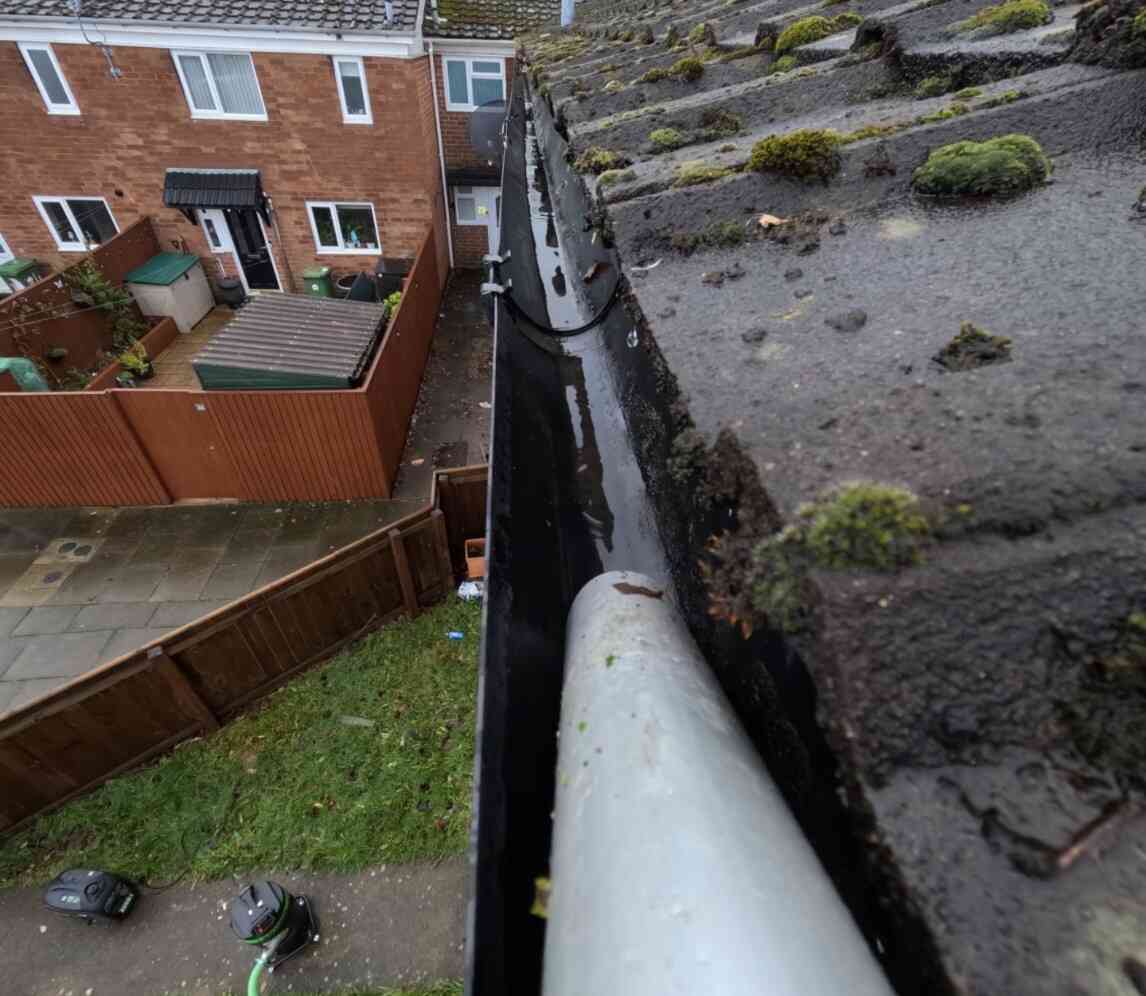
Every single drop of that water needs to go somewhere. Your guttering system is the carefully engineered channel that captures this deluge, directs it along horizontal runs, funnels it down vertical downpipes, and deposits it safely into ground-level drains, away from your foundations.
When this system fails, even partially, the consequences cascade rapidly. Water finds alternative routes—down exterior walls, into cavities, through brickwork and mortar. The damage is often invisible at first, silently spreading behind plaster and beneath floors.
£5,000+
Average cost of damp remediation from gutter-related water ingress
40%
Of UK structural damp issues are linked to faulty or blocked guttering
£60-£120
Typical cost of professional gutter cleaning to prevent all of the above
The Anatomy of a Gutter Problem: What's Really Happening Up There
Understanding how gutters become blocked helps you appreciate why regular cleaning is so vital. The process is gradual, subtle, and almost organic in nature.
Moss & Lichen Migration
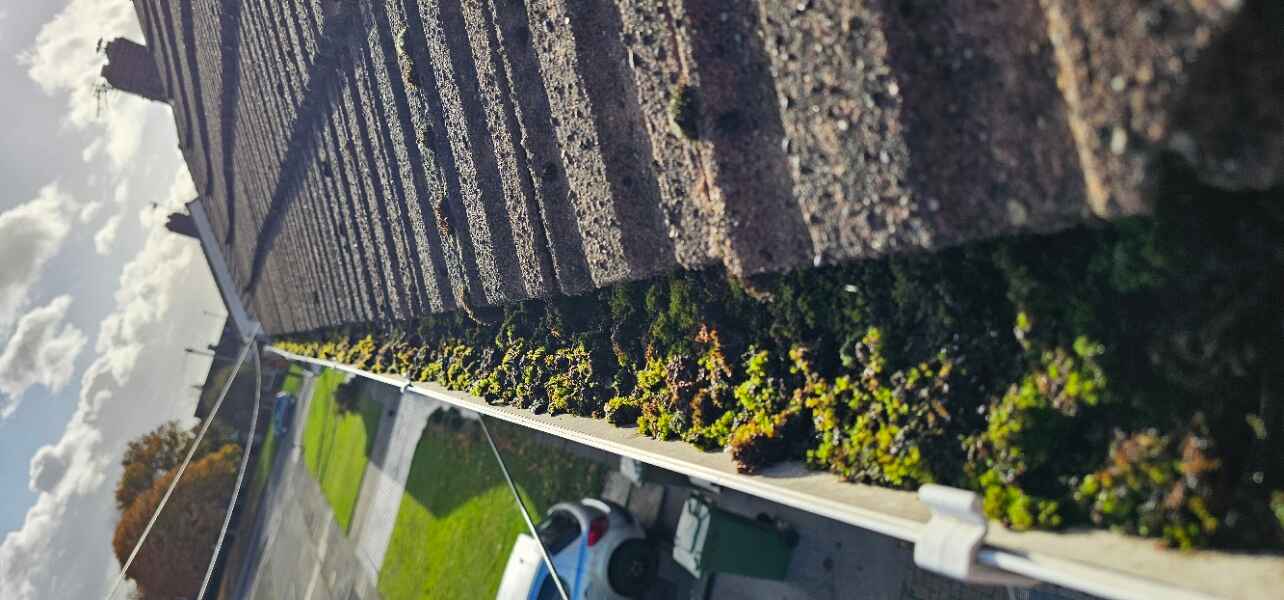
Your roof is a living environment. Moss grows on tiles, particularly on the shaded north-facing slopes. Rain washes loose fragments into the gutters, where they accumulate over months and years. This creates a dense, spongy base layer that holds moisture and encourages more growth.
Leaf Accumulation
Autumn brings the annual leaf fall. Even if you have no trees directly overhanging your property, wind carries leaves from neighbouring gardens, nearby parks, and surrounding streets. These leaves settle into gutters, decomposing into a thick, mud-like sludge.
Seed Germination
Birds roosting on rooftops deposit seeds from berries. Wind carries dandelion seeds, sycamore helicopters, and grass seeds. Landing in the nutrient-rich compost of decomposed leaves in your gutter, these seeds germinate. We've removed fully-grown plants, including small trees, from neglected guttering systems.
Downpipe Blockages
The debris doesn't stay in the horizontal runs. Heavy rain washes it towards the downpipe outlets. Here, the detritus compacts and hardens. A completely blocked downpipe transforms your entire gutter run into a long, overflowing trough during any significant rainfall.
The Silent Damage: What Blocked Gutters Do to Your Home
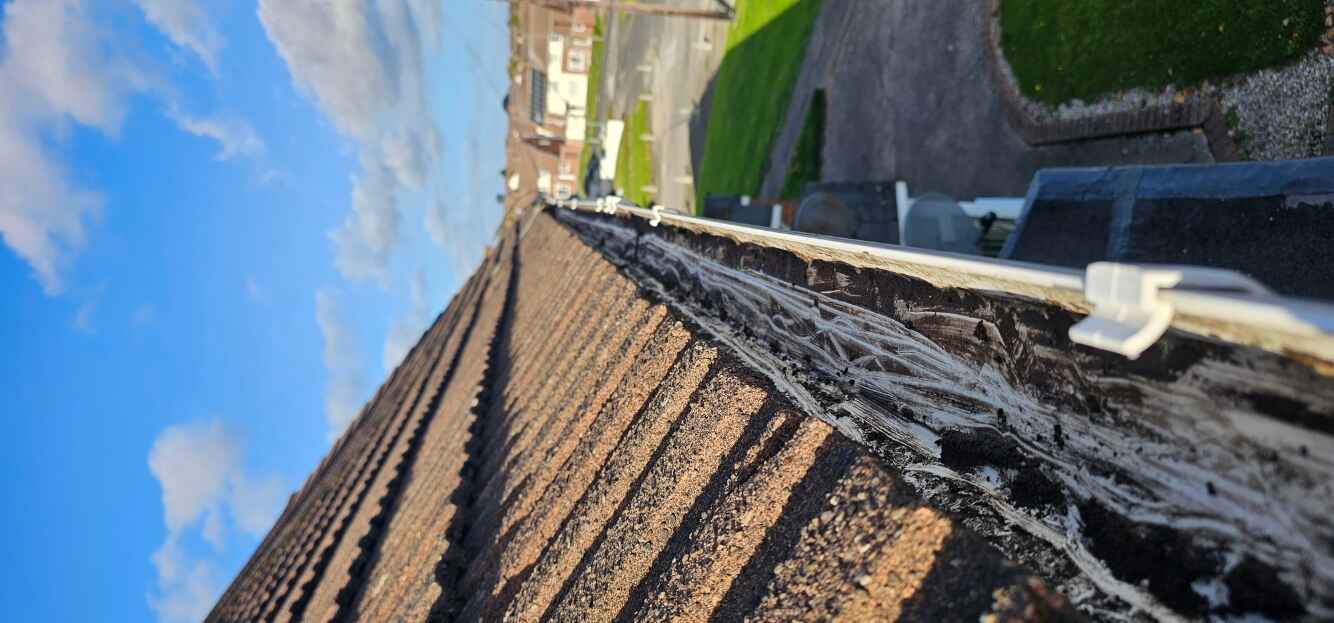
The problems caused by blocked gutters extend far beyond an annoying drip from the roofline. The damage is systematic, progressive, and often invisible until repair costs have skyrocketed. Here's the cascade of consequences that unfolds when gutters fail:
Brickwork Deterioration
Water constantly running down brickwork saturates porous masonry. In winter, this moisture freezes within the brick, expanding and causing the face to "pop off"—a process called spalling. Affected bricks must be cut out and replaced, often matching original Victorian or Edwardian bricks that cost significantly more than modern equivalents.
Internal Damp & Mould
Penetrating damp moves through cavity walls, appearing internally as dark patches, peeling wallpaper, and black mould. Beyond being unsightly, mould spores aggravate respiratory conditions and allergies. Remediation requires stripping walls back to brick, applying waterproof treatments, replastering, and redecorating—a job running into thousands.
Fascia & Soffit Rot
Overflowing water saturates the wooden fascia boards that support your guttering. Even if your fascias appear to be uPVC, there's often original timber behind them. Wet wood rots, losing structural integrity and allowing water into the roof space itself. At this stage, re-roofing the edge of the roof becomes necessary.
Foundation Erosion
If downpipes are blocked, or if water consistently pours over the gutter edge, it pools around your footings. Over years, this saturates and erodes the ground supporting your foundations. Subsidence cracks appearing in walls can often be traced back to drainage failures, including blocked guttering.
Pest Infestations
Stagnant water in blocked gutters attracts mosquitoes, while the accumulated debris provides nesting material for birds, wasps, and even squirrels. Once pests establish themselves at roofline level, they frequently find routes into loft spaces, creating secondary problems far more difficult to resolve.
Ice Dams & Winter Damage
In cold weather, standing water in gutters freezes solid. Ice is heavy—approximately 920kg per cubic metre. A gutter full of frozen water and debris can weigh 50kg+ per metre run, pulling brackets from fascias, warping plastic guttering, and causing entire sections to collapse.
8 Warning Signs Your Gutters Need Immediate Attention
You don't need to climb a ladder to identify gutter problems. Look for these telltale signs from ground level, and act promptly if you spot any:
Water Overflowing During Rain
The most obvious sign. If water cascades over the gutter edge rather than flowing to the downpipe, there's a blockage.
Visible Plant Growth
Grass, weeds, or even small plants sprouting from your gutters indicate significant debris accumulation.
Sagging Gutter Sections
Gutters bowing downward between brackets suggest heavy water or debris load pulling them down.
Green Staining on Walls
Algae growth on brickwork below the roofline indicates persistent water exposure from overflowing gutters.
Paint Peeling on Exterior
Persistently wet surfaces cause paint to bubble and peel, particularly around window frames near problem areas.
Pools of Water Near Foundations
Water pooling at ground level near walls after rain suggests blocked downpipes or incorrectly directed drainage.
Internal Damp Patches
Damp appearing on interior walls, especially in upstairs rooms near the roofline, often traces back to guttering issues.
Birds Frequently Visiting Gutters
If birds regularly land on or in your gutters, they may be finding food, water, or nesting material in accumulated debris.
How Professionals Clean Gutters Safely & Effectively
Modern gutter cleaning has evolved significantly beyond a man with a ladder and a trowel. At Operation Clean, we use professional-grade equipment designed for safety, efficiency, and thoroughness. Here's how we approach your property:
Professional Gutter Vacuum Technology
Our primary tool is a professional gutter vac system—a high-powered industrial vacuum with lightweight carbon-fibre poles that reach up to 12 metres (equivalent to a 4-storey building). This means we can clean the vast majority of residential and commercial guttering while remaining safely on the ground.
No Ladder Risk
Eliminates the danger of falls for both operators and the risk of ladder damage to your property.
On-Board Camera
Live camera footage shows exactly what's in your gutters—before and after. Complete transparency.
Powerful Suction
Removes everything—wet leaves, moss, mud, tennis balls—collected in a tank we take away.
For unusual situations—severely compacted blockages, damaged sections requiring repair, or historic buildings where manual inspection is essential—we have fully-trained operatives who work safely at height following HSE guidelines. We carry ladders on every van for these situations.
How Often Should You Clean Your Gutters?
There's no single answer that applies to every property. The ideal cleaning frequency depends on your specific circumstances. Here's a guide based on what we see across Teesside:
| Property Type | Recommended Frequency |
|---|---|
| Tree-Lined Properties | Every 6-12 Months |
| Standard Residential | Every 12-18 Months |
| Modern Estate Homes | Every 18-24 Months |
| Rural Properties | Every 6-12 Months |
| Commercial Buildings | Twice Yearly |
Pro Tip: Schedule After Autumn
The ideal time to clean gutters is late autumn (November–December), after the majority of leaves have fallen but before freezing winter weather sets in. This timing ensures gutters are clear for the wettest months of the year.
Professional Gutter Cleaning Across Teesside
At Operation Clean, we provide professional gutter clearing services throughout the Teesside region. Our vans are out daily, covering all TS postcodes. Whether you're in a Victorian terrace or a modern new-build, we have the equipment and expertise to handle your guttering safely and effectively.
We also serve Billingham, Thornaby, Yarm, Eaglescliffe, Norton, Ingleby Barwick, and all surrounding areas. Not sure if we cover you? Just drop your postcode into our contact form and we'll confirm.

DIY vs Professional Gutter Cleaning: The Honest Truth
We understand the temptation to clean gutters yourself—after all, how hard can it be? Before you raid the shed for the ladder, here's a balanced look at both approaches:
⚠️ DIY Gutter Cleaning
- ✗ Safety Risk: Falls from ladders cause 6,000+ serious injuries yearly in UK homes
- ✗ Property Damage: Ladders can dent gutters, crack tiles, scratch render
- ✗ Limited Reach: Cannot safely access gutters above extensions or conservatories
- ✗ Incomplete Job: Difficult to clear downpipes or check inside without camera
- ✗ Messy Disposal: Clearing gunk onto paths, patio, or into garden beds
✓ Professional Gutter Cleaning
- ✓ Ground-Level Safety: Modern equipment reaches 12m+ without ladders
- ✓ Fully Insured: Public liability covers any accidental damage (not your insurance)
- ✓ Complete Access: Reaches gutters above conservatories, narrow alleyways, all angles
- ✓ Camera Evidence: See inside gutters before and after for complete transparency
- ✓ Clean Disposal: All debris vacuumed into tanks and removed from your property
The cost difference is often smaller than people expect. A professional gutter clean for a typical 3-bedroom semi in Teesside costs £60-£90—the same as a restaurant meal for two. Compared to the cost of repairing damp damage, or the hospital visit after a ladder incident, it's a straightforward decision.
Complete Your Exterior Clean
Many of our customers combine gutter cleaning with other exterior maintenance tasks for maximum convenience and cost-effectiveness. While we're at your property with our equipment, it makes sense to tackle everything at once: