
Solar Panel Cleaning
in Billingham
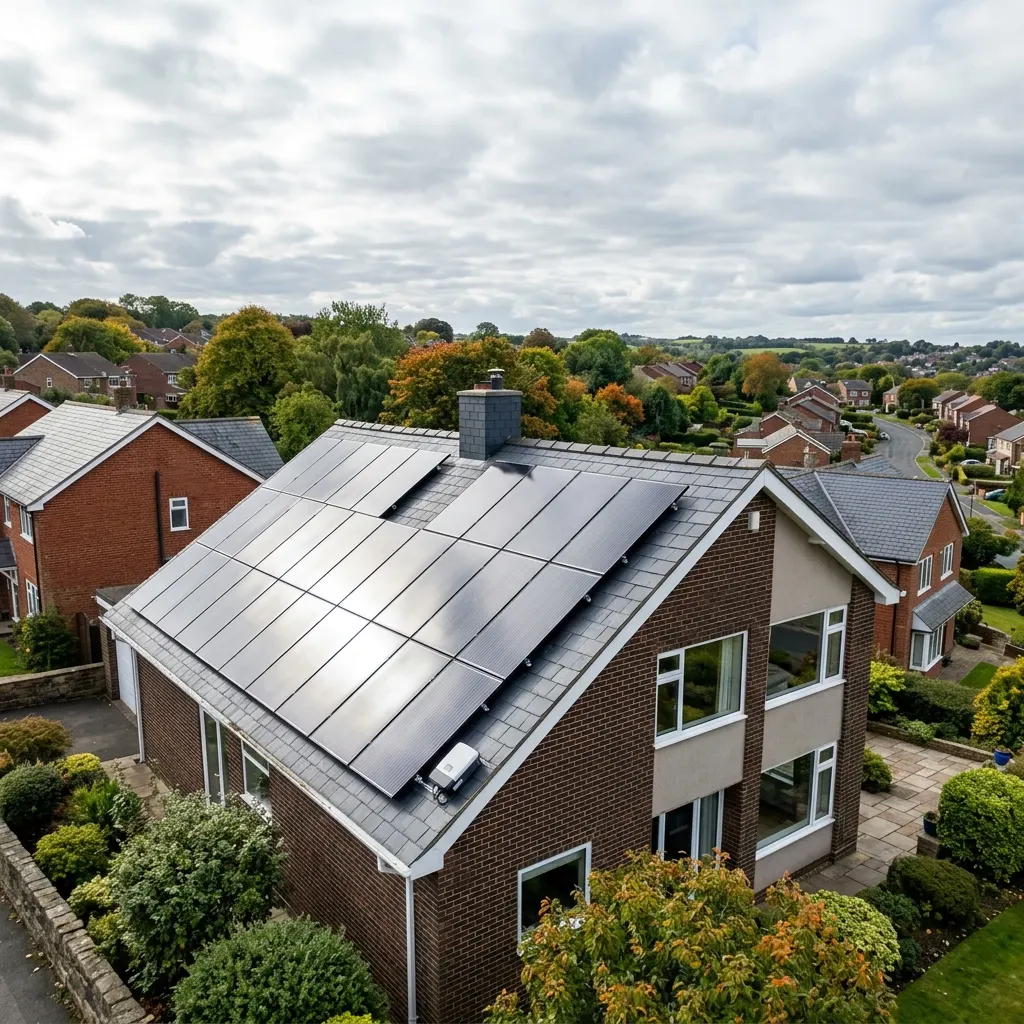
Billingham was built by ICI, and the chemical-plant carbon and marshland bird life it left behind still bake onto solar glass in a film that ordinary rain won't shift. We provide a specialised technical restoration service designed to protect your investment and maximise your financial yield, from Belasis to Wolviston Court.
What Billingham customers actually say
“Brilliant service with first class communication. Friendly and professional. Highly recommended!”
“Sam has been really professional and exceptional in his service with us. Very responsive throughout the contact we have had. Sam has a very personable and friendly manner and strives to produce his best work and is more than happy to remedy any areas of concerns and is very receptive to feedback. Thank you Sam for all your support and going the extra mile.”
“Excellent service, great communication and work carried out to a very high standard. Will definitely be using again and recommended to family and friends. House looks new again, thank you.”
Fifty Years Of Fallout, Still Settling.
Billingham was built by ICI, and although the works east of the town has since been divided, downsized and rebranded more times than most residents could name, it never stopped operating - and it never stopped venting. Panels in Belasis and Central Billingham, closest to the surviving process units, pick up a fine film that most owners never notice until their generation figures start slipping. Solar arrays are unusually exposed to this kind of contamination, because unlike a window or a gutter, a panel's entire output depends on the top few microns of glass staying genuinely clear. Add in the wildfowl drifting in off the Cowpen marshes and the everyday carbon thrown up by the A19, and left unaddressed this combination can throttle a system's yield by as much as a quarter.
"The fallout from the plants that built this town, and the marshland and farmland dust that surrounds it, isn't just a cosmetic nuisance—it settles into panel glass as a physical, measurable barrier that throttles operating voltage and quietly stretches the payback period on every array in Billingham."
Carbon Fallout From The Works
Homes closest to what remains of the old ICI site - particularly along Belasis and into Central Billingham - pick up a distinctly different kind of grime to a typical suburban street: an oily, carbon-rich residue vented from surviving process operations and stirred up by heavy A19 traffic. This film behaves nothing like dry dust. It is inherently greasy, bonds to solar glass at a near-molecular level, and settles into a stubborn grey mask that reflects sunlight away before it can ever be converted into direct current (DC).
Synthonia's Nitrogen Legacy
The Synthonia estate takes its name directly from the synthetic ammonia works that anchored Billingham's economy for most of the twentieth century, and decades of fertiliser and nitrogen-compound production have left a long tail of fine, nutrient-rich dust drifting across the town. Out towards Wolviston Court, that mixes with genuine agricultural dust blown in off the surrounding farmland at the edge of TS22. Wherever it settles into the microscopic pores of solar glass, a heavy morning dew turns it into a sticky, fertile film that ordinary rainfall does nothing to shift.
Wildfowl Off The Teesmouth Marshes
Cowpen backs onto the wetlands and mudflats of the wider Teesmouth marshes, and the wildfowl and gulls moving between the estuary and the town bring a noticeably higher volume of bird activity to roofs nearby. Droppings are highly acidic and completely opaque - first blocking all light to the cell underneath and creating a "permanent shadow," then slowly etching the protective glass casing, which leads to internal cell "hot spots" over time.
The Chemistry of 000 PPM Water.
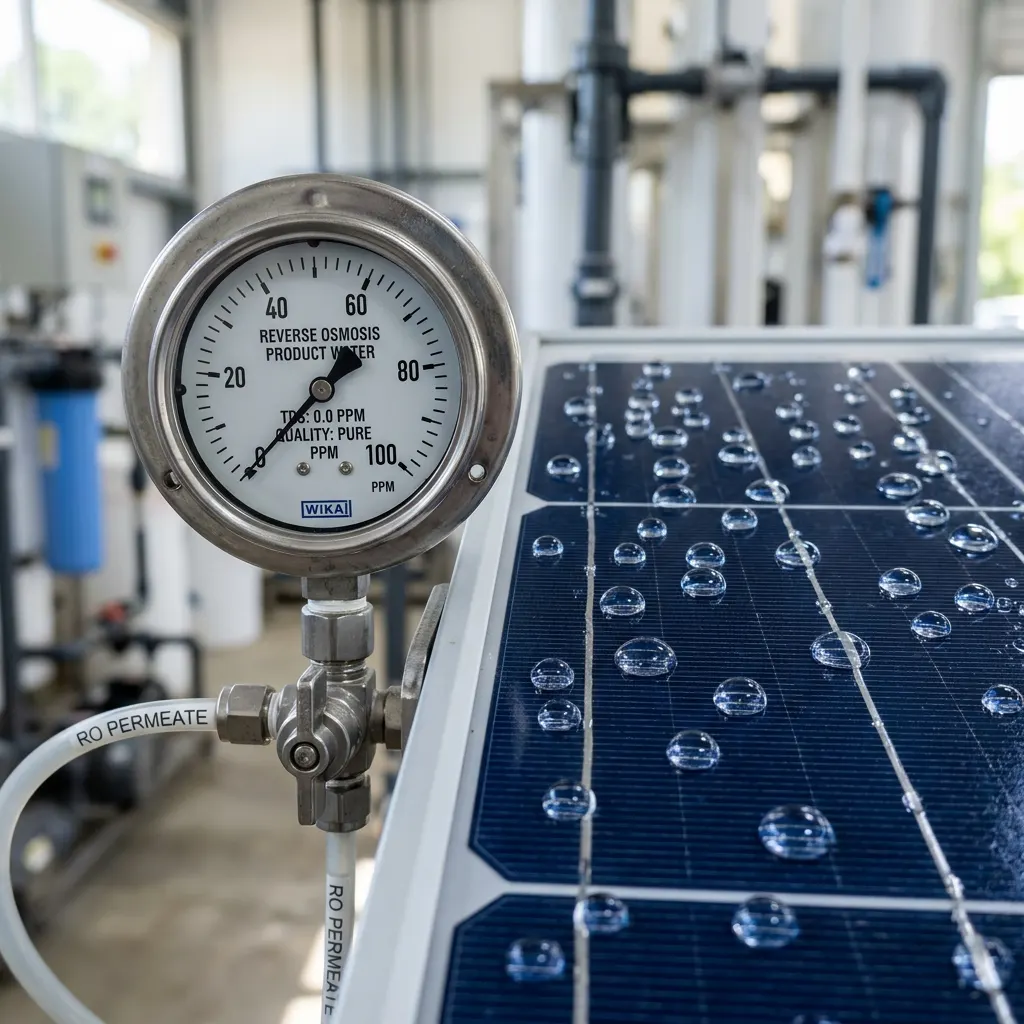
A standard brush and tap water were never going to shift what settles on a roof here. Given the specific mix of chemical-plant residue and hard local mains water we're working against in Billingham, we exclusively use high-flow, 100% deionised water filtered through a multi-stage Reverse Osmosis (RO) system to reach a flawless purity level of 000 Parts Per Million (PPM).
Molecular Hunger
Pure water is scientifically "unstable." Stripped entirely of its natural minerals - calcium, magnesium, potassium - it becomes a highly effective natural solvent, actively seeking to return to a balanced state. That means it molecularly binds to the dirt, industrial soot, and bird lime on your panels, lifting it purely through chemical attraction rather than force.
Zero-Residue Evaporation
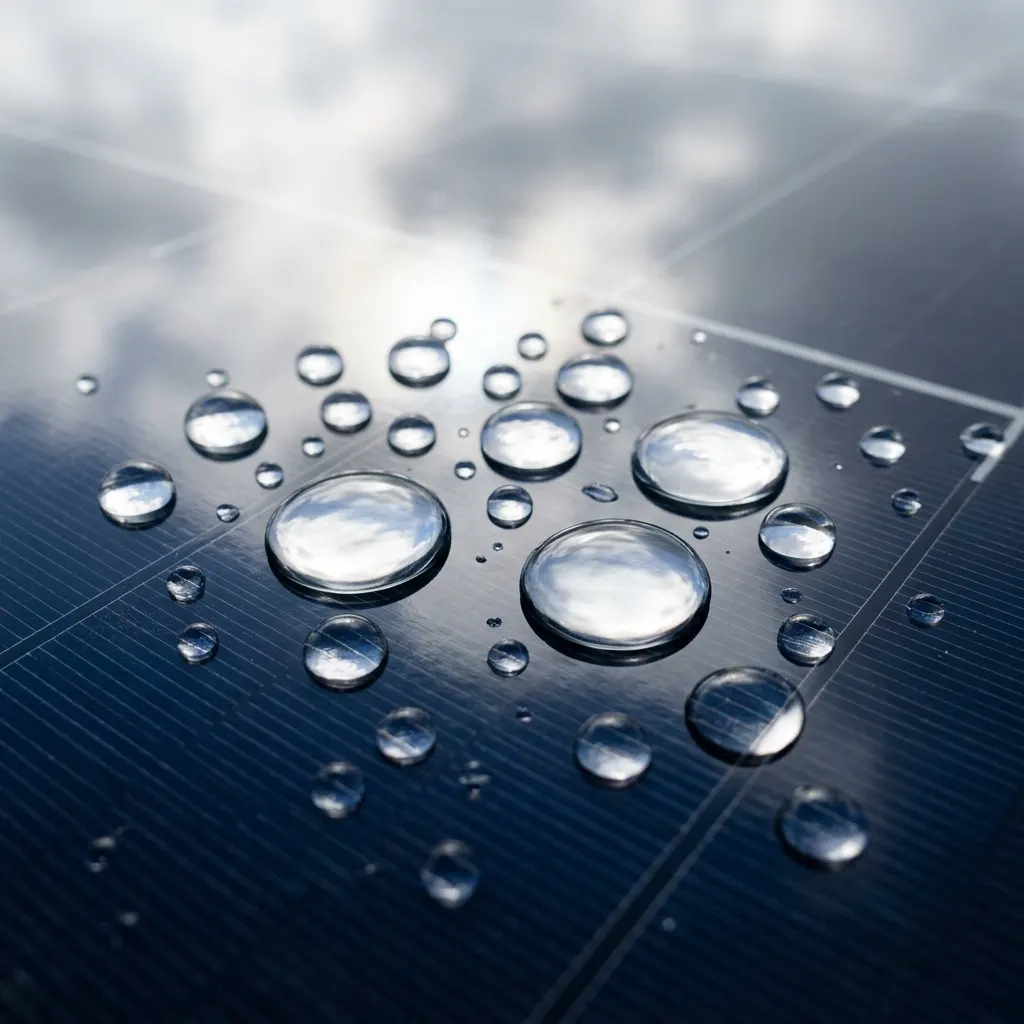
Ordinary tap water supplied across the Tees Valley carries significant levels of dissolved solids. Spray standard tap water onto a hot solar panel and the minerals left behind form white calcified spots - limescale - which act as tiny, disruptive lenses that scatter light away from the cells underneath. Our 000 PPM water simply evaporates, leaving nothing behind.
Protecting the Hydrophobic Layer
Most modern solar panels are factory-treated with a delicate hydrophobic or self-cleaning coating. Harsh chemicals, degreasers, or "standard" window cleaning soaps strip this layer away fast, and once it has gone the glass turns porous and attracts dirt even faster. Our pure-water method is chemically inert from start to finish and leaves that surface treatment fully intact.
The Science of Yield Restoration
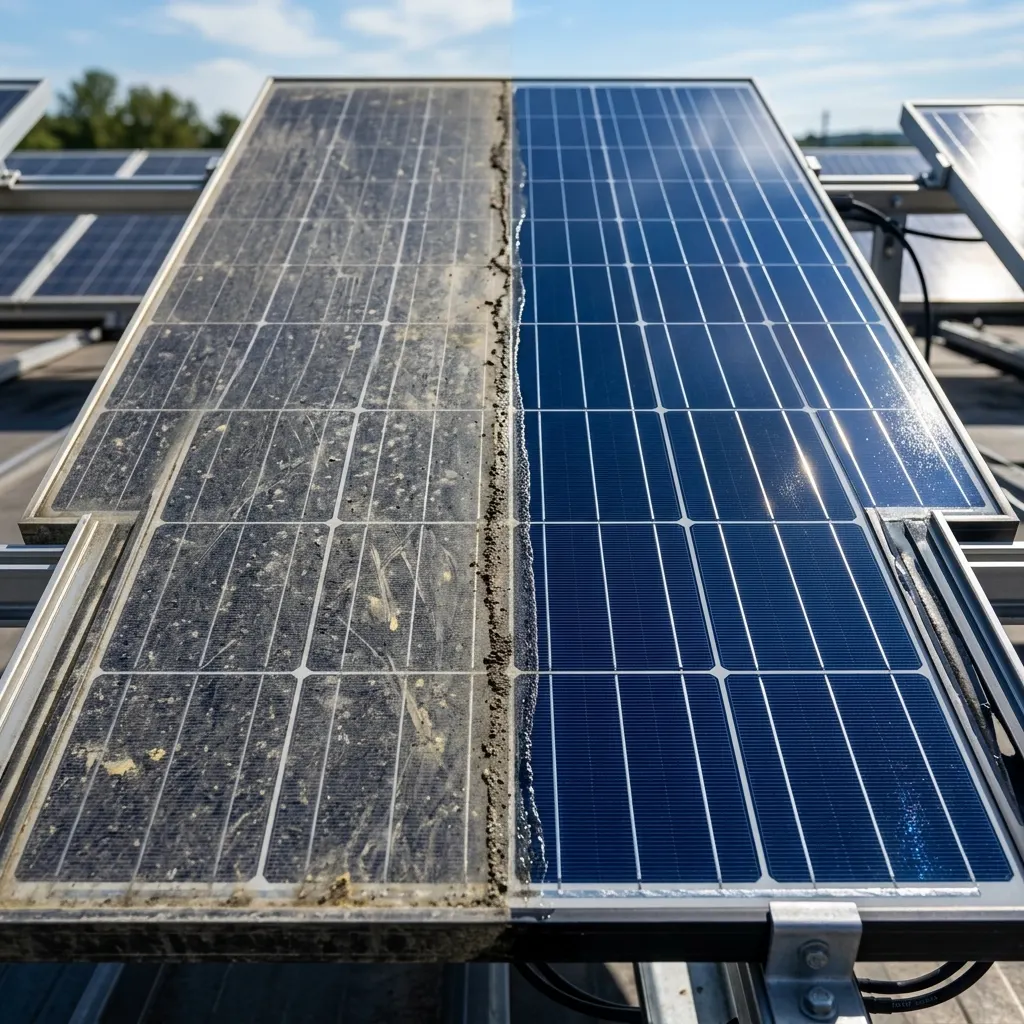
Solar cells need direct, unobstructed ultraviolet (UV) penetration to perform, and in Billingham that penetration is up against more than everyday urban grime. When chemical-plant residue, traffic film and organic matter bake onto the toughened glass, it physically throttles output - a process the industry technically calls "soiling". Plenty of homeowners here assume that regular rain off the North Sea keeps panels clear on its own. The physics disagrees.
No rainwater is entirely pure. Falling through Billingham's atmosphere - which still carries the fine chemical and particulate signature of the works that built this town - it collects its own microscopic pollutants along the way. That rain then evaporates on a sun-warmed panel and leaves a distinct "muddy" film behind. Over a typical 12 to 24-month period, this film steadily thickens and bakes onto the surface, creating a permanent, light-blocking barrier that routine rain does nothing whatsoever to shift.
Restoring a genuinely clean surface in Billingham isn't just about kerb appeal - it keeps the internal inverter logic running at its intended efficiency curve. Even a small, seemingly insignificant patch of shading from debris in the lower corner of one panel can trip the system's "bypass diodes," shutting down entire strings of the array until it clears.
Protecting the AR Coating
Modern photovoltaic modules feature a highly sensitive Anti-Reflective (AR) coating designed to capture more light during low-angle periods, such as sunrise and sunset. Standard household detergents or harsh chemicals degrade this coating over time and cause irreversible yield loss. Our process uses zero chemicals of any kind, relying entirely on the natural solvency and lifting power of deionised water.
Our 4-Step Technical Process
A domestic or commercial solar array is a live, high-voltage electrical system, and we treat it accordingly - strict safety protocols, manufacturer-approved methods, no shortcuts, no exceptions.
Ground-Level Thermal Assessment
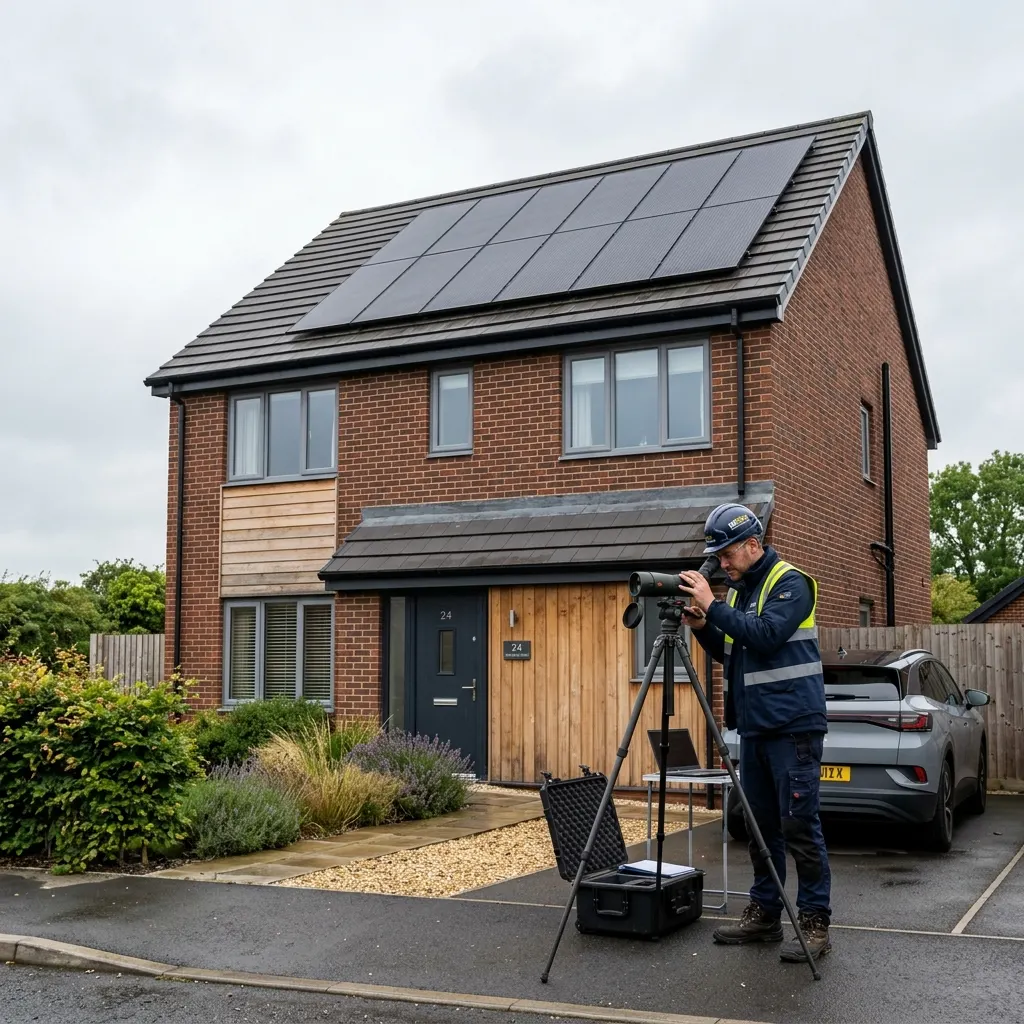
Before a single drop of water touches your roof, we run a full visual survey from the ground using high-reach optical equipment, checking for any pre-existing signs of physical damage such as "snail trails" (internal cell fractures) or cracked glass casing.
Recording this baseline condition first means we can pick the safest, most appropriate washing method for your specific array configuration, keeping your system protected from water ingress and short circuits throughout.
Pure Water Saturation & Pre-Soak
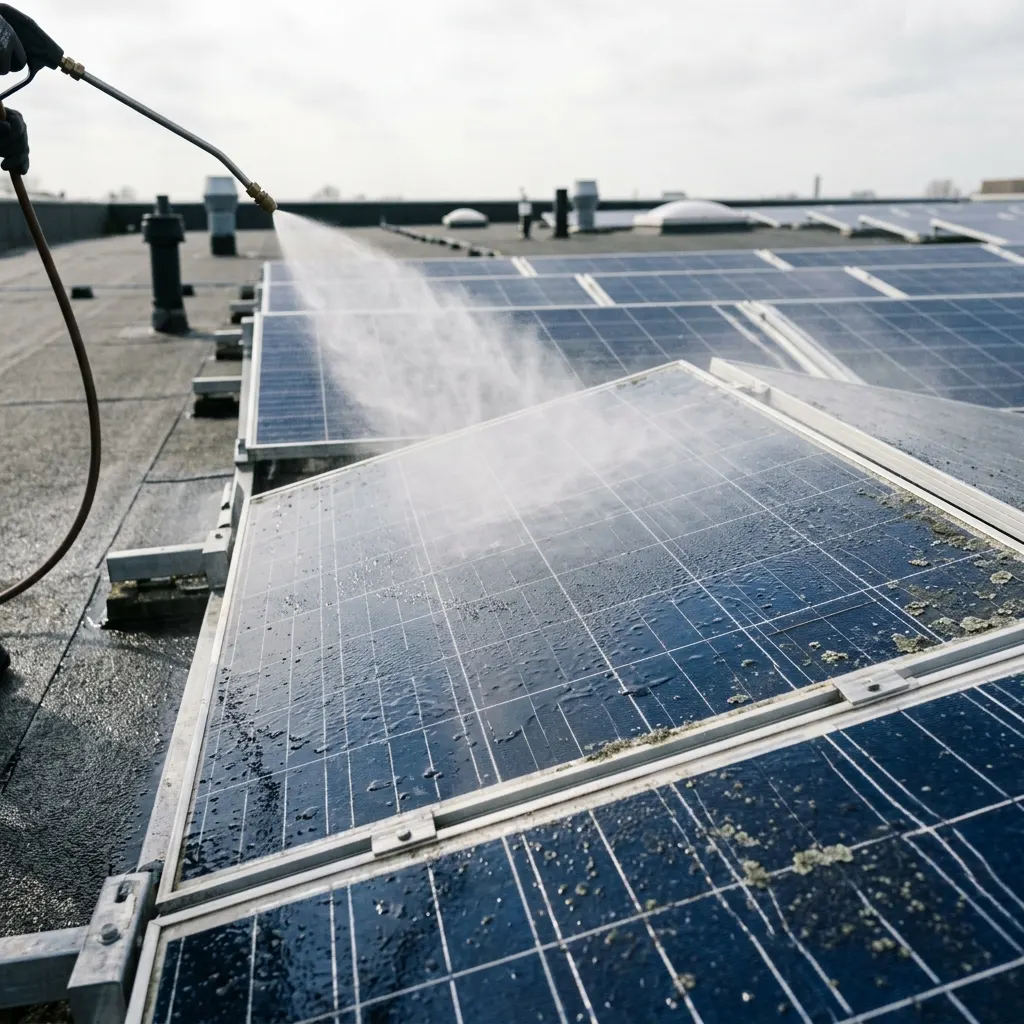
Lichen, moss, and heavy biological matter thrive in the microscopic gaps between the glass and the aluminium frames. On heavily soiled arrays across Belasis and Central Billingham, where chemical-plant carbon settles fastest, we start with a low-pressure, high-volume mist of pure deionised water to fully saturate this baked-on biomass before any agitation begins.
Pressure washers are never used - high-pressure jets can force their way past the fragile waterproof seals. Our gentle soaking mist rehydrates and softens the stubborn grip of baked-on grime and bird lime instead, preparing it for safe removal.
Precision Brush Agitation
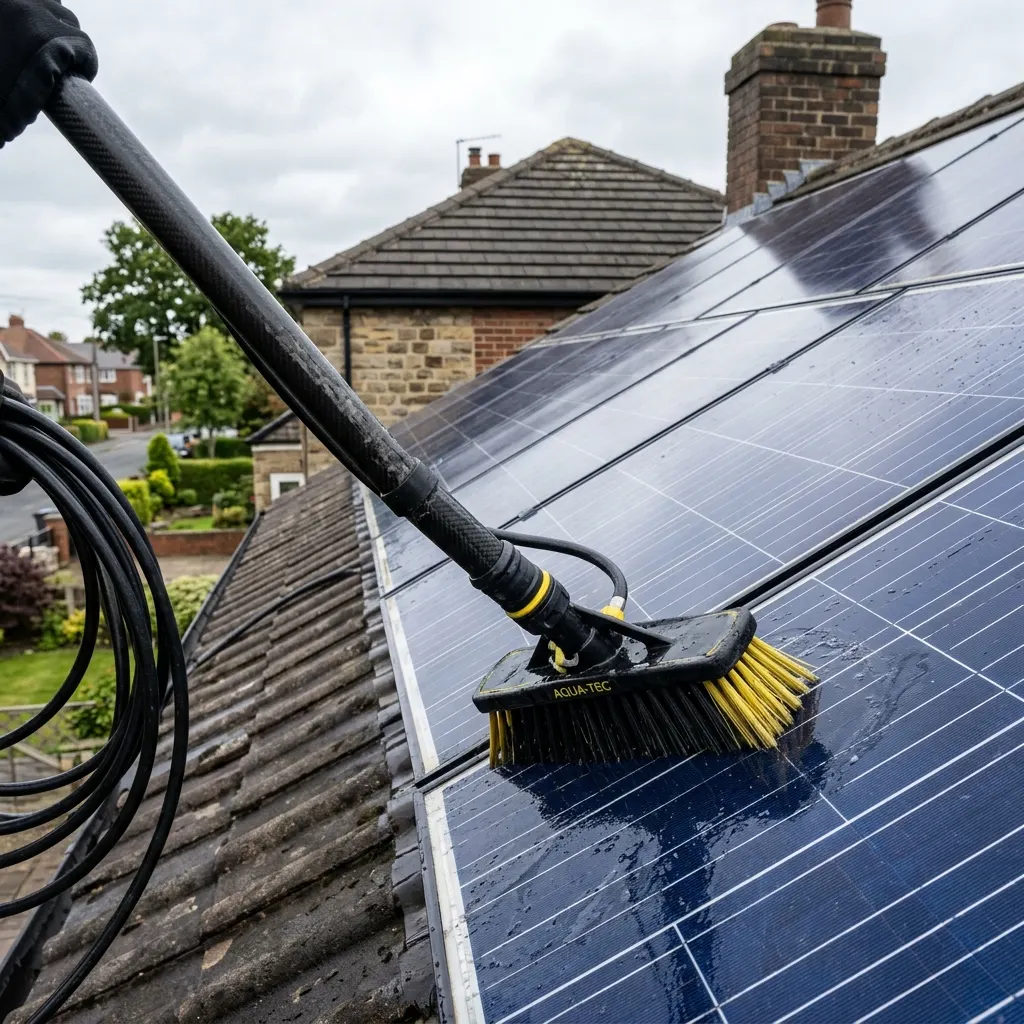
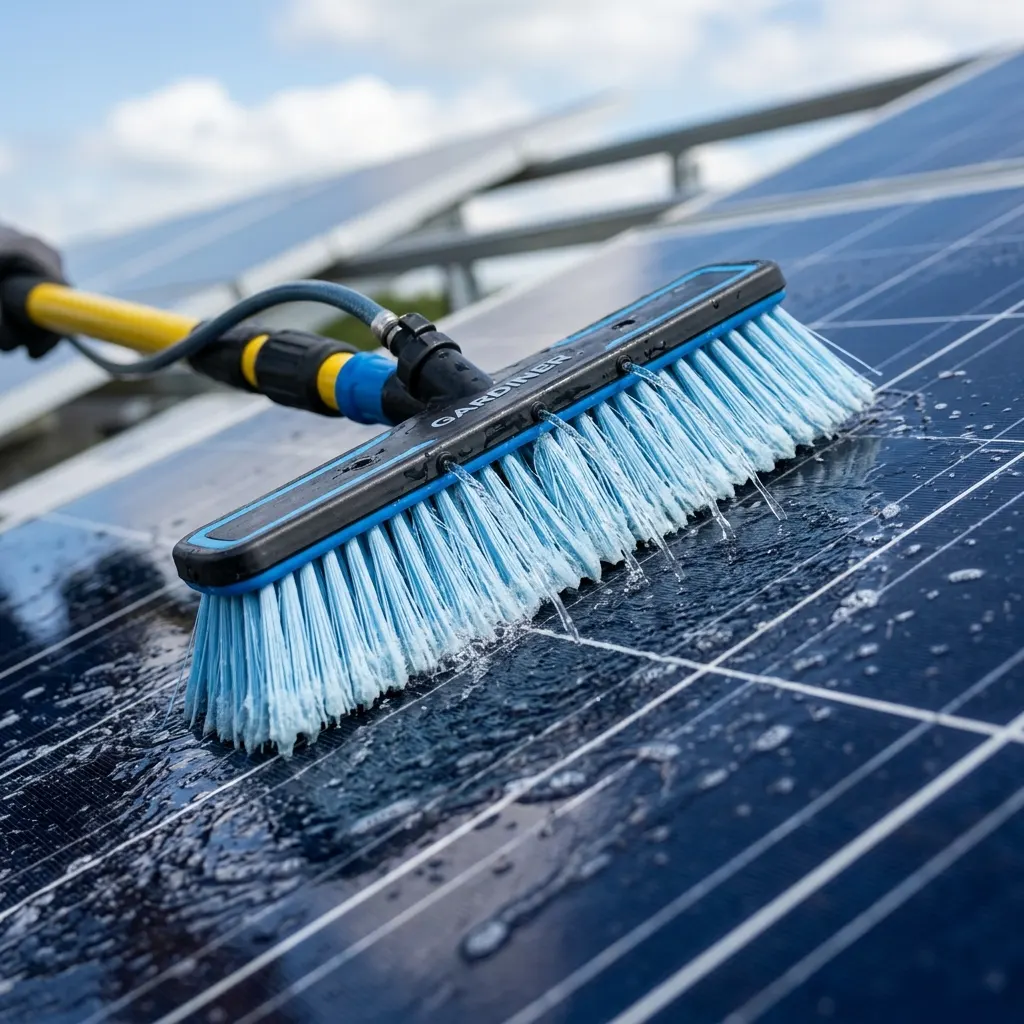
Once the debris has softened, specialised solar brushes with soft-flocked, non-scratch bristles are used to methodically work the surface. Technicians are trained never to lean downward weight or excessive pressure onto the fragile cells beneath.
Particular attention goes to the bottom edge of the aluminium frame, where dirt and algae build up to form a biological "dam". Clearing this blockage lets future rainwater drain freely, which stops stagnant pooling and further algae growth from taking hold.
The Final Zero-Residue Rinse
The process finishes with a heavy, high-flow rinse using 100% pure deionised water at exactly 000 PPM. At this purity level the water acts as a powerful liquid magnet for any remaining microscopic particles, carrying them away entirely.
What is left behind is "surgically clean" glass with zero streaks or mineral deposits, holding its maximum possible transparency and perfectly primed to capture every available photon of Billingham sunlight.
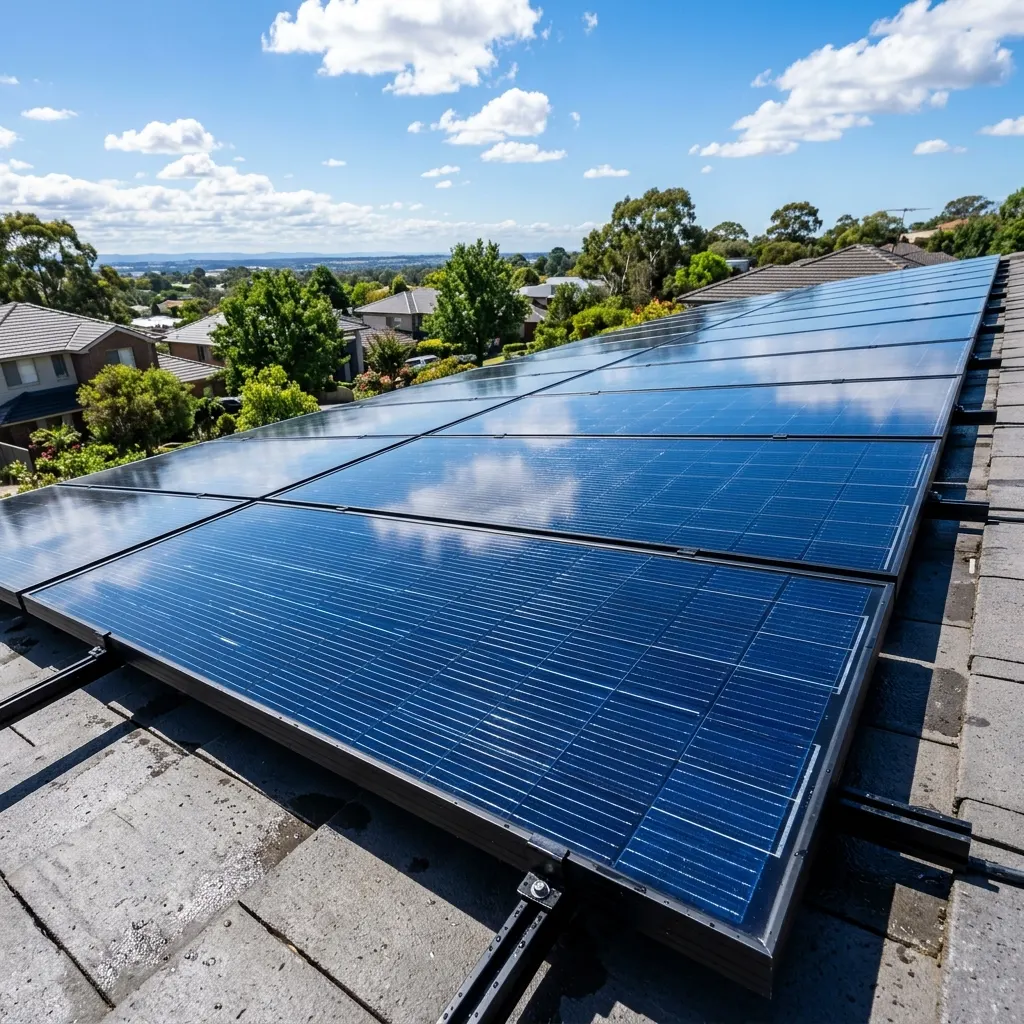
The ROI of Clean Solar Panels.
Given Billingham's specific fallout profile - chemical-plant carbon, nitrate dust and marshland bird activity all landing on the same roofs - keeping panels clean here is less about appearances and more a calculated financial decision. We look at what environmental soiling and electrical "throttling" actually cost a typical Billingham array.
In the North East, our limited daylight hours make energy efficiency paramount. A mere 5% drop in efficiency due to industrial soot might seem minor, but compounded over 365 days, it results in hundreds of lost kilowatt-hours.
"For most systems in Middlesbrough or Stockton, the generation gain from a professional clean typically offsets the service cost within 4–6 months."
The typical, measurable jump in electrical generation seen on a standard system that has been heavily soiled for 24 months.
Consistent maintenance stops the formation of permanent internal "hot spots" that can otherwise lead to complete panel failure.
Severe Soiling Throttling
In industrial corridors where soot accumulation is heavy, panels can reach a "Generation Plateau" where they lose a quarter of their potential output annually.
Protecting Your Warranty.
Manufacturer guidelines for maintaining modern solar panels are strict, and using the wrong cleaning method - standard window-cleaning chemicals, or simply walking on the modules - can and will permanently void your warranty.
Zero-Pressure Cleaning
We never use pressure washers. High-pressure water can force its way past the delicate waterproof seals, causing internal corrosion and irreparable short-circuits, whereas our low-pressure pure water delivery system is fully compliant with manufacturer standards.
Telescopic Ground-Access
Work is carried out almost entirely from the safety of the ground, using telescopic carbon-fibre poles. That means no human weight is ever placed on your roof tiles or the delicate solar modules themselves, which is what causes invisible "micro-cracks".
Deionised & Solvent-Free
Zero detergents, chemical degreasers, or standard soaps are used at any point. Most household agents leave a sticky residue that attracts more dust, whereas our deionised water system is the purest natural solvent available and leaves your Anti-Reflective coating fully intact.
Avoid "Panel Walking"
Some providers walk on panels to reach the centre of an array. Even if the glass doesn't crack, the weight creates "Micro-Cracks" in the internal silicon cells, resulting in immediate efficiency loss and a permanent fire hazard. Operation Clean operates 100% from the ground.
Knowing Billingham, Street By Street
From the legacy chemical corridor around Belasis to the quieter estates near Wolviston Court and Billingham Green, we know exactly which fallout profile is settling on your specific array across TS22 and TS23.
Central Billingham & Belasis
Arrays across Central Billingham and Belasis sit closest to what remains of the old ICI complex, so our visits here focus on stripping the oily, carbon-rich film vented from surviving process operations and from passing A19 traffic.
Synthonia & Billingham Green
The Synthonia estate and the older housing around Billingham Green carry decades of chemical-plant history in the air as much as the brickwork, so we pay particular attention to the fine nitrate and ammonia-linked dust that has settled there since the works first opened.
Cowpen & The Marsh Fringe
Properties around Cowpen sit close to the wetlands and mudflats of the wider Teesmouth marshes, which brings a noticeably higher volume of wildfowl and gull activity - and the acidic fouling that goes with it - to nearby roofs.
Wolviston Court & The Rural Fringe
Larger detached homes around Wolviston Court back onto open farmland at the edge of TS22, where seasonal harvest dust settles into panel glass alongside the general chemical fallout, and specialist long-reach equipment is needed to clear both safely.
Window Cleaning FAQs
Common questions about the pure water process, expertly answered.
How much does Solar Panel Cleaning in Billingham cost?
Do I need to turn my solar system off during the clean?
How often should panels in Billingham be cleaned?
Will you walk on my roof or lean heavily on the panels?
Does the clean actually pay for itself?
What exactly is 000 PPM water, and why does it matter here?
Can't I just wait for the rain to clean them naturally?
More Services
We Offer in Billingham
From ground level to roofline — Operation Clean protects every inch of your property's exterior.

Window Cleaning in Billingham
Heated pure water & TFR degreasing for a long-lasting, streak-free finish on every pane.

Gutter Clearing in Billingham
3,000W industrial vacuum extraction with HD camera verification — entirely from the ground.

Soffit & Fascia Cleaning in Billingham
Bio-degradable UPVC roofline restoration returning your plastics to brilliant, factory-white.

Conservatory Cleaning in Billingham
Full structural valet for glass and polycarbonate roofs — inside, outside, and every valley.

Commercial Cleaning in Billingham
SafeContractor approved B2B exterior maintenance with full RAMS and £5M+ cover.
Roof Soft Washing in Billingham
HSE-approved dry-scrape and 12v low-pressure biocide treatment — moss removal without damaging your tiles.

Solar Panel Bird Proofing in Billingham
Non-drill mesh permanently seals the gap under your array from nesting birds.
Areas We Provide This Service
Book Your Billingham Solar Scrub.
Select the number of panels you have and see a completely transparent price on screen immediately. No salesmen. No pressure.
No-Obligation Pricing
We confirm the right details before pricing.
Fast Response
We usually reply within the hour — no waiting on hold.