Solar Panel Cleaning
in the North East
Every drop of grime blocking your panels is money off your bottom line. We provide a technical restoration service designed to protect your investment and maximise your financial yield in the North East.
What customers actually say
“Brilliant service with first class communication. Friendly and professional. Highly recommended!”
“Sam has been really professional and exceptional in his service with us. Very responsive throughout the contact we have had. Sam has a very personable and friendly manner and strives to produce his best work and is more than happy to remedy any areas of concerns and is very receptive to feedback. Thank you Sam for all your support and going the extra mile.”
“Excellent service, great communication and work carried out to a very high standard. Will definitely be using again and recommended to family and friends. House looks new again, thank you.”
Why Your Efficiency Drops in the North.
The North East of England offers a unique environment for solar energy. While modern photovoltaic (PV) cells are incredibly efficient at capturing UV light even on overcast days in Middlesbrough or Newcastle, they are sensitive to surface interference. In our region, we face a "triple threat" of environmental contaminants that can drop your yield by up to 25% if left unmanaged.
"Industrial soot from Teesside or agricultural dust from the Tees Valley isn't just dirt—it's a physical barrier that throttles your system's operational voltage and extends your payback period by years."
Industrial Carbon & Traffic Film
Properties near the A19, A66, or the Teesside industrial corridor experience a specific type of airborne contaminant: oily carbon soot. Unlike standard dust, this "traffic film" bonds to the glass at a molecular level, creating a grey translucent mask that reflects sunlight away from the silicon cells before it can be converted into current.
Agricultural Dust & Nitrates
In rural and semi-rural areas like Yarm, Norton, and Northallerton, seasonal harvesting creates a thick, "crusty" layer of organic dust. When mixed with morning dew, this dust creates a nitrate-rich sludge that encourages the rapid growth of lichen and algae in the gaps between the panel and the frame.
Avian Fouling (The Seagull Factor)
Coastal areas and urban centres across the North East deal with high levels of bird activity. Seagull and pigeon droppings are highly acidic and opaque. Not only do they block 100% of light to the cell (creating a "permanent shadow"), but if left to bake in the sun, the acid can etch the glass and cause internal cell "hot spots".
Areas We Provide This Service
The Chemistry of 000 PPM Water.
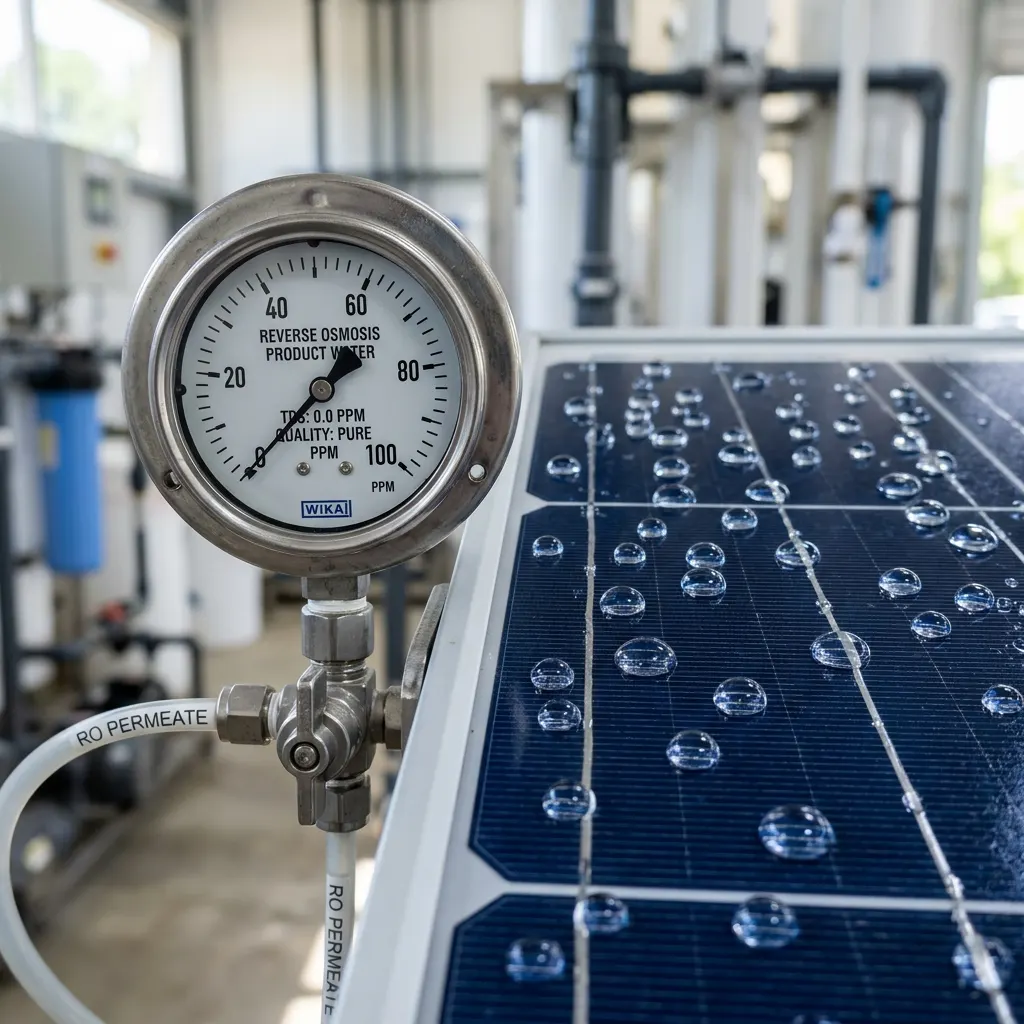
Professional solar restoration requires more than just "water and a brush". We use high-flow, 100% deionised water that has been filtered through a multi-stage Reverse Osmosis (RO) system to reach a purity level of 000 Parts Per Million (PPM).
Molecular Hunger
Pure water is naturally "unstable". Because it has been stripped of all minerals (calcium, magnesium, potassium), it becomes a powerful solvent. It actively seeks out and molecularly binds to dirt, soot, and bird lime, lifting them from the glass surface without the need for aggressive scrubbing or harmful detergents.
Zero-Residue Evaporation
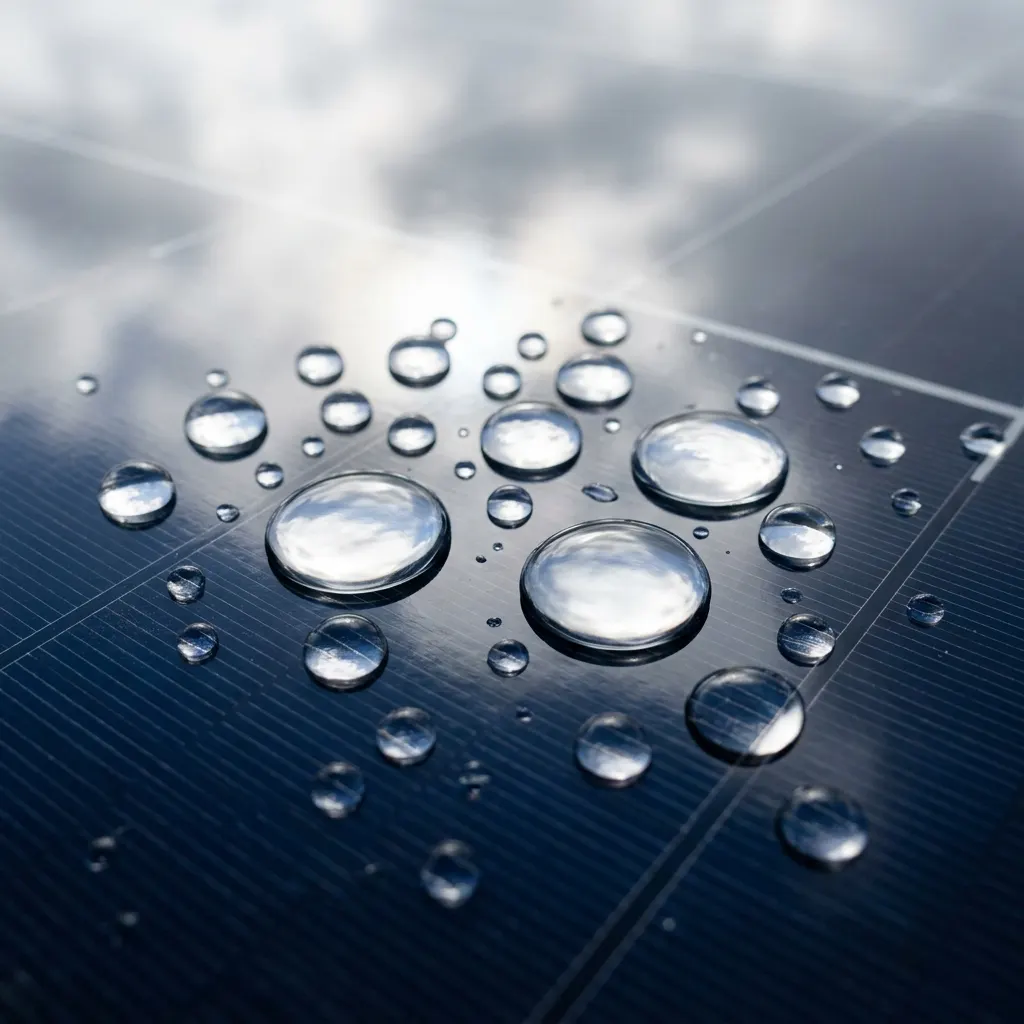
Ordinary tap water contains high levels of dissolved solids. If you spray tap water on a solar panel, it will leave behind white calcified spots (limescale) as it dries. These spots act as tiny lenses that refract light away from the cells. Our 000 PPM water evaporates completely, leaving a surgically clean finish.
Protecting the Hydrophobic Layer
Many modern solar panels are treated with a hydrophobic or self-cleaning coating. Harsh chemicals or "standard" window cleaning soaps can strip this layer, making the panels get dirtier, faster. Our pure-water method is 100% safe and preserves the manufacturer's original surface treatment.
The Science of Yield Restoration
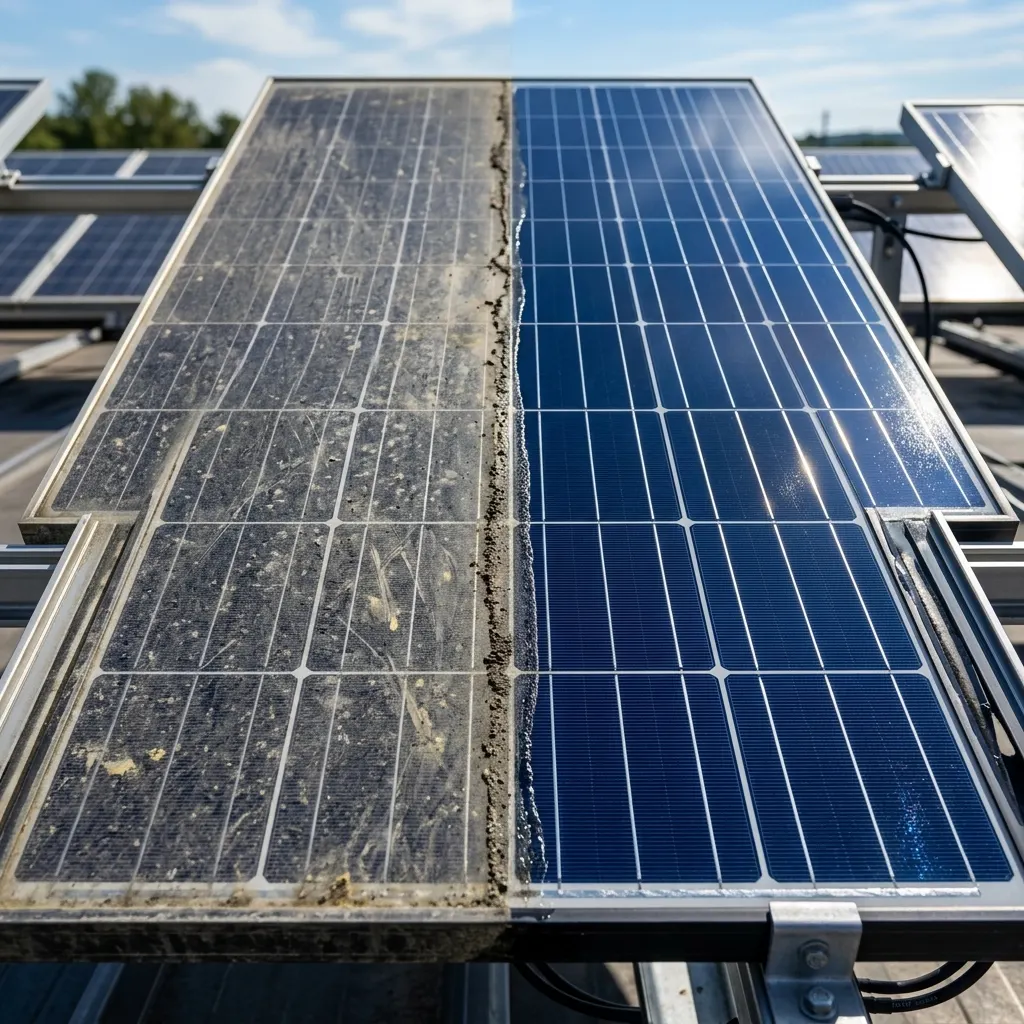
Solar panels rely on direct UV penetration. When organic matter bakes onto the glass, it physically throttles energy production—a process technically known as "soiling". Many homeowners in Stockton and Darlington believe that North East rain is enough to keep their panels clean. Unfortunately, the opposite is true.
Rainwater often carries its own atmospheric pollutants. When it evaporates on a warm panel, it leaves behind a "muddy" film. Over 12–24 months, this film thickens, creating a permanent barrier. Professional cleaning ensures your cells have an unobstructed view of the sky, restoring your system to its peak operational voltage and maximising your energy independence.
By maintaining a clean surface, you aren't just making the panels look better—you are ensuring that the internal inverter logic can operate at its peak efficiency curve. Even a small amount of corner shading from debris can trigger "bypass diodes," which shut down entire portions of your array to protect the circuit, resulting in massive generation drops.
Protecting the AR Coating
Modern panels feature a delicate Anti-Reflective (AR) coating designed to capture more light at low angles (sunrise and sunset). Household detergents or harsh chemicals aggressively degrade this coating over time. Operation Clean uses zero chemicals, relying entirely on the natural solvency of deionised water to lift dirt safely without scratching the surface.
Our 4-Step Technical Process
A solar array is a high-voltage electrical system. We treat it with the respect it deserves, following strict safety protocols and manufacturer-approved cleaning methods.
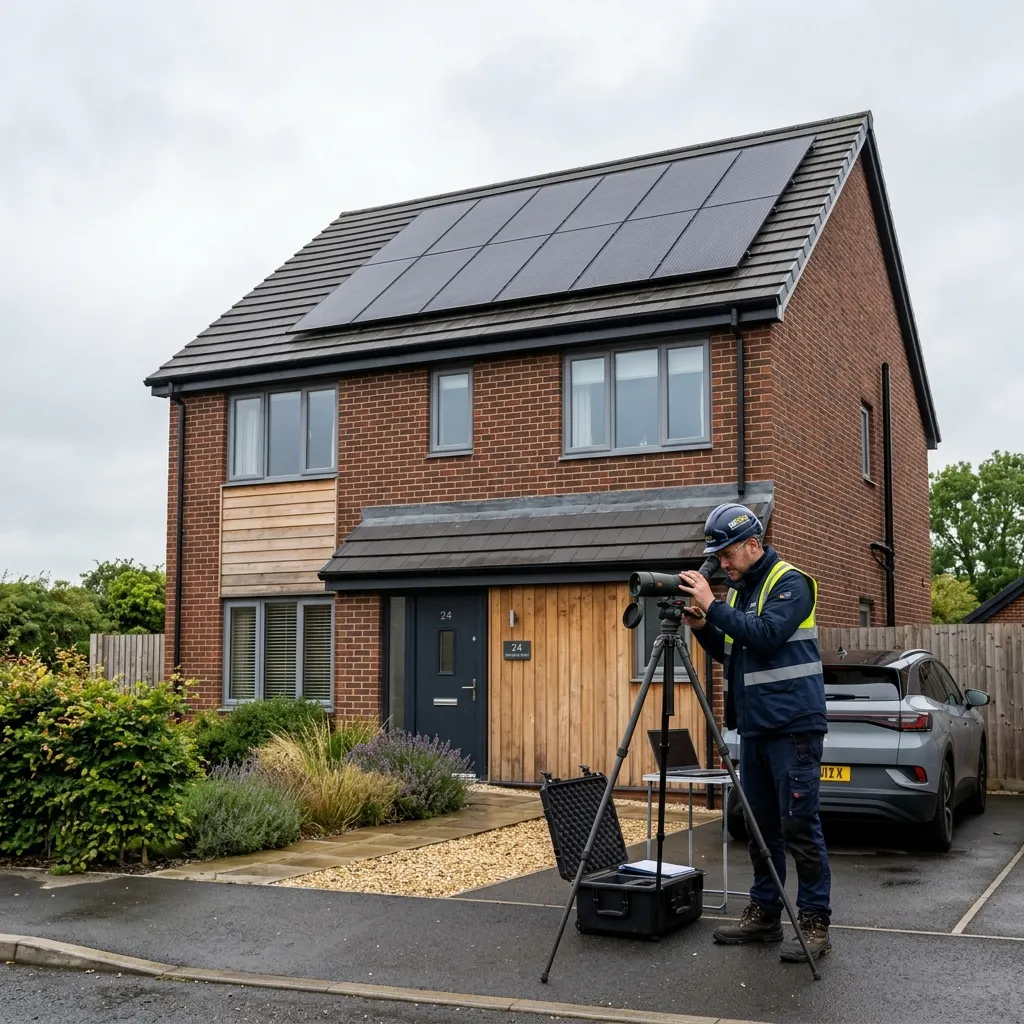
Ground-Level Thermal Assessment
Before we begin, we conduct a visual survey from the ground using high-reach optics. We look for pre-existing damage, such as "snail trails" (signs of internal cell failure) or cracked glass that could lead to water ingress.
Documenting the pre-existing state ensures we deploy the absolute safest washing method tailored to your specific array configuration, whether it's on a domestic roof or a ground-mounted commercial system.
Pure Water Saturation & Pre-Soak
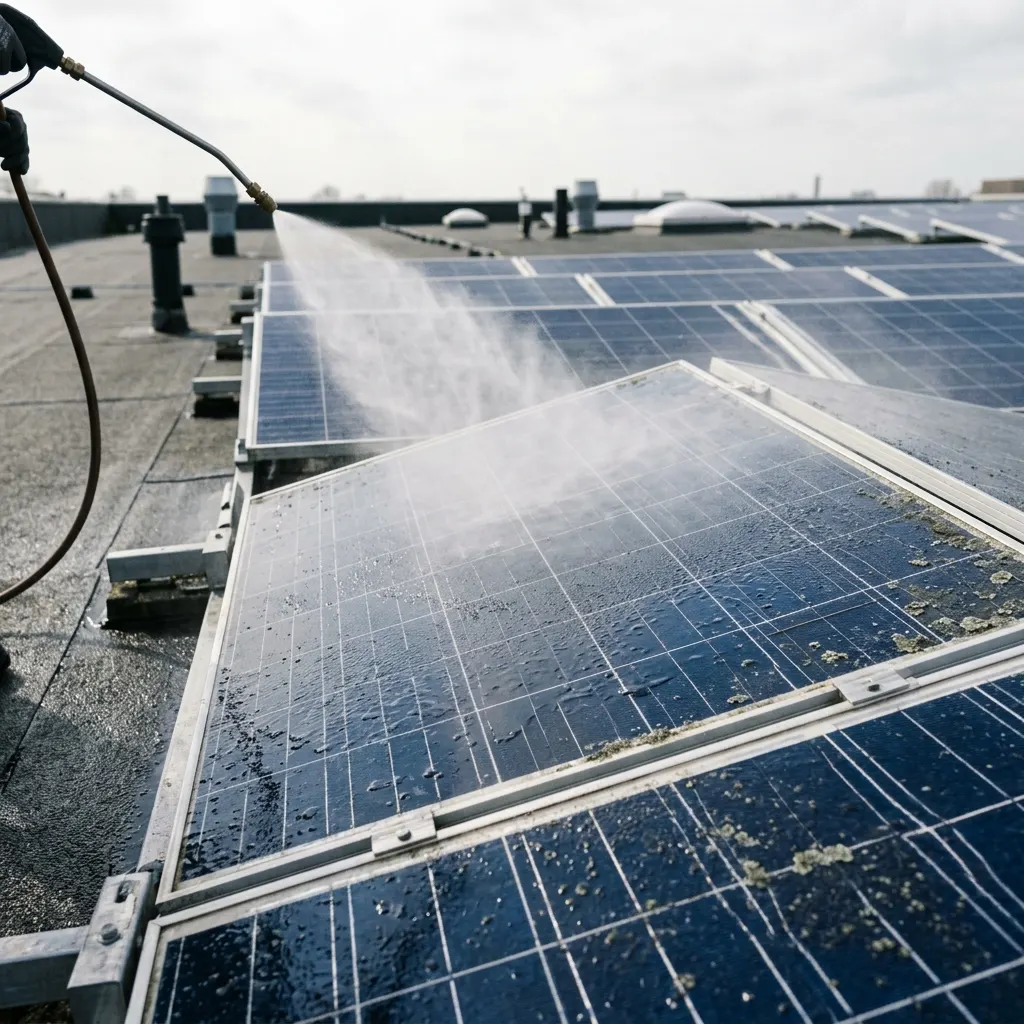
Lichen and moss thrive in the gaps between panels. On heavily soiled arrays, we apply a low-pressure, high-volume mist of pure water to saturate the biomass. Unlike pressure washing (which can destroy seals), our mist is gentle.
This rehydrates and softens the grip of baked-on grime and bird lime, allowing it to be rinsed away during the next phase without the need for forceful or abrasive scraping that could scratch the glass.
Precision Brush Agitation
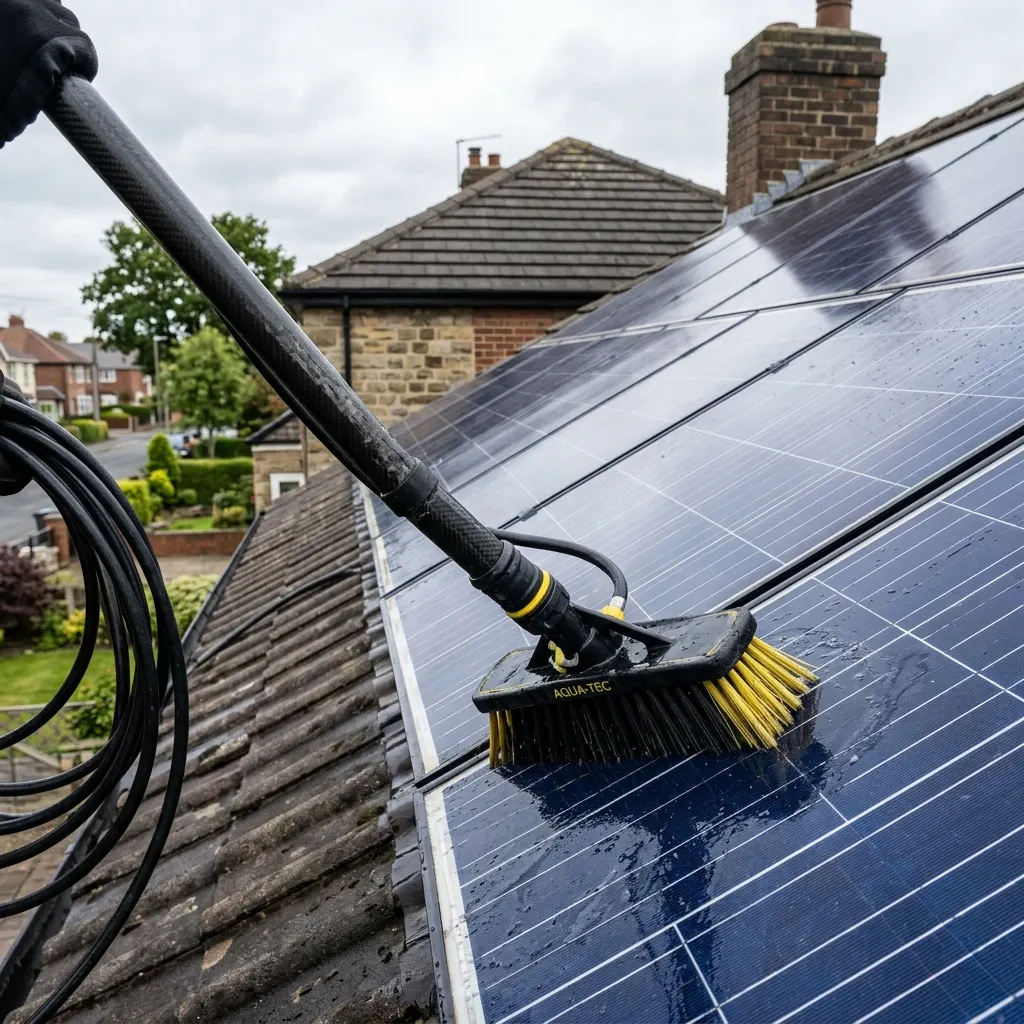
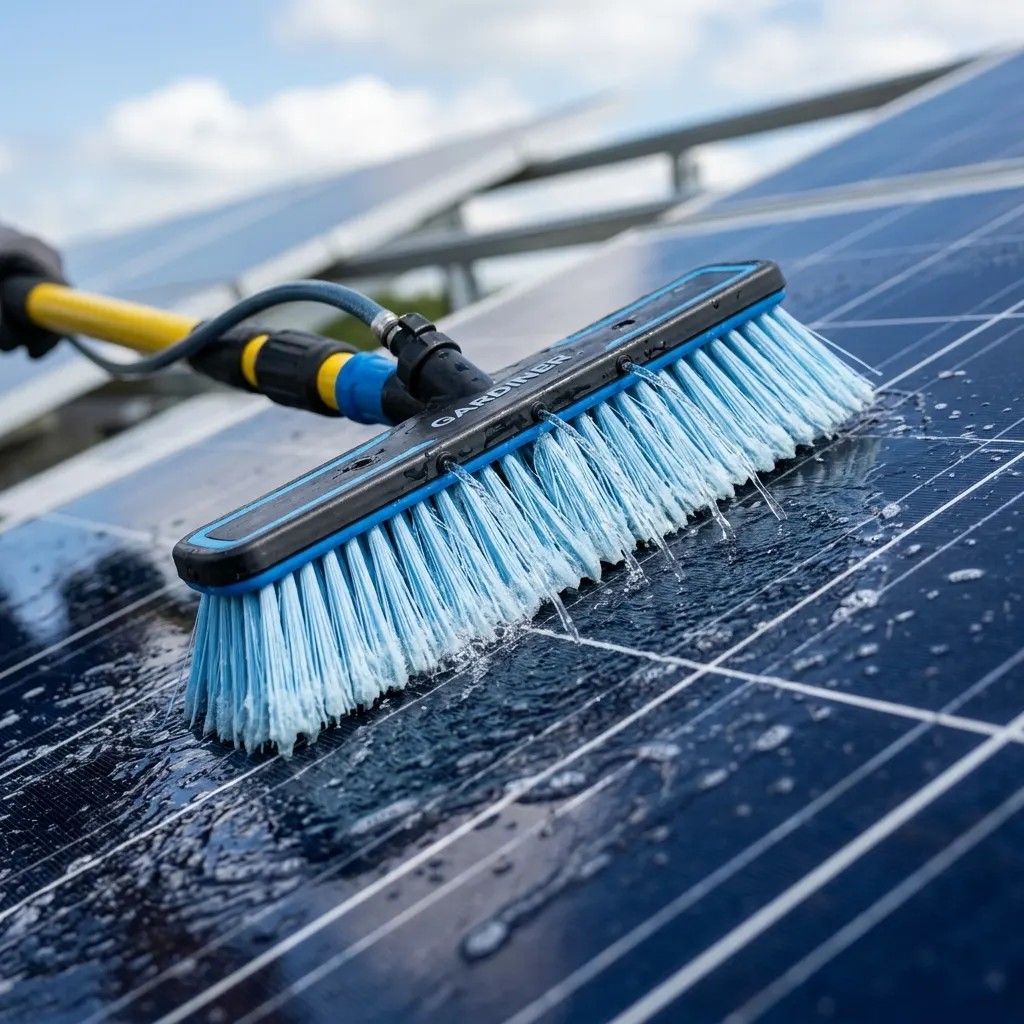
Using specialized solar brushes with soft-flocked bristles, we methodically scrub each panel. We never apply downward weight or pressure to the cells. Our brushes are designed specifically for PV glass to prevent micro-scratches.
We pay particular attention to the bottom edge of the frame, where dirt accumulated can create a "dam". By clearing this, we ensure water can drain freely, preventing future algae growth and "hot-spot" cell failure.
The Final Zero-Residue Rinse
We finish with a high-flow rinse of 100% deionised water at 000 PPM. Because the water is "starved" of minerals, it acts as a magnet for any remaining microscopic particles, rinsing them away completely.
Your panels are left "surgically clean," with zero streaks or mineral deposits. This allows the glass to reach its maximum transparency, ready to capture every available photon of North East sunlight.
The ROI of Clean Solar Panels.
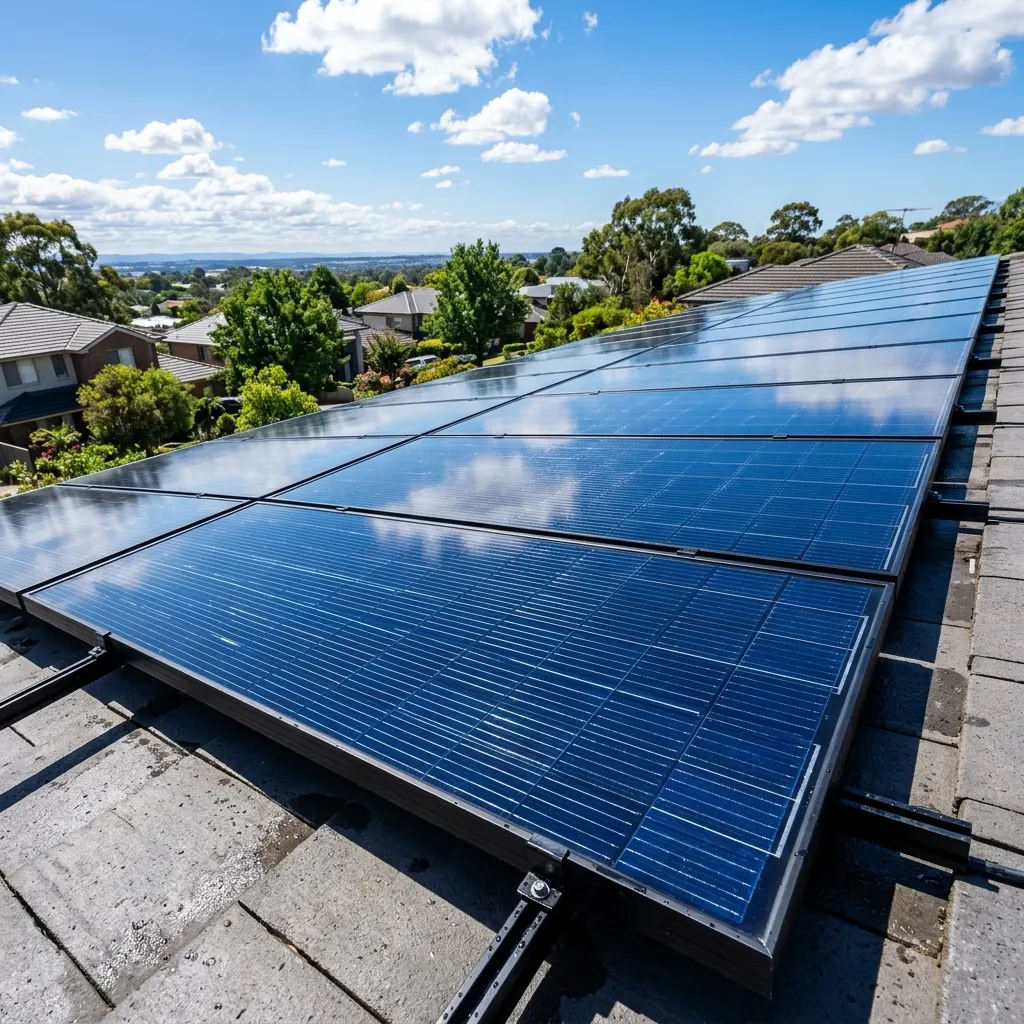
Professional cleaning isn't just about aesthetics—it's an investment strategy for your home. We analyze the fiscal impact of environmental soiling and the resulting "throttling" of your solar output over time.
In the North East, our limited daylight hours make energy efficiency paramount. A mere 5% drop in efficiency due to industrial soot might seem minor, but compounded over 365 days, it results in hundreds of lost kilowatt-hours.
"For most systems in Middlesbrough or Stockton, the generation gain from a professional clean typically offsets the service cost within 4–6 months."
The typical generation jump seen on a 24-month soiled system after a professional 000 PPM pure water clean.
Regular maintenance prevents the formation of permanent "hot spots" that can lead to premature cell failure and fire risks.
Severe Soiling Throttling
In industrial corridors where soot accumulation is heavy, panels can reach a "Generation Plateau" where they lose a quarter of their potential output annually.
Protecting Your Warranty.
Manufacturer guidelines for solar panel maintenance are strict. Incorrect cleaning methods—like using standard chemicals or walking on the modules—can permanently void your warranty and damage your cells.
Zero-Pressure Cleaning
We never use pressure washers. High-pressure water can force its way past the waterproof seals of the panel casing, causing internal corrosion and short-circuits. Our low-pressure pure water system is 100% compliant with manufacturer standards.
Telescopic Ground-Access
We operate 100% from the safety of the ground using telescopic carbon-fibre poles. This ensures no weight is ever put on your roof tiles or the delicate solar modules themselves, preventing costly structural damage.
Deionised Solvent-Free
We use zero detergents or soaps. Most household soaps leave a sticky film that actually attracts more dust. Our deionised water system is the "purest" solvent available, ensuring your AR coating remains perfectly intact.
Avoid "Panel Walking"
Some providers walk on panels to reach the centre of an array. Even if the glass doesn't crack, the weight creates "Micro-Cracks" in the internal silicon cells, resulting in immediate efficiency loss and a permanent fire hazard. Operation Clean operates 100% from the ground.
Serving the North East
From the industrial corridors of Teesside to the leafier estates of Yarm, we understand the hyper-local environmental factors that affect your solar yield. Our teams are based in Stockton-on-Tees and cover the entire region.
Stockton & Ingleby Barwick
We service hundreds of arrays in Ingleby and Stockton, focusing on removing the traffic film and carbon fallout from the nearby A19 corridor and industrial hubs.
Wynyard & Wolviston
Catering to larger, high-output residential systems that require long-reach equipment, architectural care, and meticulous documentation of panel condition.
Yarm & Eaglescliffe
Managing the unique challenges of lichen, moss, and organic canopy growth common in these greener areas, using specialised bio-saturating pre-soaks.
Middlesbrough & Teesside
Tackling the specific soot deposits and salt spray that are common in urban coastal environments, ensuring maximum light penetration for every cell.
Frequently Asked Questions
Common questions, expertly answered.
Do I need to turn my solar system off during the clean?
How often should I have my panels professionally cleaned?
Will you walk on my roof or lean on the panels?
The ROI: Does the clean really pay for itself?
What is 000 PPM water, and why does it matter?
Can’t I just wait for the North East rain to clean them?
Book Your Solar Scrub.
Select the number of panels you have and see a completely transparent price on screen immediately. No salesmen. No pressure.
No-Obligation Pricing
We confirm the right details before pricing.
Fast Response
We usually reply within the hour — no waiting on hold.