
Solar Panel Cleaning
in Yarm
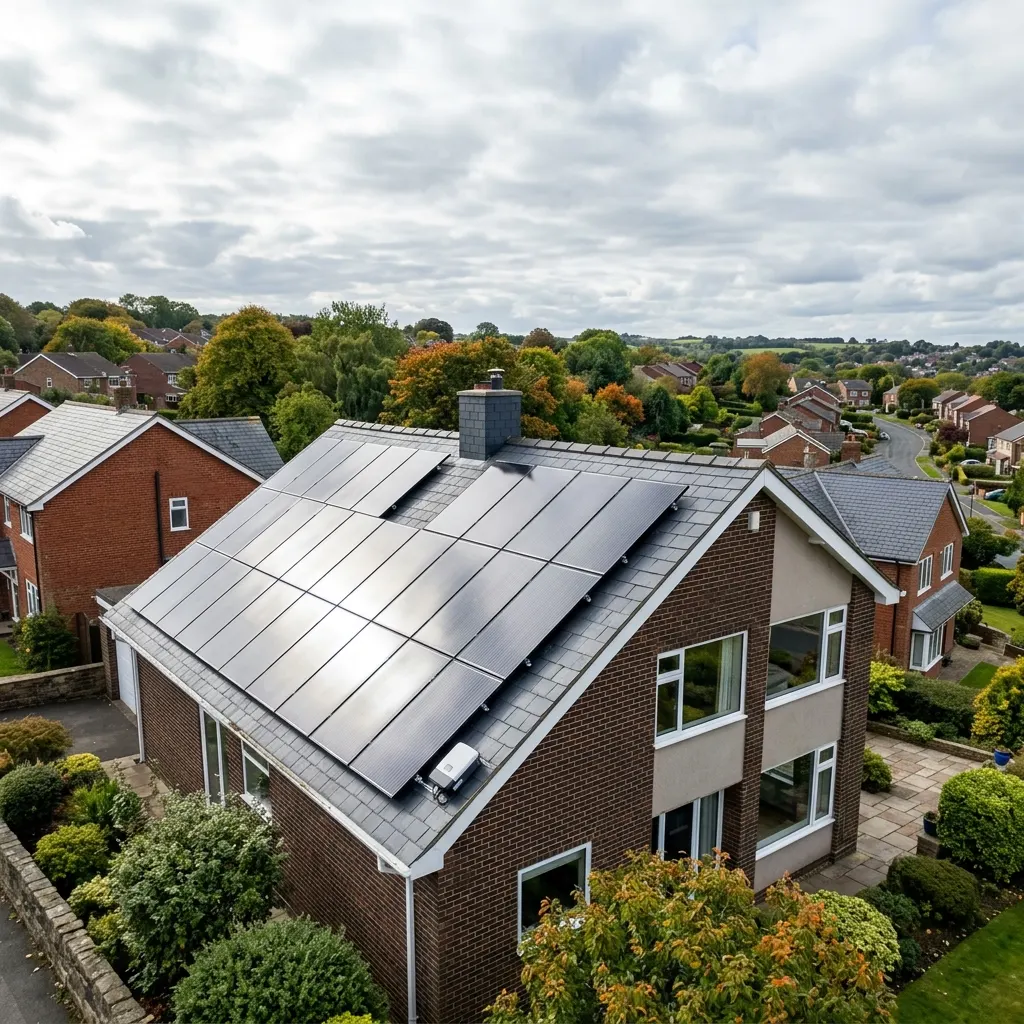
Yarm's Georgian High Street curls inside a tight loop of the River Tees, and while the conservation area's listed roofs rarely carry solar arrays themselves, panels across the wider TS15 postcode — from Leven Park to the farmland edges around Kirklevington and Worsall — still pick up grime fast. We provide a technical restoration service built to protect that investment and keep your yield exactly where it should be.
What Yarm customers actually say
“Brilliant service with first class communication. Friendly and professional. Highly recommended!”
“Sam has been really professional and exceptional in his service with us. Very responsive throughout the contact we have had. Sam has a very personable and friendly manner and strives to produce his best work and is more than happy to remedy any areas of concerns and is very receptive to feedback. Thank you Sam for all your support and going the extra mile.”
“Excellent service, great communication and work carried out to a very high standard. Will definitely be using again and recommended to family and friends. House looks new again, thank you.”
Why Your Yield Drops Faster in TS15.
Yarm earned its conservation area status precisely because its Georgian High Street survived intact — a run of listed townhouses and merchants' houses curving with the River Tees inside the horseshoe bend that gives the town its shape. Planning controls mean almost no solar sits on those original slate roofs, but step back from the High Street itself and the picture changes fast: the estates off Leven Park, the villages at Kirklevington and Worsall, and the newer infill nearer Low Worsall have all taken to solar in a way the conservation core never could. That spread — a heritage centre ringed by a genuinely mixed patchwork of roof ages and access — means no two arrays in TS15 face quite the same soiling problem, though three culprits turn up again and again: dust carried in off the working farmland, oily film from traffic funnelling across the historic bridge, and fouling from the birds that the river loop and surrounding woodland keep in healthy numbers.
"Whether it drifts in off the fields at Kirklevington and Worsall or settles from the queue over Yarm's bridge, a fine film on the glass is a physical barrier — it throttles your system's operating voltage and stretches out your payback period."
The High Street Bridge Bottleneck
Properties fronting or standing just behind Yarm High Street sit only a short distance from the approach to the town's historic river bridge, where traffic queues and idles morning and evening. That queue leaves the same oily, carbon-flecked soot on nearby roofs that heavier trunk roads deposit further out along the A67 and the A19 interchange — except here it's concentrated into a much tighter footprint. An array within reach of that daily bottleneck picks up a fine black film noticeably faster than one set back on a quieter close.
Farmland Dust & Nitrate Film
The fields around Yarm haven't disappeared under the town's growth — Kirklevington, Worsall and Low Worsall all sit a few minutes from the centre, and the land around them is still ploughed, sprayed and harvested on its usual seasonal rhythm. That work throws a fine, nutrient-rich dust into the air, and where it settles into the heavy morning dew that rises off the Tees and the Leven, it forms a nitrate film that panels in the villages nearest those fields have to deal with far more often than a roof buried deep in a modern estate.
Avian Fouling Off the River Loop
The stretch of Tees Riverside that curls around Yarm, together with the mature tree cover bordering Leven Park, gives gulls, geese and woodpigeons plenty to roost in above gardens on both banks. Arrays anywhere near that loop collect a disproportionate amount of bird lime compared with roofs further from the water, and in direct sun it can bake hard onto the glass within hours rather than days.
The Chemistry of 000 PPM Water.
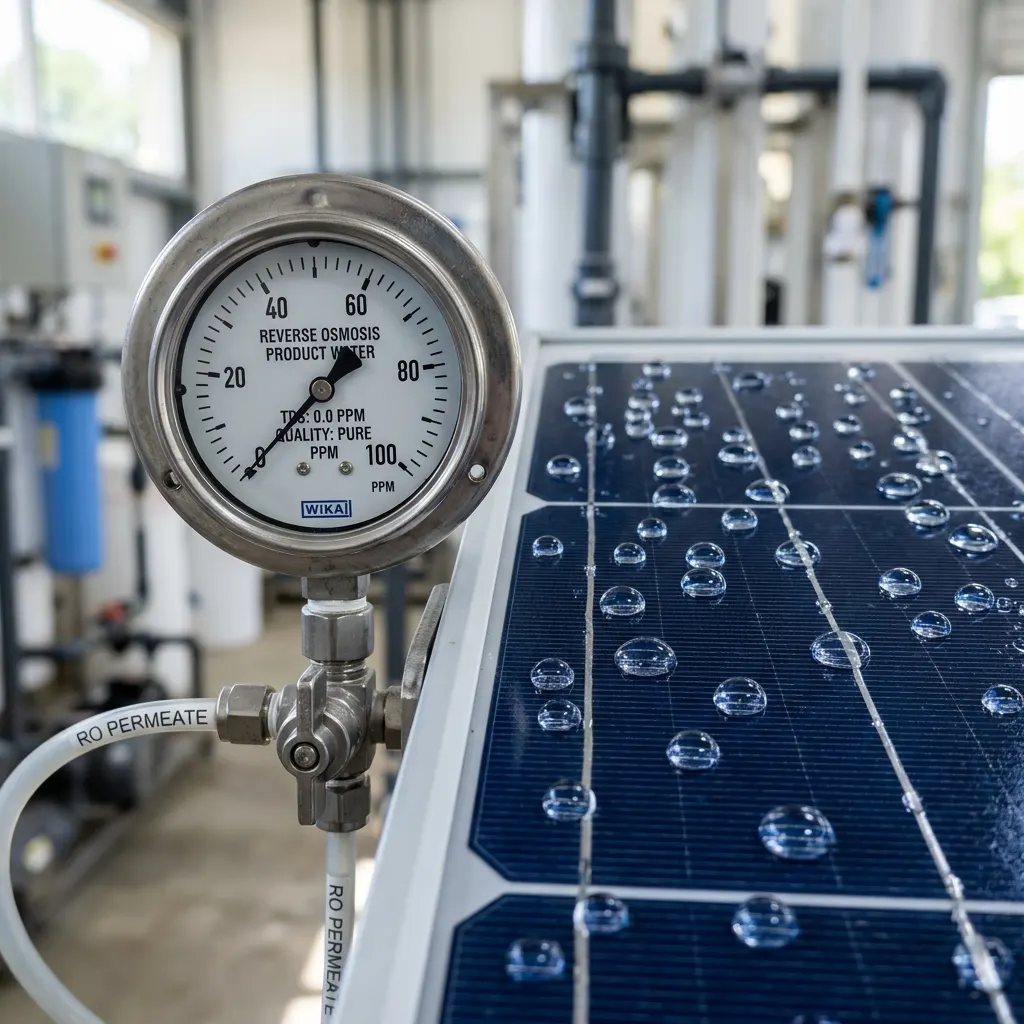
A "water and a brush" approach doesn't stand much chance against what actually reaches a Yarm roof — traffic soot off the High Street bottleneck, farmland dust rolling in from Kirklevington and Worsall, and the tree sap and river-mist algae the Tees loop encourages. Panels across the TS15 postcode need genuine chemistry, not a garden hose. We use high-flow, 100% deionised water filtered through a multi-stage Reverse Osmosis (RO) system to reach an absolute purity level of 000 Parts Per Million (PPM).
Molecular Hunger
Strip water of every mineral it naturally carries — calcium, magnesium, potassium — and it turns chemically restless. Rather than sitting inert on the glass, it actively hunts out dirt, oily soot and baked-on bird lime and binds to it at a molecular level, lifting contamination purely through that chemical attraction. No scrubbing, no detergent, just water doing what mineral-free water does.
Zero-Residue Evaporation
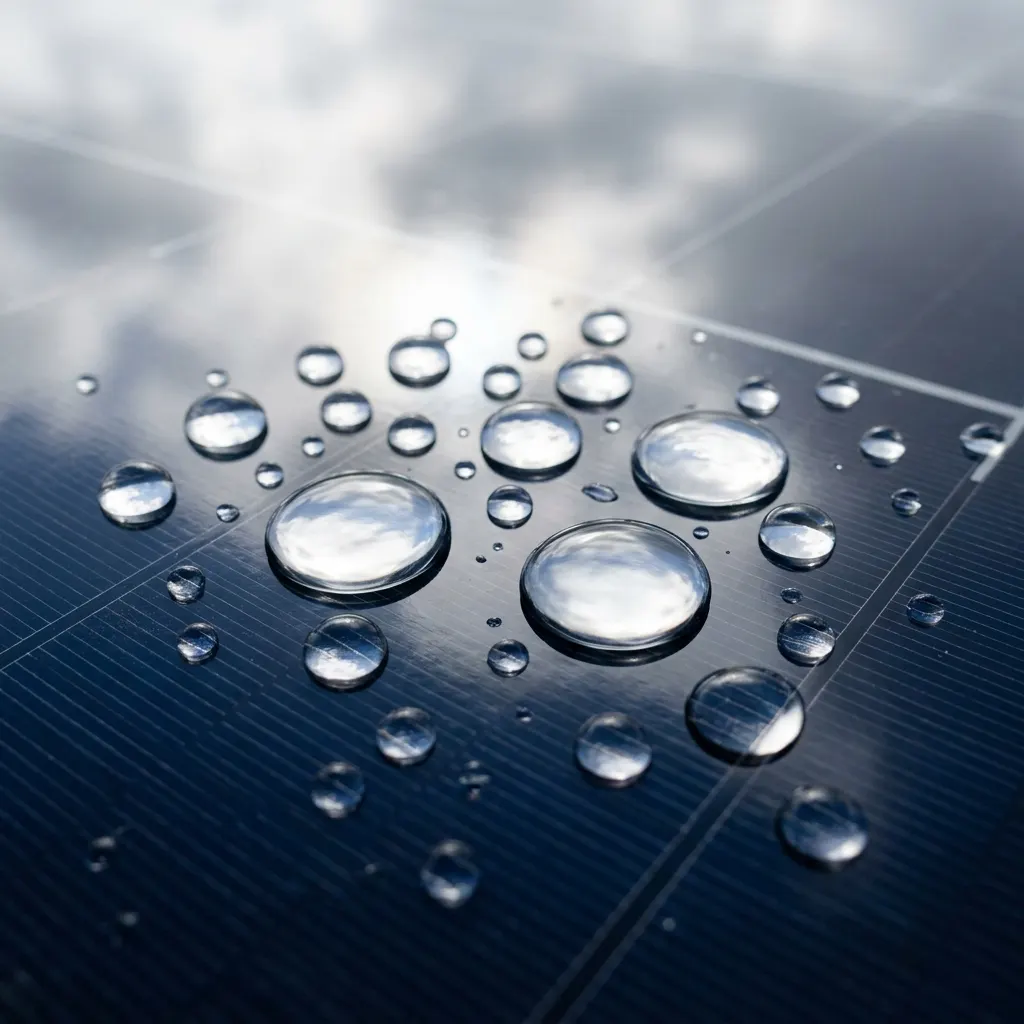
Mains water across the Stockton-on-Tees borough, Yarm included, runs hard and heavily mineralised. Spray it on a solar panel and it leaves behind the white, calcified spotting of limescale as it dries. Our precision-filtered 000 PPM water carries none of those minerals to leave behind, so it evaporates clean, leaving the glass optically clear rather than freshly speckled.
Protecting the Hydrophobic Layer
Many modern, high-efficiency panels leave the factory with a hydrophobic, self-cleaning coating designed to shed rainwater. Standard window cleaning soaps, or anything with a harsh detergent base, strip that coating over time and leave the panel getting dirty faster than before. Pure water carries no such risk — it's chemically inert, so the manufacturer's original surface treatment stays exactly as fitted.
The Science of Yield Restoration
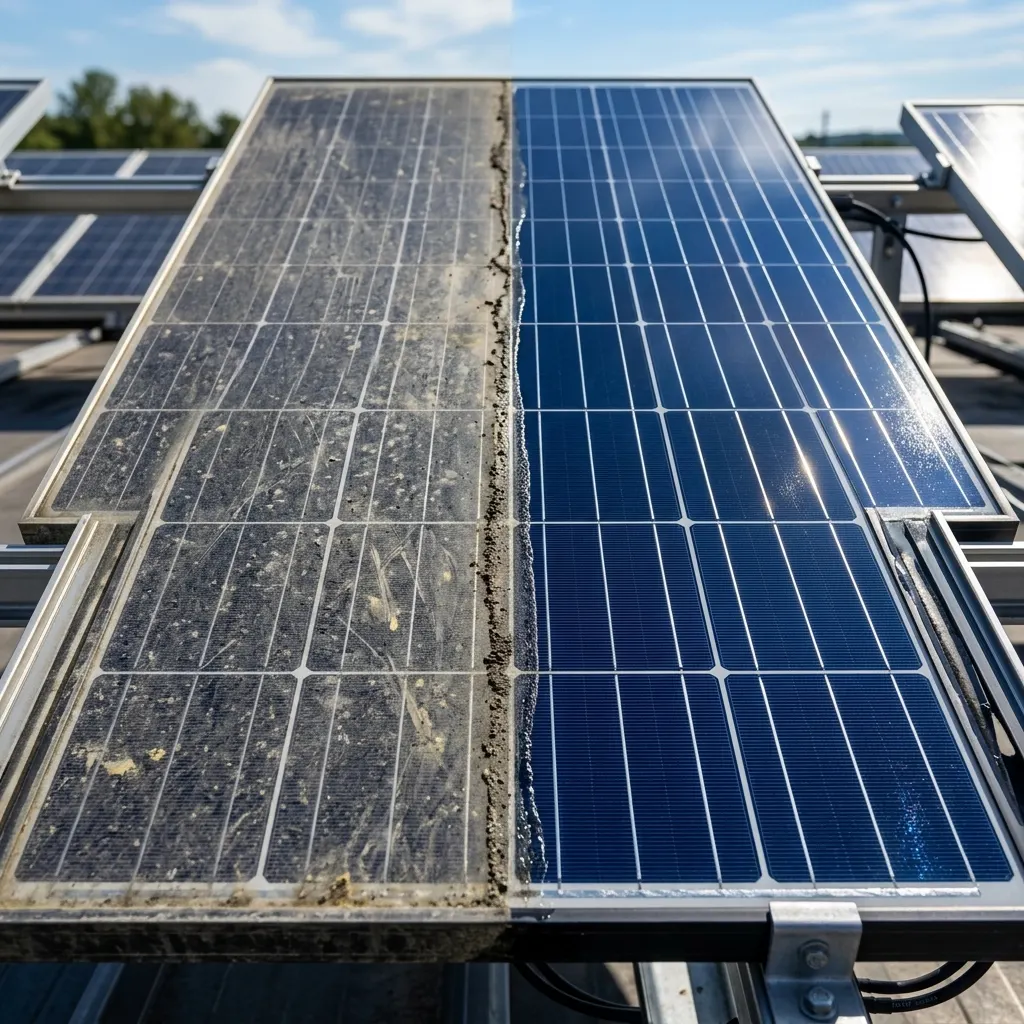
Solar panels depend on direct, unobstructed UV penetration to do their job. Once organic matter bakes onto the toughened glass, it physically throttles energy production — engineers call the process "soiling". Plenty of Yarm homeowners assume the town's regular rainfall handles this automatically. The physics of a solar cell say otherwise.
Rain falling through the queue of exhaust backed up over the High Street bridge approach, or drifting in from the wider Teesside corridor, picks up a fine load of particulates on the way down. When that water evaporates off a warm panel, it leaves a distinctly "muddy" film rather than a clean rinse. Given 12–24 months, that film thickens into a permanent, light-blocking layer.
Keeping the surface clean isn't just cosmetic — it lets the inverter's internal logic run at its intended efficiency curve. Even a small patch of corner shading, such as a leaf blown in from the tree cover around Leven Park, can trigger a panel's "bypass diodes" and cause a generation drop well out of proportion to the size of the patch.
Protecting the AR Coating
Modern panels carry a delicate Anti-Reflective (AR) coating built to capture more ambient light at low sun angles, at sunrise and sunset. Ordinary detergents and harsh generic chemicals degrade that coating over time. Operation Clean uses no chemicals at all, relying entirely on the natural solvency of deionised water to lift heavy dirt safely.
Our 4-Step Technical Process
A domestic or commercial solar array is a live, high-voltage generation system, and we treat every Yarm installation with that in mind — whether it's a modern estate roof near Leven Park or a converted outbuilding out toward Worsall — strictly following our safety protocols throughout.
Ground-Level Thermal Assessment
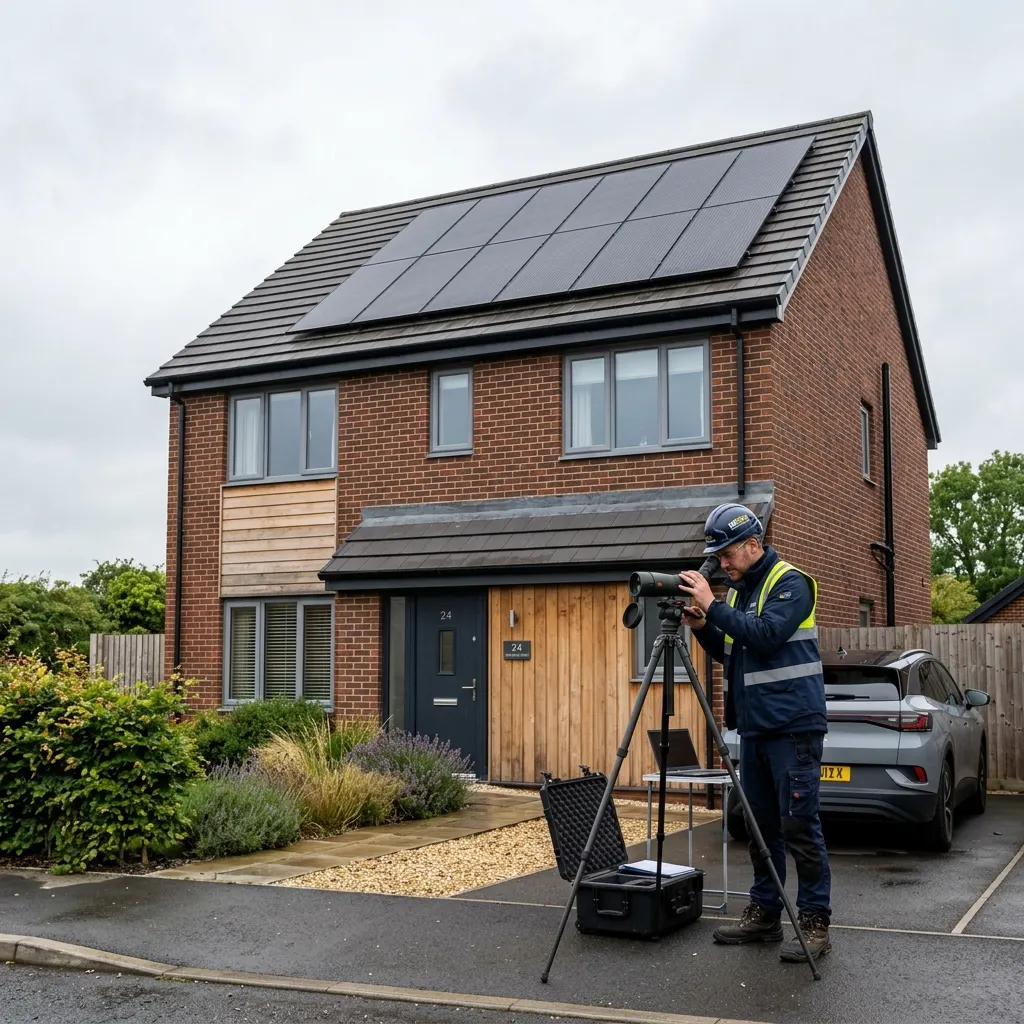
Before a single drop of purified water touches your roof, we carry out a full visual survey from ground level using high-reach optics, checking for any pre-existing "snail trails" or cracked glass that could let water in over time.
That record lets us choose the safest method for your specific roof — a close-set conversion near the Yarm High Street conservation area, where equipment has to stay well clear of the surrounding historic brickwork, or a ground-mounted array on one of the farms out towards Kirklevington.
Pure Water Saturation & Pre-Soak
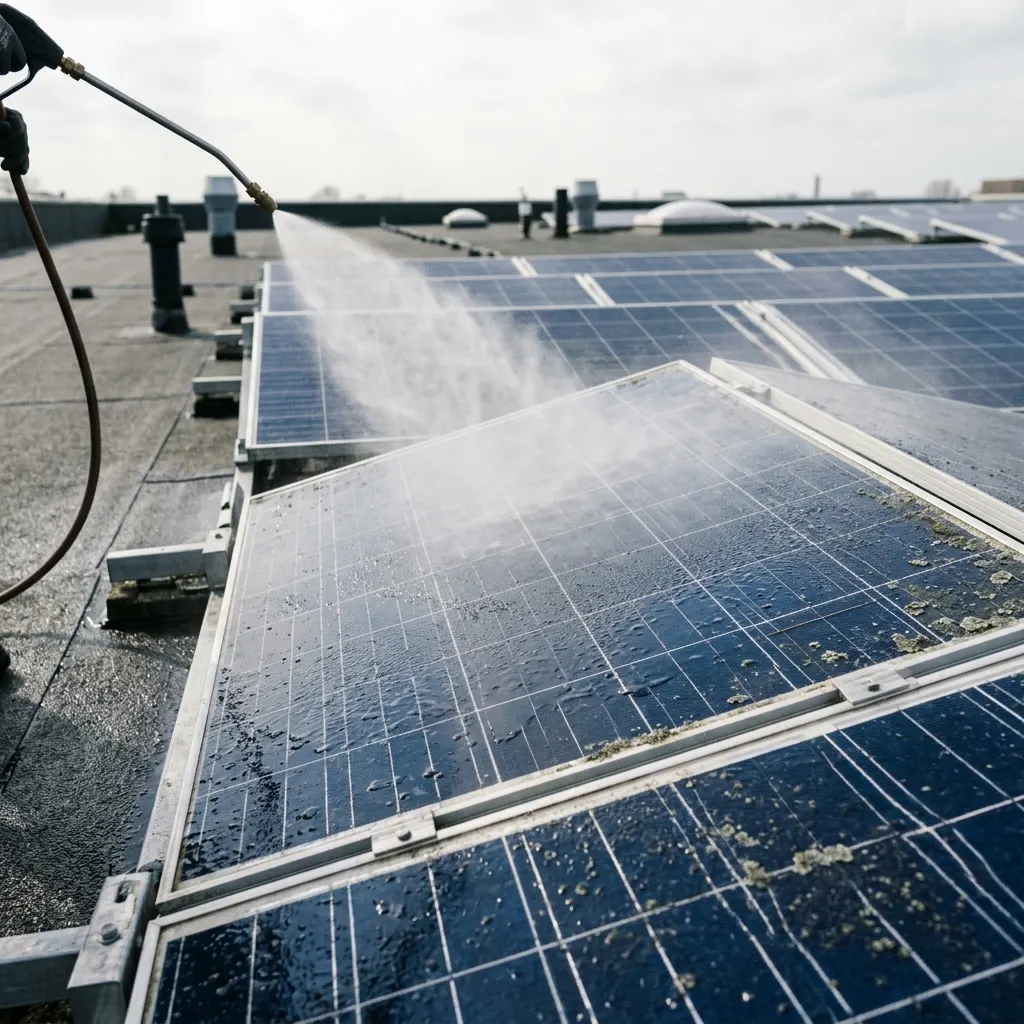
Lichen, river-mist moss and heavy biological matter thrive in the tight gaps between panels, especially on roofs closest to the Tees loop. On the more heavily soiled arrays we find across town, we start with a low-pressure, high-volume mist of pure water rather than reaching straight for a brush.
That mist is gentle by design. It rehydrates and loosens the grip of baked-on grime and acidic bird lime, so the next phase can rinse it away without any forceful or abrasive scraping.
Precision Brush Agitation
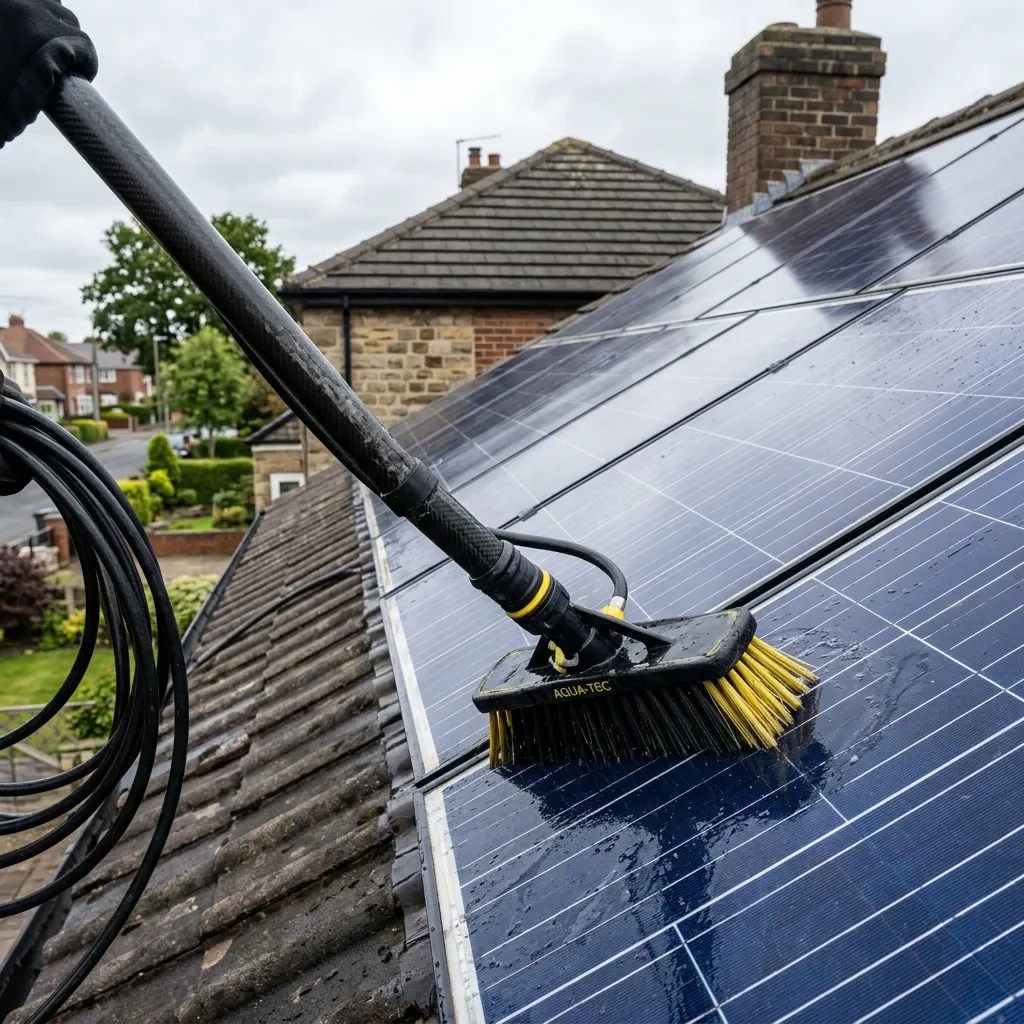
Our carbon-fibre solar brushes carry soft-flocked bristles, and every panel gets worked over methodically with them. We never lean weight or apply excessive pressure onto the fragile silicon cells sitting just beneath the glass.
Particular attention goes to the bottom edge of the aluminium frame, where dirt collects to form a biological "dam". Clearing it lets rainwater drain freely afterwards, heading off the "hot-spot" cell failure that standing debris eventually causes.

The Final Zero-Residue Rinse
We close out the clean with a heavy, high-flow rinse of 100% deionised water calibrated to exactly 000 PPM. At that purity level, the water acts like a liquid magnet for whatever's still suspended on the glass, carrying it away completely.
What's left is genuinely, surgically clean — total optical clarity, no streaks, no calcium deposits drying in the sun. That finish lets the tempered glass reach its maximum transparency, ready to take in every available photon of light over Yarm.
The ROI of Clean Solar Panels.
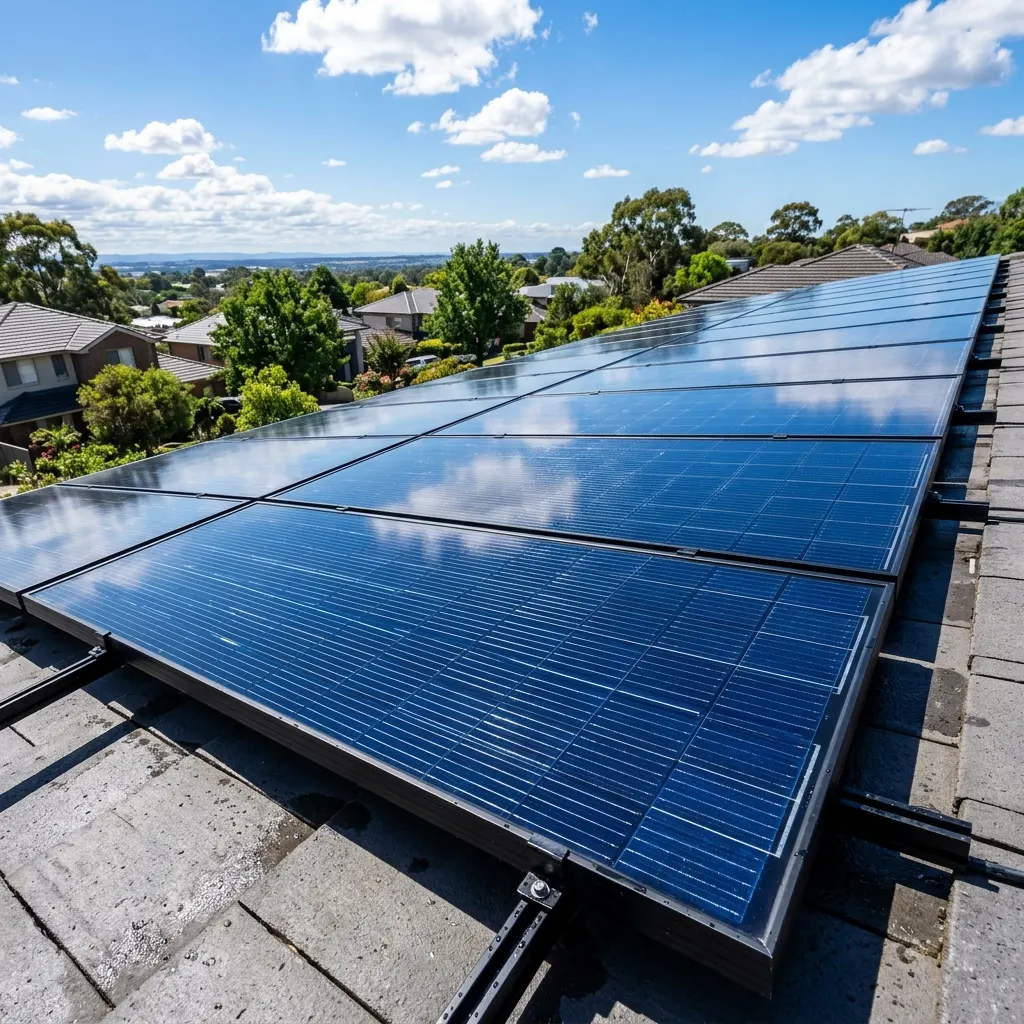
Professional solar panel cleaning in Yarm isn't just about kerb appeal — it's a calculated financial move for a system you've already paid to install, whether it sits above a High Street conversion or a barn conversion out near Worsall.
In the North East, our limited daylight hours make energy efficiency paramount. A mere 5% drop in efficiency due to industrial soot might seem minor, but compounded over 365 days, it results in hundreds of lost kilowatt-hours.
"For most systems in Middlesbrough or Stockton, the generation gain from a professional clean typically offsets the service cost within 4–6 months."
The typical generation jump measured on a system left soiled for 24 months, immediately after a professional 000 PPM pure water clean.
Regular maintenance heads off the permanent "hot spots" that lead to premature cell failure and, in rare cases, fire risk.
Severe Soiling Throttling
In industrial corridors where soot accumulation is heavy, panels can reach a "Generation Plateau" where they lose a quarter of their potential output annually.
Protecting Your Warranty.
Tier 1 manufacturer guidelines for solar maintenance are exceptionally strict, and the wrong cleaning method can void an expensive warranty outright.
Zero-Pressure Cleaning
We never use pressure washers. High-pressure water can force its way past the waterproof seals around the panel casing, leading to internal corrosion and short-circuits. Our low-pressure pure water system stays fully within manufacturer tolerances.
Telescopic Ground-Access
We work entirely from ground level using rigid telescopic carbon-fibre poles, so no weight ever goes onto your roof tiles or the panels themselves — a genuine advantage on the tighter plots around Yarm High Street's conservation area, where leaning a ladder against an old parapet or gutter line simply isn't an option.
Deionised Solvent-Free
We use no detergents and no household soaps. Most leave a faintly sticky film that attracts more dust than it removes. Deionised water is about as pure a natural solvent as exists, and it leaves your AR coating completely untouched.
Avoid "Panel Walking"
Some providers walk on panels to reach the centre of an array. Even if the glass doesn't crack, the weight creates "Micro-Cracks" in the internal silicon cells, resulting in immediate efficiency loss and a permanent fire hazard. Operation Clean operates 100% from the ground.
Serving Yarm & The Surrounding TS15 Villages
From the conservation core around Yarm High Street to the farmland fringes at Kirklevington and Worsall, we work to the environmental factors that actually affect solar yield in each part of TS15.
Yarm High Street & The Conservation Core
Very few panels sit on the listed Georgian frontages themselves, but the mews properties, garden rooms and rear extensions tucked behind the High Street do carry arrays. We service these with pole-based, ground-operated equipment, keeping ladders and pressure well clear of the historic brickwork.
Kirklevington & Worsall
The larger roofs and outbuildings on the farms and barn conversions around these villages often need longer-reach equipment, plus a careful eye for the nitrate-rich dust that seasonal harvesting throws into the air.
Leven Park & The Wooded Estates
Managing the sap, leaf litter and shaded-garden moss that come with this area's mature tree canopy, using techniques that lift baked-on organic residue without resorting to harsh chemicals.
The Wider Teesside Drift
Tackling the soot and traffic-borne particulates that reach Yarm from the broader A67/A19 corridor and the Teesside industrial belt beyond, so every cell keeps its maximum light exposure.
Window Cleaning FAQs
Common questions about the pure water process, expertly answered.
How much does solar panel cleaning in Yarm cost?
Do I need to turn my solar system off during the clean?
How often should I have my panels professionally cleaned in Yarm?
Will you walk on my roof or lean on the panels?
The ROI: Does the clean really pay for itself?
What is 000 PPM water, and why does it matter?
Can't I just wait for the rain to clean them?
More Services
We Offer in Yarm
From ground level to roofline — Operation Clean protects every inch of your property's exterior.

Window Cleaning in Yarm
Heated pure water & TFR degreasing for a long-lasting, streak-free finish on every pane.

Gutter Clearing in Yarm
3,000W industrial vacuum extraction with HD camera verification — entirely from the ground.
Soffit & Fascia Cleaning in Yarm
Bio-degradable UPVC roofline restoration returning your plastics to brilliant, factory-white.

Conservatory Cleaning in Yarm
Full structural valet for glass and polycarbonate roofs — inside, outside, and every valley.

Commercial Cleaning in Yarm
SafeContractor approved B2B exterior maintenance with full RAMS and £5M+ cover.
Roof Soft Washing in Yarm
HSE-approved dry-scrape and 12v low-pressure biocide treatment — moss removal without damaging your tiles.

Solar Panel Bird Proofing in Yarm
Non-drill mesh permanently seals the gap under your array from nesting birds.
Areas We Provide This Service
Book Your Yarm Solar Clean.
Select the exact number of panels you have and see a completely transparent price on screen immediately. No salesman. No pressure.
No-Obligation Pricing
We confirm the right details before pricing.
Fast Response
We usually reply within the hour — no waiting on hold.