
Solar Panel Cleaning
in Stockton-on-Tees
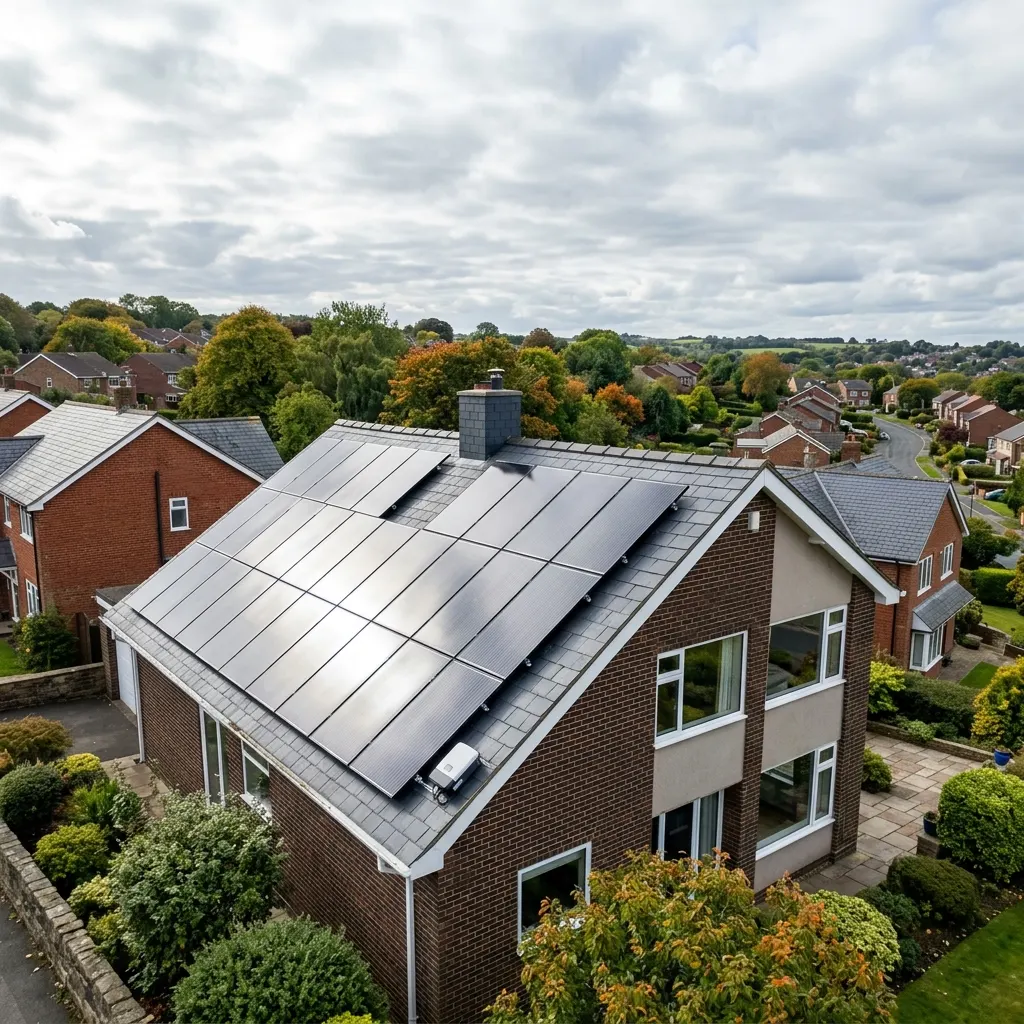
Teesside Grey carbon fallout and A66/A19 traffic film settle on rooftops across Stockton-on-Tees every week, and every layer of it is money off your generation. We provide a technical restoration service designed to strip that film safely and protect the yield you're paying your panels for.

What Stockton-on-Tees customers actually say
“Brilliant service with first class communication. Friendly and professional. Highly recommended!”
“Sam has been really professional and exceptional in his service with us. Very responsive throughout the contact we have had. Sam has a very personable and friendly manner and strives to produce his best work and is more than happy to remedy any areas of concerns and is very receptive to feedback. Thank you Sam for all your support and going the extra mile.”
“Excellent service, great communication and work carried out to a very high standard. Will definitely be using again and recommended to family and friends. House looks new again, thank you.”
Why Yield Drops Fast in a River-Valley Town.
Stockton-on-Tees sits in a wide bend of the River Tees, and that valley setting works against your panels in a way flatter towns don't experience. Cool, damp air pools along the riverside overnight and condenses onto anything already sitting on the glass. Add to that decades of industrial legacy — Teesside's steelworks and chemical plants left behind a fine carbon residue locals still call "Teesside Grey" — and the modern equivalent delivered daily by the A66 and A19, the two arterial routes that effectively ring the borough, and you get a genuinely specific atmospheric problem. Whether your array sits above a terrace near Stockton Town Centre or a newer roofline out at Ingleby Barwick, the same combination of river humidity, historic carbon fallout, and constant heavy-vehicle traffic film can quietly cut generation by up to a quarter if it's never addressed.
"Teesside Grey carbon fallout and A66/A19 traffic film aren't just cosmetic—they're a physical barrier sitting between your cells and the sun, and every month they're left in place adds to your payback period."
Teesside Grey & Traffic Film
Properties close to the A66 interchange or the A19 corridor take the brunt of it: a fine, oily soot that clings to warm glass and doesn't rinse off in normal rain. Portrack's retail parks and the approach roads into Stockton Town Centre carry some of the heaviest vehicle flow in the borough, and panels here build up a greasy film noticeably faster than those on quieter estates further out.
Suburban Pollen & Organic Growth
Move out to the mature, tree-lined streets of Hartburn, Fairfield, and Bishopsgarth and the problem changes shape entirely. Pollen and windblown organic debris settle into the narrow gap between a panel and its frame, and once damp river-valley air gets to it, it turns into a nitrate-rich film that lichen and algae take hold in far quicker than on an open, exposed roofline.
River Tees Waterfowl & Gulls
Stockton's stretch of the River Tees, and the Quayside frontage running alongside it, supports a large population of gulls and other waterfowl that range across the whole town centre. Their droppings are strongly acidic and completely opaque — left in place they don't just mark the surface, they etch it, leaving a permanent shadow that no amount of rain will lift once it's baked on.
The Chemistry of 000 PPM Water.
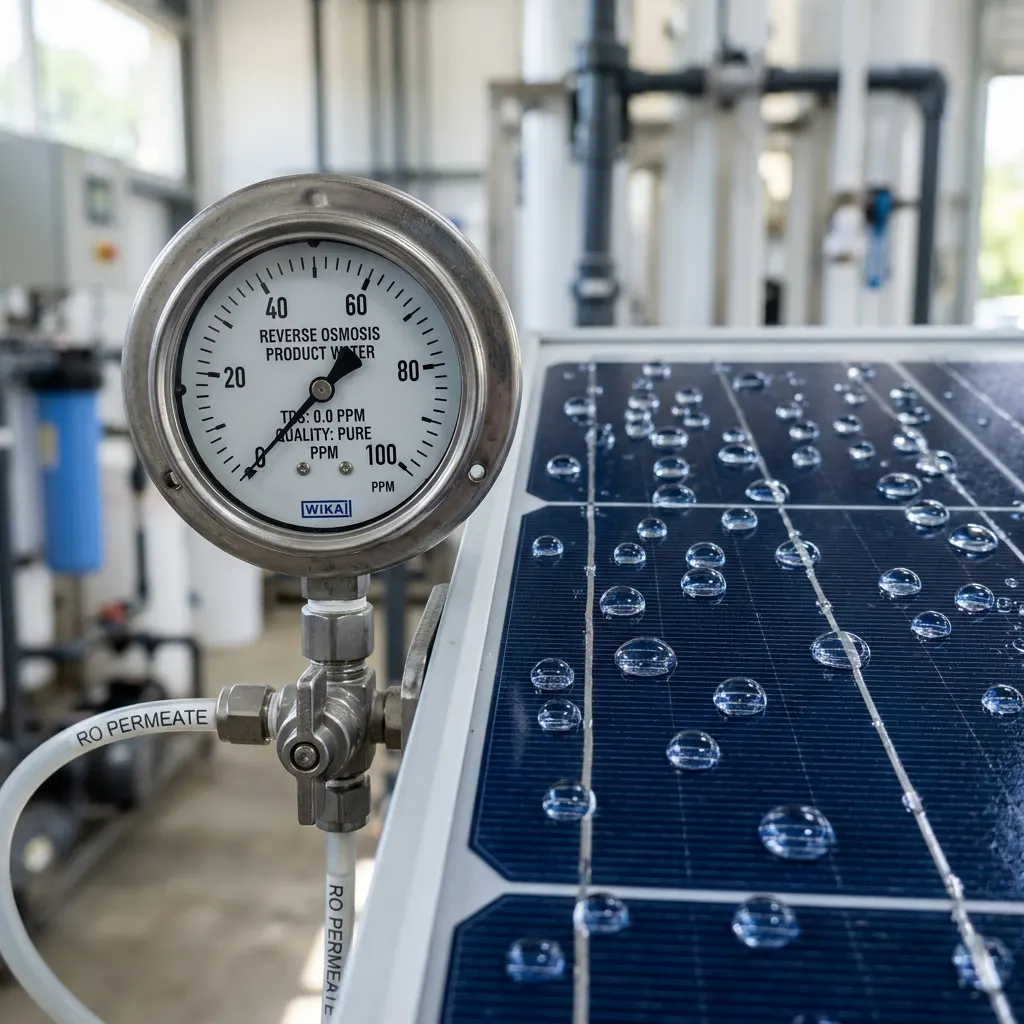
Restoring a soiled array here takes more than a hose and a soft brush. To cut through Teesside Grey carbon fallout, traffic film off the A66 and A19, and the organic build-up common on tree-shaded roofs around Hartburn and Fairfield, we run high-flow, 100% deionised water through a multi-stage Reverse Osmosis (RO) system until it reaches 000 Parts Per Million (PPM) — as close to chemically pure as water gets.
Molecular Hunger
Water this pure is chemically unstable. Stripped of every mineral, it becomes a powerful natural solvent that actively seeks out and binds to soot, oily traffic film, and baked-on bird lime, lifting them away through pure chemical attraction rather than force — no aggressive scrubbing and no detergents required.
Zero-Residue Evaporation
Tap water piped across Stockton-on-Tees is heavily mineralised, and spraying it on a sun-warmed panel leaves behind a fine crust of limescale as it dries. Those microscopic mineral spots act like tiny lenses, scattering light away from the cells beneath. Our precision-filtered 000 PPM water carries nothing to leave behind, so it evaporates to a genuinely clean, streak-free finish.
Protecting the Hydrophobic Layer
Many newer, high-efficiency panels carry a factory-applied hydrophobic coating designed to shed water and dirt on its own — right up until a harsh detergent or standard window cleaning soap strips it away. Because our method uses nothing but purified water, that coating stays fully intact and keeps doing part of the work between visits.
The Science of Yield Restoration
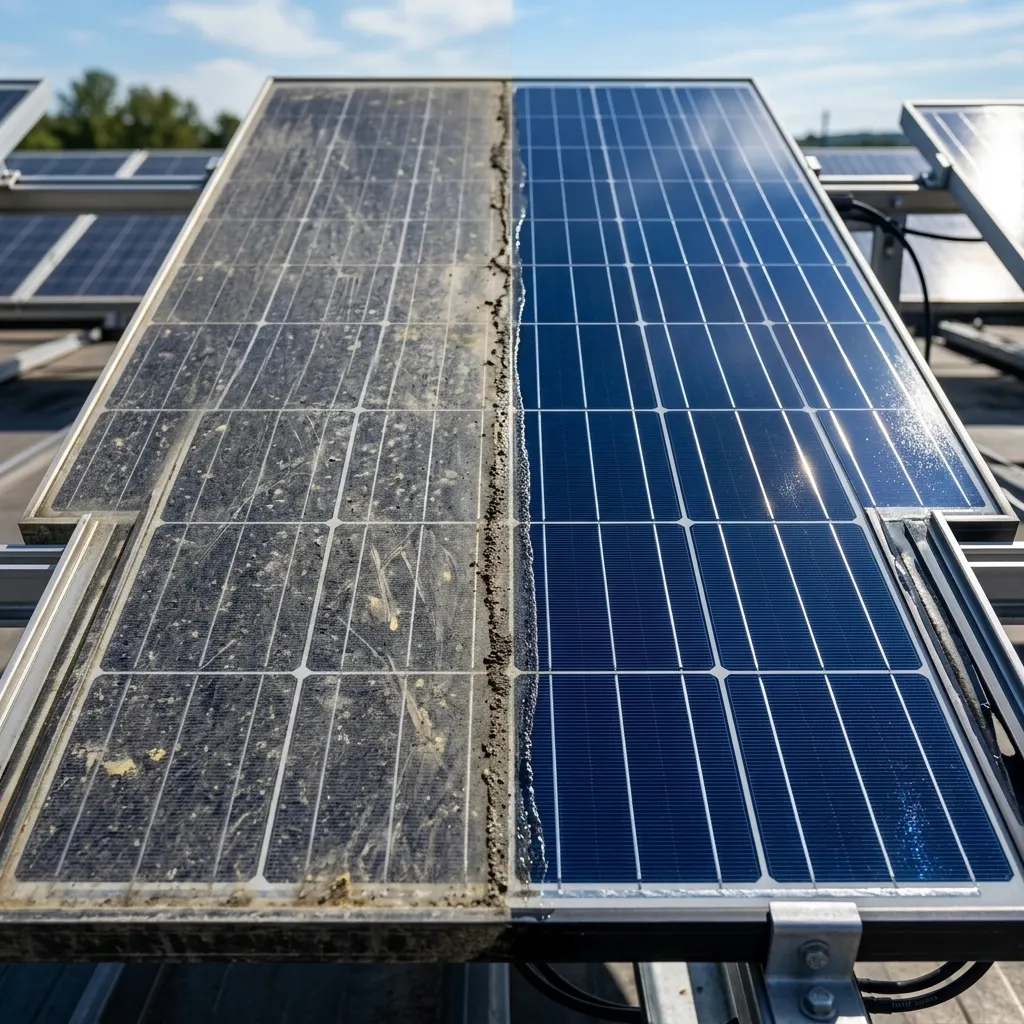
Solar cells need clean, direct light to hit them. When grime bakes onto the toughened glass, it blocks that light before it ever reaches the silicon — a process engineers call "soiling". It's a common assumption in Stockton-on-Tees that the odd downpour keeps a roof array clean. In practice, rain and soiling don't cancel each other out.
Rain falling through Teesside's air picks up whatever is suspended in it — carbon fallout from the A66 interchange, exhaust from the A19, riverside humidity off the Tees — before it ever reaches your roof. When that water lands on a warm panel and evaporates, it leaves a faint muddy residue behind. It looks negligible after one shower; after 12–24 months of accumulation, it's a genuine light-blocking barrier.
Keeping the surface clear isn't cosmetic housekeeping — it directly protects the inverter's operating curve. Even a small patch of shade from accumulated debris near a panel's edge can trip its "bypass diodes", and the generation drop that follows is often far larger than the size of the patch would suggest.
Protecting the AR Coating
Modern panels carry an Anti-Reflective (AR) coating engineered to pull in extra light at low sun angles — useful this far north, where the sun sits low for a large part of the year. Detergents and harsh chemicals degrade that coating over repeated washes. We rely solely on the natural solvency of deionised water, so the coating is never touched.
Our 4-Step Technical Process
A solar array is a live electrical system sitting several metres above ground level. We treat every visit accordingly, following manufacturer-approved methods and strict safety protocol from first assessment through to the final rinse.
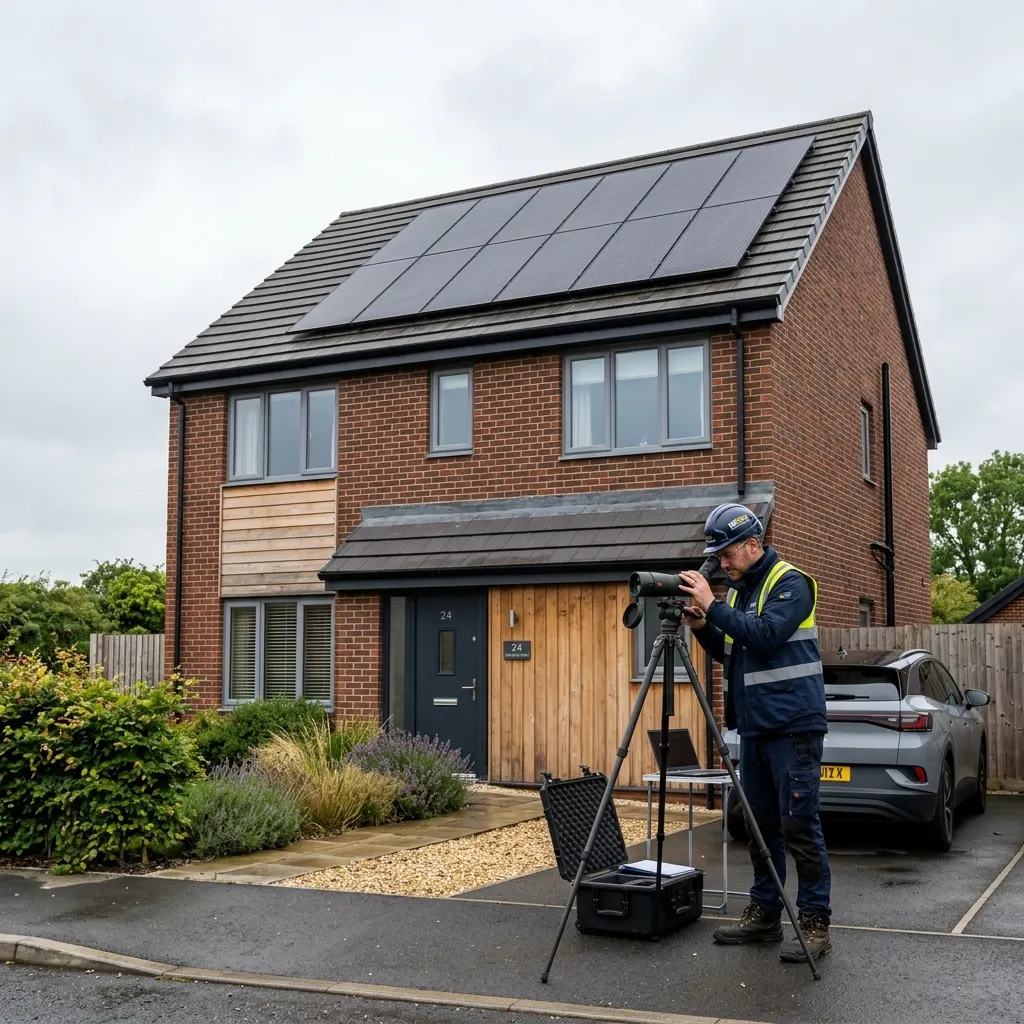
Ground-Level Thermal Assessment
Before any water touches the roof, we survey the array from ground level using high-reach optics, checking for pre-existing damage — hairline cracks, "snail trails", or a loose seal — that a wash could make worse if it went unnoticed.
That record lets us pick the safest approach for what's actually on your roof, whether it's a compact domestic array on a terrace near Oxbridge or a larger commercial installation closer to the Quayside.
Pure Water Saturation & Pre-Soak
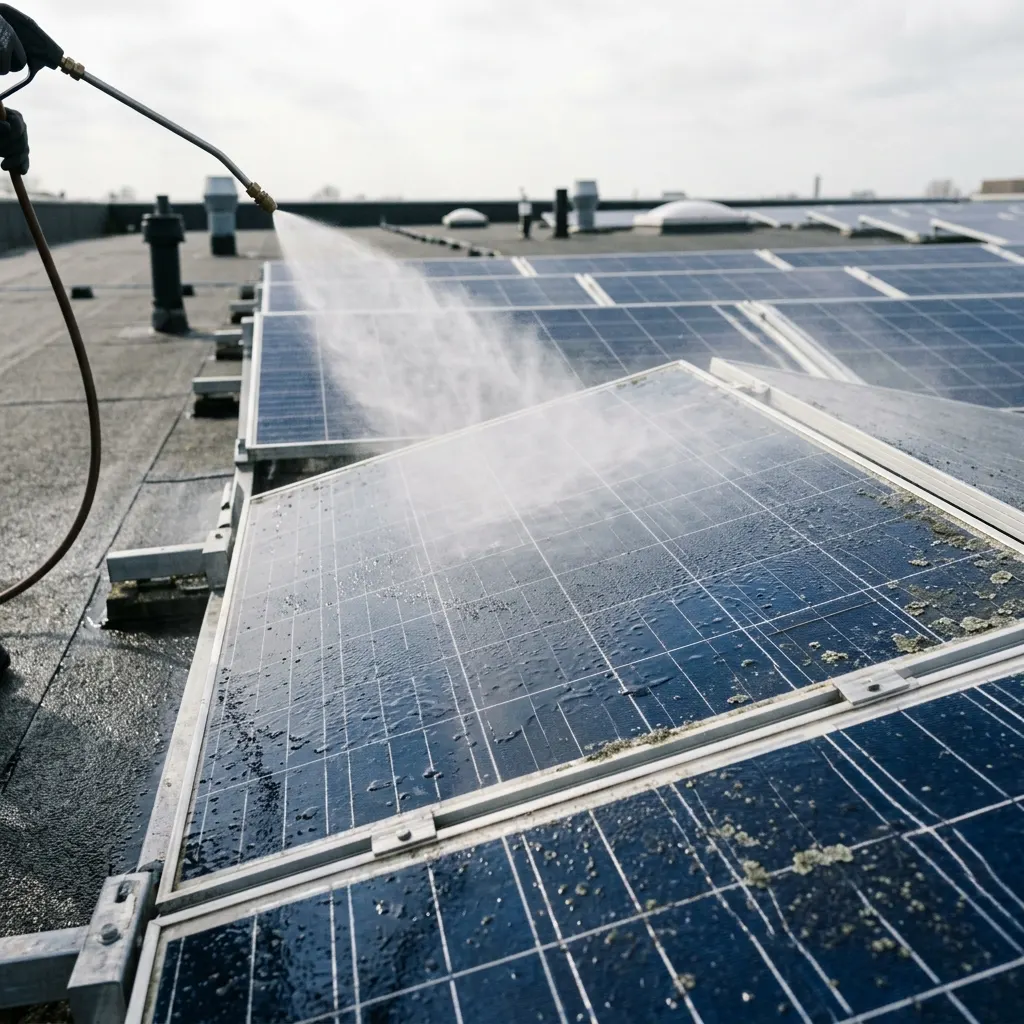
Lichen and moss take hold fastest in the tight gaps between panels, and we see it most on arrays shaded by the mature woodland around Wynyard. On these heavily soiled installations, we start with a low-pressure mist of pure water across the whole array.
Unlike aggressive pressure washing, our mist is exceptionally gentle. It rehydrates and softens the stubborn grip of baked-on grime and acidic bird lime, allowing it to be safely rinsed away later without forceful or abrasive scraping.
Precision Brush Agitation
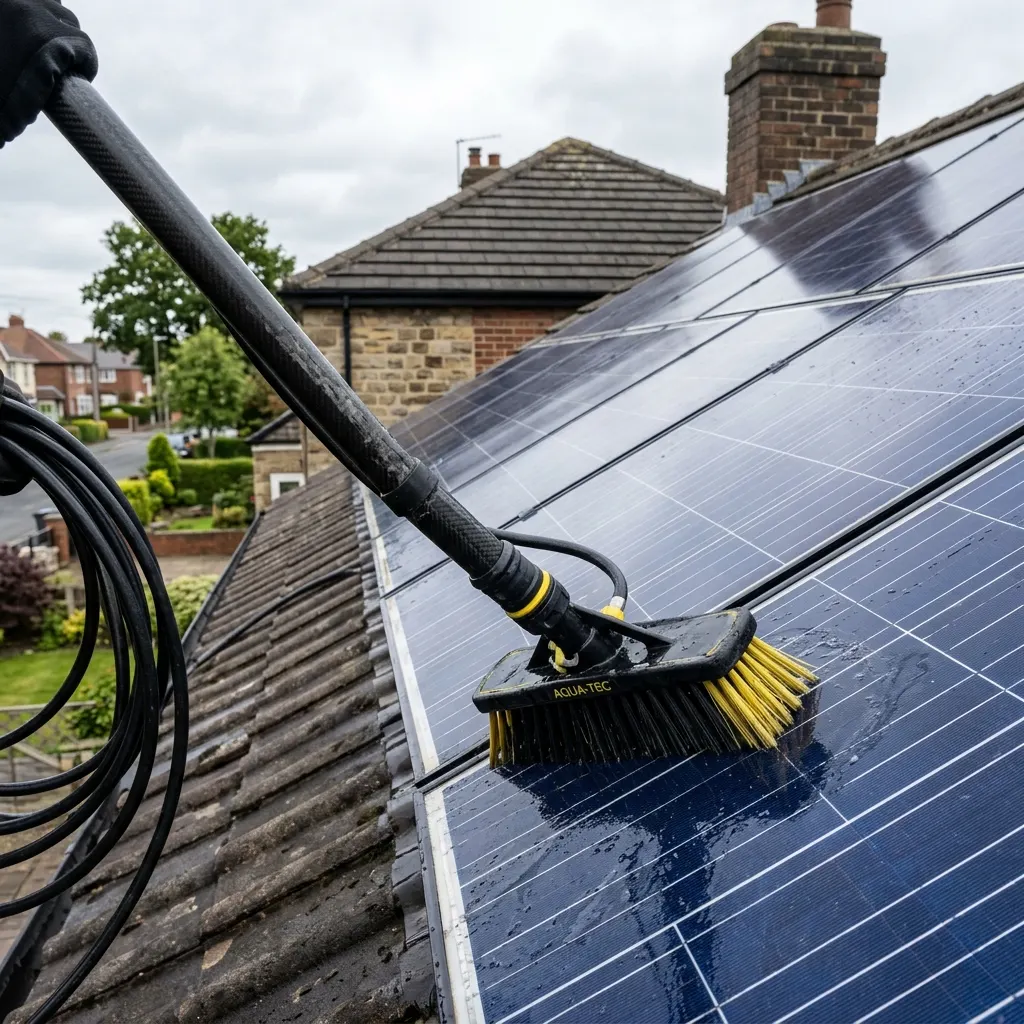
We work each panel with soft-flocked carbon-fibre brushes, built specifically for solar glass. Technicians are trained to let the brush do the work — no downward weight, ever, on cells that can crack under the wrong kind of pressure.
The bottom edge of the aluminium frame gets particular attention, since that's where grime dams up and blocks drainage. Clear that channel properly and rainwater can run off freely afterwards, instead of pooling and building toward a "hot-spot" cell failure.

The Final Zero-Residue Rinse
We close with a high-volume rinse of 100% deionised water, calibrated to exactly 000 PPM. At that purity, the water pulls in every last suspended particle as it runs off, taking the Teesside Grey film with it rather than just redistributing it across the glass.
What's left is a genuinely clear panel — no streaking, no smearing, no mineral spotting — ready to take in whatever sun reaches Stockton-on-Tees that day, low winter light included.
The ROI of Clean Solar Panels.
This isn't about how the panels look on the roof — it's about what soiling actually costs in lost generation, and what a proper clean gets back for you.
In the North East, our limited daylight hours make energy efficiency paramount. A mere 5% drop in efficiency due to industrial soot might seem minor, but compounded over 365 days, it results in hundreds of lost kilowatt-hours.
"For most systems in Middlesbrough or Stockton, the generation gain from a professional clean typically offsets the service cost within 4–6 months."
The typical, measurable jump in output seen immediately after a professional 000 PPM clean on a system that has gone two years without maintenance.
Regular cleaning stops the kind of localised heat build-up that leads to permanent "hot spots" and premature cell failure over the life of the system.
Severe Soiling Throttling
In industrial corridors where soot accumulation is heavy, panels can reach a "Generation Plateau" where they lose a quarter of their potential output annually.
Protecting Your Warranty.
Manufacturers are specific about how a panel should be maintained, and getting it wrong can void cover you've already paid for. Every part of our process is built to stay inside those terms.
Zero-Pressure Cleaning
Pressure washers have no place on a solar array. The force can push past the rubber and silicone seals around the frame and cause internal corrosion you won't see until damage is already done. Our low-pressure pure water system stays well within every major manufacturer's standard.
Telescopic Ground-Access
We work entirely from the safety of the ground using rigid telescopic carbon-fibre poles, so no one's body weight ever goes anywhere near your roof tiles or the panels themselves — a real risk-reducer on the steeper rooflines common across the borough.
Deionised Solvent-Free
No detergents, ever. Standard household soap leaves a sticky film that actually attracts more dust once it dries. Deionised water is the purest natural solvent available, and it leaves your AR coating exactly as the manufacturer applied it.
Avoid "Panel Walking"
Some providers walk on panels to reach the centre of an array. Even if the glass doesn't crack, the weight creates "Micro-Cracks" in the internal silicon cells, resulting in immediate efficiency loss and a permanent fire hazard. Operation Clean operates 100% from the ground.
Serving Stockton-on-Tees & The North East
From the traffic-heavy corridors around Portrack to the quieter rooflines of Bishopsgarth and Norton, we adjust our approach to whatever's actually landing on your panels that week.
Stockton Town Centre & Portrack
Heavy footfall and the roads feeding the A66 and A19 mean panels here pick up traffic film and Teesside Grey carbon fallout faster than anywhere else in the borough, so these arrays sit at the top of our clean cycle.
Wynyard & Norton
Larger plots and taller, more established trees mean bigger arrays and heavier organic load — we bring long-reach equipment and document panel condition carefully across these more spread-out properties.
Hartburn, Fairfield & Bishopsgarth
Mature, tree-lined estates where sap, pollen, and shade-driven lichen are the main issue rather than industrial grime — we lead with a longer bio-saturating pre-soak on these roofs.
Ingleby Barwick & Stockton Quayside
From one of the region's largest modern estates to the riverside frontage by the Quayside, we handle everything from new-build roof arrays to older installations exposed to river humidity and gull activity.
Window Cleaning FAQs
Common questions about the pure water process, expertly answered.
How much does solar panel cleaning in Stockton-on-Tees cost?
Do I need to turn my solar system off during the clean?
How often should I have my panels professionally cleaned in Stockton-on-Tees?
Will you walk on my roof or lean on the panels?
The ROI: Does the clean really pay for itself?
What is 000 PPM water, and why does it matter so much?
Can't I just wait for the rain to clean them naturally?
More Services
We Offer in Stockton-on-Tees
From ground level to roofline — Operation Clean protects every inch of your property's exterior.

Window Cleaning in Stockton-on-Tees
Heated pure water & TFR degreasing for a long-lasting, streak-free finish on every pane.

Gutter Clearing in Stockton-on-Tees
3,000W industrial vacuum extraction with HD camera verification — entirely from the ground.

Soffit & Fascia Cleaning in Stockton-on-Tees
Bio-degradable UPVC roofline restoration returning your plastics to brilliant, factory-white.

Conservatory Cleaning in Stockton-on-Tees
Full structural valet for glass and polycarbonate roofs — inside, outside, and every valley.

Commercial Cleaning in Stockton-on-Tees
SafeContractor approved B2B exterior maintenance with full RAMS and £5M+ cover.
Roof Soft Washing in Stockton-on-Tees
HSE-approved dry-scrape and 12v low-pressure biocide treatment — moss removal without damaging your tiles.

Solar Panel Bird Proofing in Stockton-on-Tees
Non-drill mesh permanently seals the gap under your array from nesting birds.
Areas We Provide This Service
Book Your Solar Scrub.
Select the exact number of panels you have and see a completely transparent price on screen immediately. No salesman. No pressure.
No-Obligation Pricing
We confirm the right details before pricing.
Fast Response
We usually reply within the hour — no waiting on hold.