
Conservatory Cleaning in Middlesbrough.
Middlesbrough is Teesside's largest urban centre, and that scale is exactly what makes a conservatory here behave differently to one in a smaller neighbouring town. Victorian terraces around Linthorpe and Acklam sit only a short drive from the newer estates spreading out towards Marton, Nunthorpe, Coulby Newham and Hemlington, yet almost every one of those properties shares the same constant background load: the traffic and general urban pollution that comes with being the borough's commercial and transport hub. Add in humid air rolling off the Tees Valley and down from the Cleveland Hills, and a conservatory roof here is picking up grime from two directions at once. Keeping one properly maintained takes more than a bucket and sponge; it takes a Conservatory Cleaner in Middlesbrough who understands how this particular mix of old and new housing actually weathers.
What Middlesbrough customers actually say
“Very professional operation. Very happy with the work. I would highly recommend this company.”
“Great service”
“Great communication and fit us in quickly. Thanks”
A Full Structural Reset.
Built for Teesside's biggest town.
Why Middlesbrough Conservatories
Carry a Heavier Load Than Most.
A conservatory is one of the largest single investments most Middlesbrough homeowners make in their property, and it's also one of the most exposed. As the largest urban centre on Teesside, Middlesbrough carries a volume of through-traffic that smaller neighbouring towns simply don't see, with the A66 and A19 corridors funnelling commuter and haulage traffic past residential streets on the way from the town centre out towards Marton and Nunthorpe. That traffic leaves a fine film of carbon and diesel soot behind, and it settles fastest on structures closest to the main routes. Further out, the older terraced streets around Linthorpe and Acklam sit close enough to the Tees Valley and the Cleveland Hills that humid, spore-laden air keeps algae and moss growth ticking over even through a dry spell.
At Operation Clean, a Conservatory Cleaning Middlesbrough project is treated as a full architectural restoration rather than a quick wash. That means the finials and crestings at roof height, the box gutters hidden along the wall line, and every millimetre of UPVC framework get the same attention as the glass. Leave any one of those areas untouched and it becomes the point where algae takes hold, or where grime works its way back onto a pane you've only just cleaned.
Our process pairs high-temperature, laboratory-grade pure water agitation with a professional Traffic Film Remover (TFR) treatment, because the grime found on a Middlesbrough conservatory is rarely just one substance. It's usually a mix of legacy industrial carbon and modern traffic film, and shifting both properly needs heat and the right chemistry working together rather than either one alone. Opening the UPVC's surface pores with thermal agitation and drawing the embedded contaminants out is what brings a faded, grey-tinged frame back to a bright, light-reflective white — a finish standard window cleaning was never built to achieve.
Matched to Your Conservatory's Shape, Not a Generic Rate
Our pricing is based on the shape and size of your specific structure, which is why we ask you to select your architectural style when you book online. Categorising the work this way means every nook, ridge and valley of your design gets accounted for rather than estimated at a glance.
Victorian
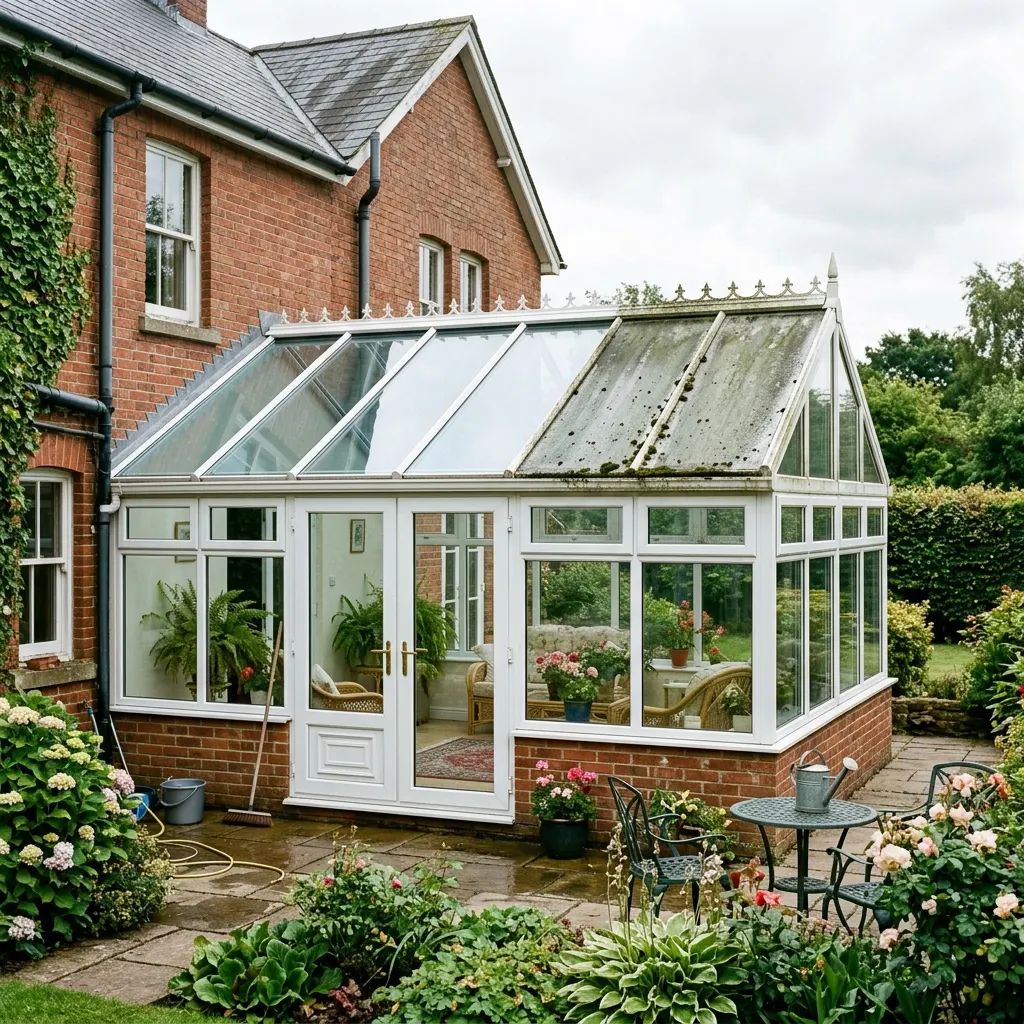
Middlesbrough's Victorian terraces, concentrated in the streets around Linthorpe and Acklam, typically pair a bay-fronted conservatory with a steeply pitched roof and ornate ridge details known as finials and crestings. Those ridge features are where green algae gets its first foothold, and because they sit above the glass, growth left unchecked eventually bleeds down the panels every time it rains. Clearing them properly takes patient, high-reach brush work rather than a single quick pass.
Technical Standard
Edwardian / Georgian
The flat-fronted, symmetrical Edwardian and Georgian style is the design you see most often across the newer family estates of Coulby Newham and Marton. Its vaulted roof gives a grand sense of space inside, but it also creates internal valleys where water can sit rather than drain away. Our valet puts real time into those hidden box gutters and valley joints, clearing silt and leaf mulch before it turns into a drainage failure rather than after.
Technical Standard
Gable / P-Shape / Lean-To
Nunthorpe's larger detached properties, along with the newer executive-style homes toward Hemlington, tend to favour Gable-ended or P-Shaped conservatories with wide, sprawling roof spans. Reaching the full width of a gable safely means working from 4-storey safe-reach poles rather than a ladder propped against UPVC that was never designed to take that kind of load, and it's the only reliable way to give a structure this ambitious an even, "Premium Plus" finish.
Premium Plus
Why Your Roof Turns Green
Spores drift in from tree-lined streets, the Cleveland Hills to the south, and the wider Tees Valley, landing on any roof left damp and undisturbed. In a town with this much through-traffic, that spore layer rarely stays clean for long.
Phase 1: The Colonisation Phase
It starts with a biofilm too thin to see with the naked eye. In a heavily trafficked town like Middlesbrough, that sticky layer begins trapping carbon particles from passing vehicles almost immediately, on top of whatever spores have already landed. The roof looks a shade duller than it should, but there's no visible growth yet, just the groundwork for it.
Phase 2: The Visible Bloom
As humidity builds through spring and autumn, that biofilm develops into visible green algae (Chlorophyta). Streaks start appearing along the glazing bars and moss begins rooting itself into the rubber gasket seals — a pattern that tends to arrive fastest on the older, more sheltered terraces around Linthorpe and Acklam, where neighbouring rooflines and mature street trees keep a roof shaded for longer through the day. This is usually the point at which a homeowner first notices something is wrong.
Phase 3: The Structural Breach
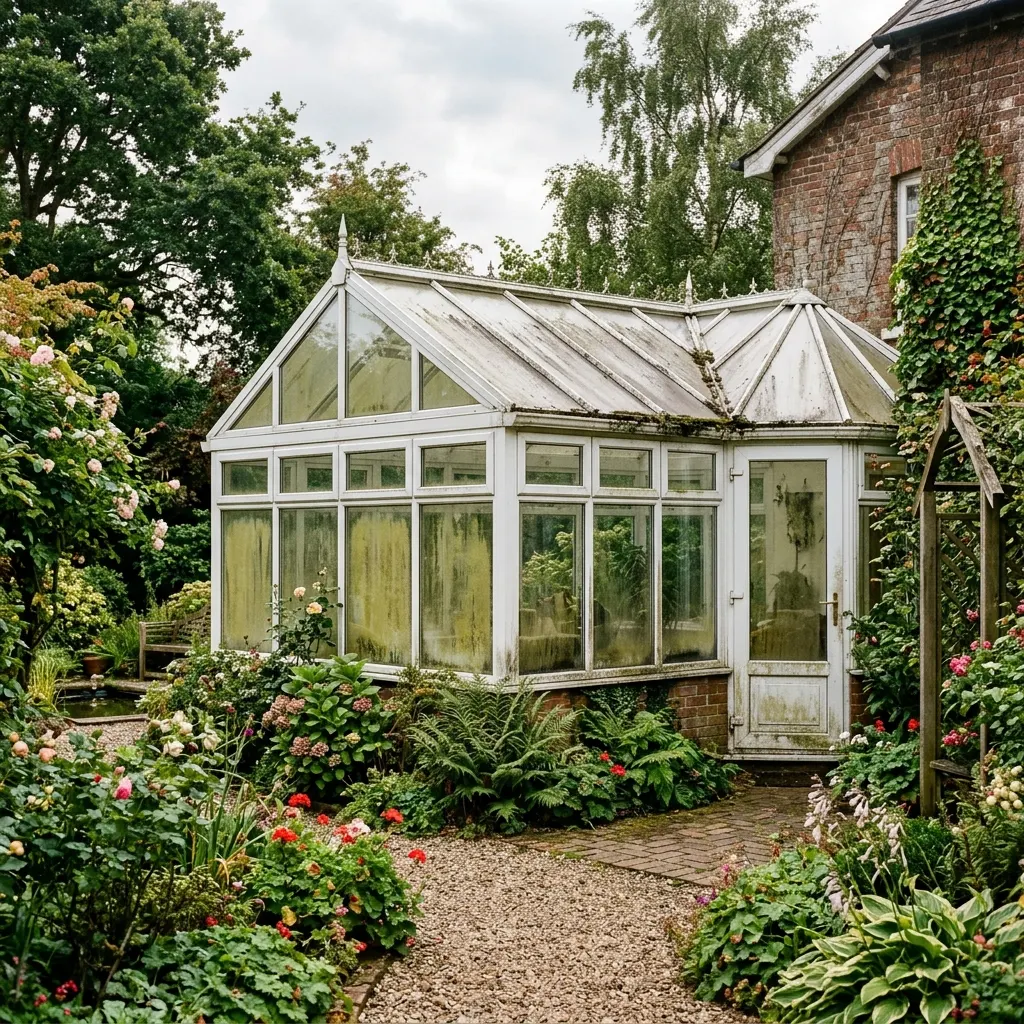
Left beyond roughly a year, algae starts to digest the surface of the polycarbonate itself, causing pitting that no clean can reverse. Moss expanding inside the gaskets lifts and eventually perishes the seals, which is when double glazing units begin to blow and water starts finding its way inside — a particularly costly failure on the wide Gable and P-Shape roofs common around Nunthorpe and Hemlington, where a single failed seal has far more glass to let go of.
The Tipping Point: Don't wait for the "Structural Breach"
Once algae establishes a permanent colony under your rubber gaskets, it begins to digest the surface minerals, leading to permanent pitting and seal failure. Our annual valet stops this cycle in its tracks.
The Anatomy of a Valet.
This isn't a splash-and-dash service. Our process works top-to-bottom through every structural component in turn, and when you hire a Conservatory Cleaner in Middlesbrough, that's exactly what you should expect from the framework as a whole.
Finials & Crestings
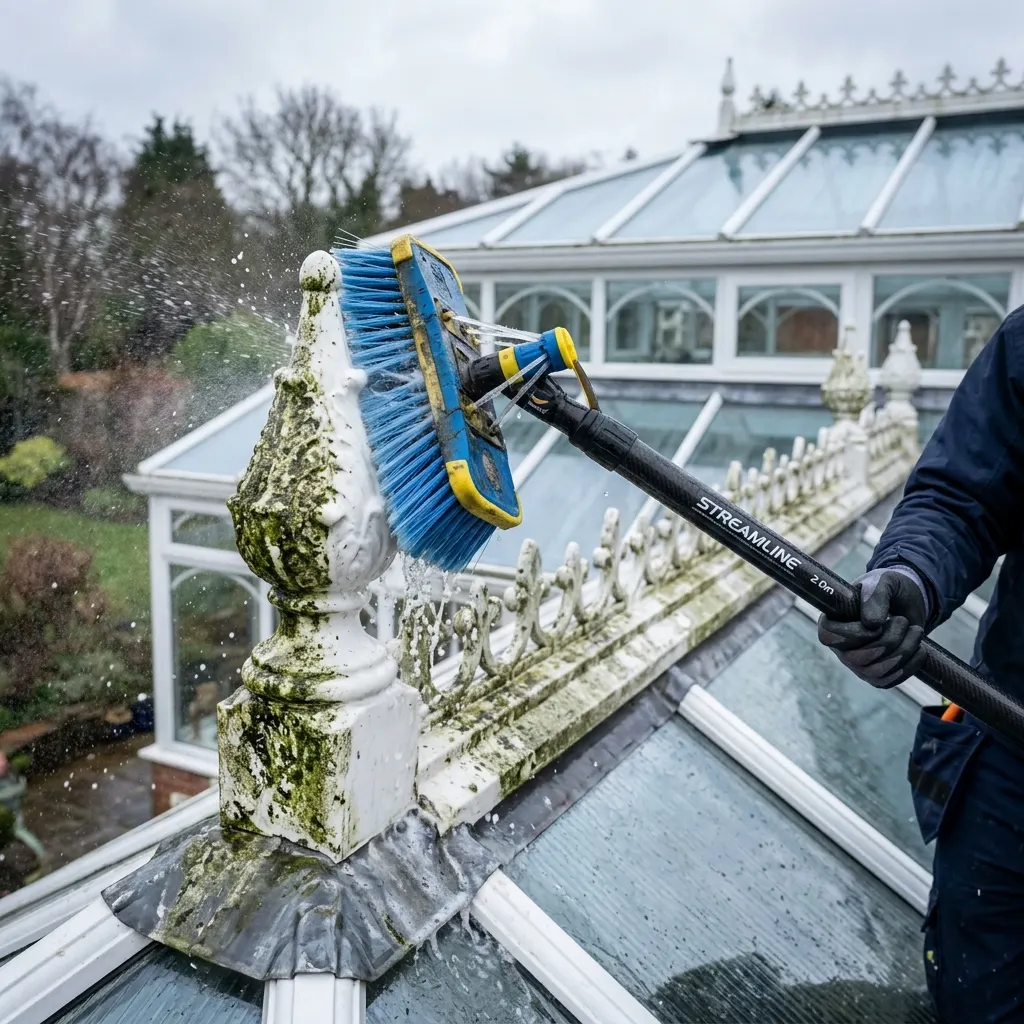
The ornate ridge spikes sit at the highest point of the roof, which is precisely why they're usually the first place algae takes hold. We use specialised high-reach carbon fibre poles to scrub these peaks directly, stopping growth before it has the chance to bleed down onto the glass beneath.
Structural Beams
White UPVC is porous, and over years of exposure it absorbs pollutants from the atmosphere, particularly the oily traffic film common along Middlesbrough's arterial roads into the town centre. Our heated pure water system opens those microscopic pores back up, lifting the ingrained soot and returning the framework to a genuine white.
Gaskets & Seals
Algae growing under a rubber seal holds moisture against the edge of the glass, and over time that pressure breaks the seal it's sitting on. We deep-clean every compression point to keep that seal intact, which is what keeps a conservatory thermally efficient rather than draughty.
Internal Valleys
The hidden box gutters where a conservatory meets the house wall get a thorough flush on every visit. On the more established, tree-lined streets around Acklam and Linthorpe in particular, these valleys fill with leaf mulch and silt far faster than a newer estate would, and clearing them properly is what prevents an overflow during a heavy Teesside downpour.
Postcode Specific Technical Care
The environmental load on a conservatory changes noticeably as you move across the borough. As a local Conservatory Cleaner in Middlesbrough, we calibrate agitation and cleaning solutions to whichever of these three profiles your postcode falls into.
Middlesbrough Central & North
Urban / Industrial (TS1 - TS4)Properties around Middlesbrough Town Centre and the surrounding industrial corridor carry the heaviest traffic film of anywhere in the borough, simply as a result of being the commercial and transport hub for the whole of Teesside. That oily residue needs our TFR treatment to properly degrease and whiten UPVC that would otherwise dull to grey within months.
Marton & Nunthorpe
Leafy / Residential (TS7 - TS8)Marton and Nunthorpe are greener and more sheltered than the town centre, which brings a different problem: rapid moss growth and heavy silt build-up in box gutters from mature tree cover overhead. We adjust water temperature and brush pressure to shift that organic load rather than relying on the traffic-film chemistry used closer to the centre.
Coulby Newham & Hemlington
Open / Exposed (TS8)Coulby Newham and Hemlington's newer, more open estates trade tree cover for exposure, so UV degradation and rapid silt accumulation are the bigger issues here rather than moss. We lean on high-flow rinsing to shift abrasive silt safely before it has the chance to scratch panels that see far more direct sun than their older, more sheltered counterparts.
The Complete Structural Restoration Protocol.
Every stage of our process stays low-pressure but high-flow, so a Middlesbrough conservatory gets a genuinely deep clean without the seal damage that high-pressure power washing tends to cause.
Phase 1: Bio-Saturation Pre-Wash
We start by coating the entire structure in a high-volume mist of deionised water, which hydrates and softens whatever the last few weeks of Middlesbrough weather have deposited on it.
That pre-wash means moss, lichen and bird droppings can be lifted a step later without abrasive scrubbing that would otherwise scratch a sensitive glass coating.
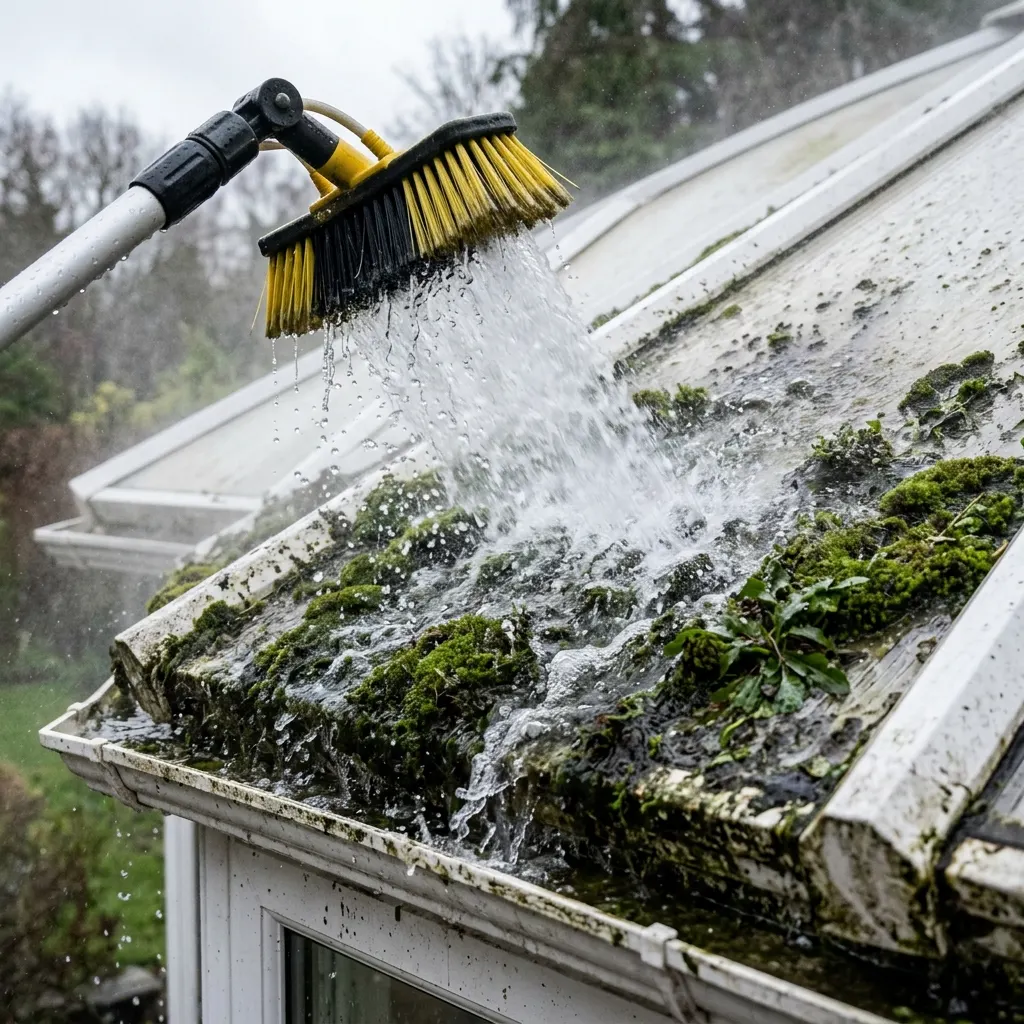
Phase 2: Intensive Structural Scrub
Working from the ridge down, we use ultra-light carbon fibre poles to manually agitate every part of the structure in turn, rather than a single blanket pass.
The heat carried in our pure water acts as a natural solvent here, melting away the oily traffic film that's a constant near Middlesbrough's main routes and lifting ingrained dirt out of the porous plastic surface underneath.
Phase 3: The Degreasing Flush
With the dirt loosened, a high-flow rinse carries away the silt, organic spores and dissolved traffic film in one continuous pass rather than smearing it around.
Internal valleys and box gutters get particular attention here, since keeping water flowing freely through the downpipes is what actually stops an overflow during heavy rain.
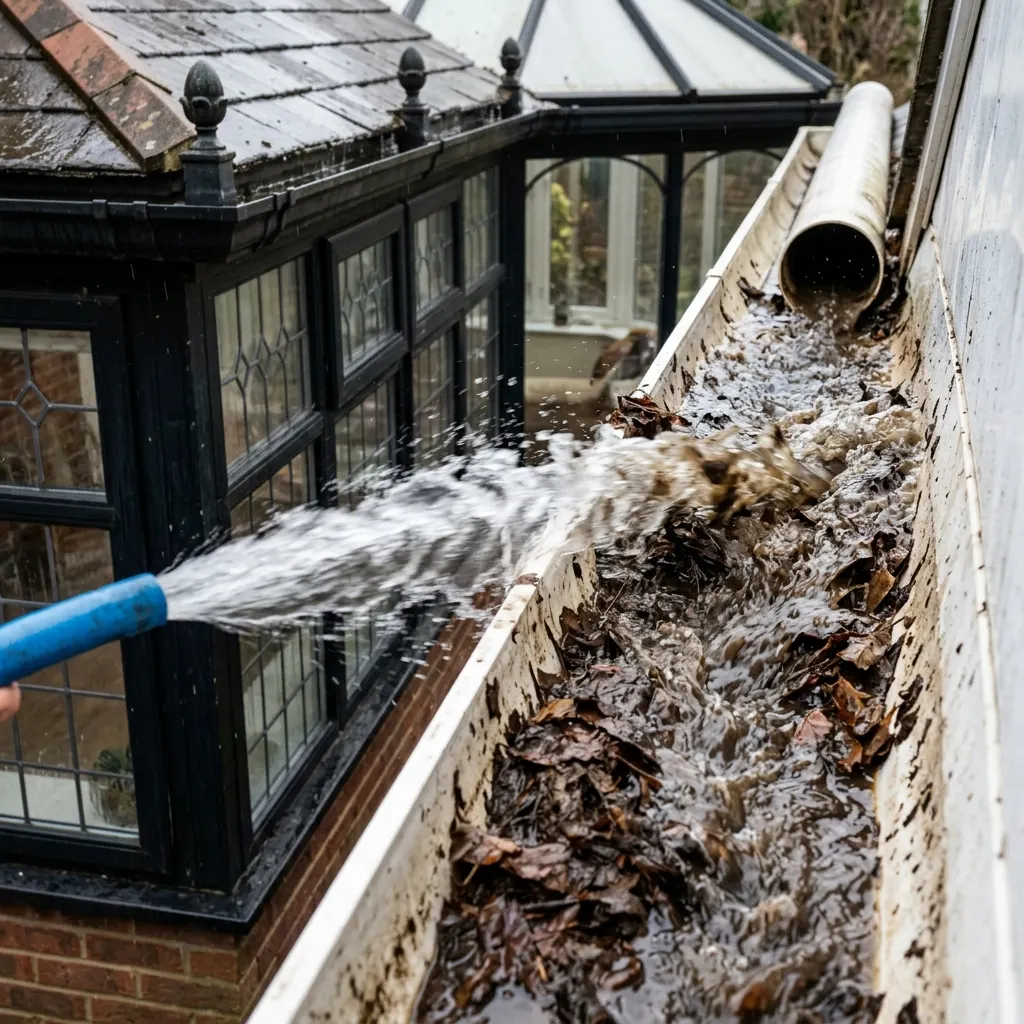
Phase 4: Surgical 0 TDS Rinse
The final step uses 100% deionised water (000 PPM). With zero dissolved minerals left in it, that water evaporates naturally into the air without leaving a streak behind.
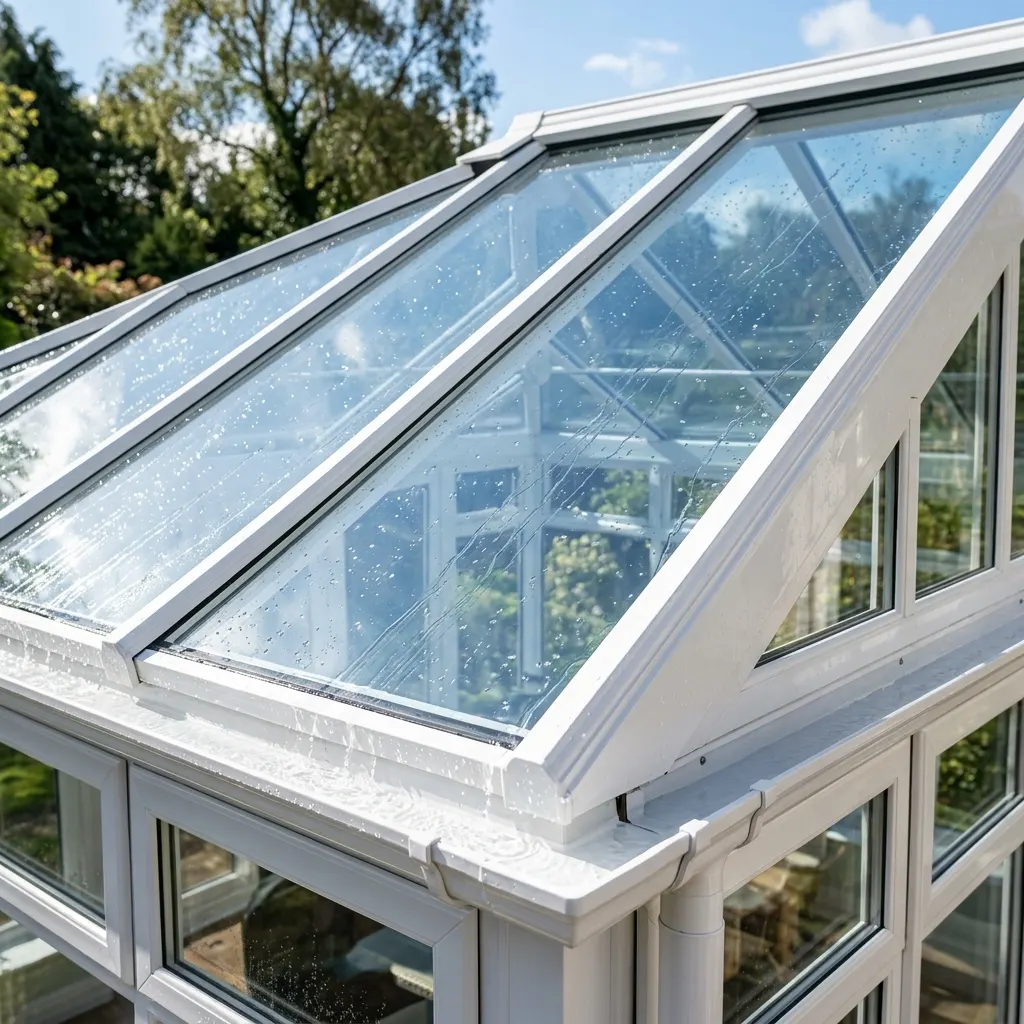
The result is a mirror-like finish on both glass and UPVC, free of the white mineral spotting that standard tap-water cleaning tends to leave in its wake.
Substrate Specific Calibration
Whether a Middlesbrough conservatory has a modern glass roof or a traditional structured polycarbonate one, we calibrate brush pressure and water purity to match the substrate underneath.
Self-Cleaning Glass
Photocatalytic CoatingPlenty of newer conservatories around Middlesbrough now use self-cleaning glass, which carries a microscopic chemical coating that uses UV light to help break down dirt on its own. Standard detergents and harsh chemicals can burn straight through that coating if used carelessly.
Our 100% additive-free pure water leaves the coating untouched, so the glass keeps performing its self-cleaning function long after we've packed up and gone.
Structured Polycarbonate
Multiwall ConstructionPolycarbonate is highly porous and prone to microscopic scratching, and cheap stiff-bristle brushes leave thousands of tiny scratches that trap dirt and leave a panel looking permanently cloudy no matter how often it's cleaned.
We use soft-flocked, boar's-hair-style brushes that glide across the surface instead, lifting the grey algae film off without ever abrading the panel underneath it.
Frequently Asked Questions
Common questions about our premium conservatory restoration service.
More Services
We Offer in Middlesbrough
From ground level to roofline — Operation Clean protects every inch of your property's exterior.

Window Cleaning in Middlesbrough
Heated pure water & TFR degreasing for a long-lasting, streak-free finish on every pane.

Gutter Clearing in Middlesbrough
3,000W industrial vacuum extraction with HD camera verification — entirely from the ground.

Soffit & Fascia Cleaning in Middlesbrough
Bio-degradable UPVC roofline restoration returning your plastics to brilliant, factory-white.

Solar Panel Cleaning in Middlesbrough
Restore peak energy output by removing bio-film with 000 PPM zero-TDS pure water.

Commercial Cleaning in Middlesbrough
SafeContractor approved B2B exterior maintenance with full RAMS and £5M+ cover.
Areas We Provide This Service
Book Your Middlesbrough Restoration Today.
Ready to transform your conservatory? Simply select the style and size of your conservatory, tell us a bit about its current condition, and see a completely transparent price instantly on screen. No hidden fees, just professional service.
No-Obligation Pricing
We confirm the right details before pricing.
Fast Response
We usually reply within the hour — no waiting on hold.