
Conservatory Cleaning in Hartlepool.
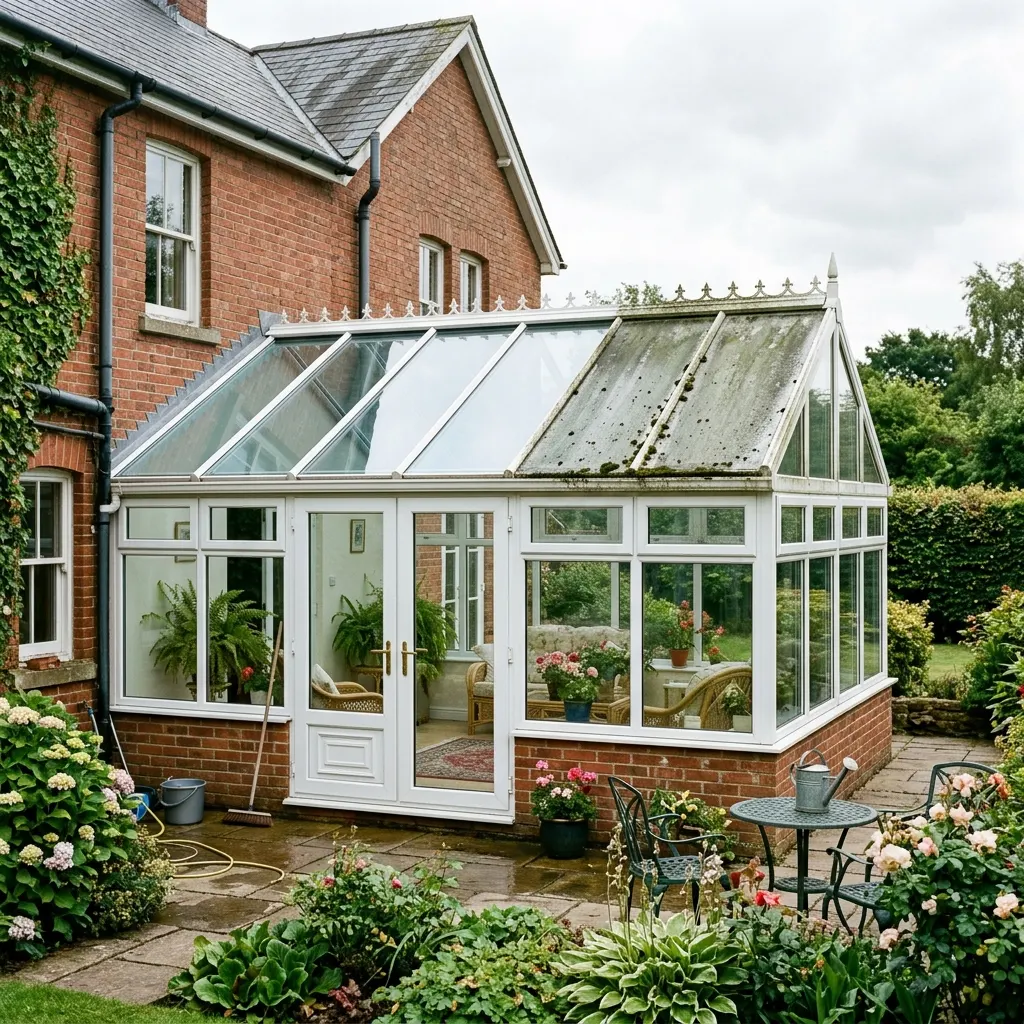
Hartlepool conservatories sit exposed to a coastline that doesn't let up. Sea spray off the North Sea bakes a fine salt residue onto every roof panel, herring gulls treat flat conservatory roofs and hidden internal valleys as a nesting site every spring, and the hinges and fixings holding your frame together corrode faster here than almost anywhere else inland. Standard window washing was never built for any of that. As your Conservatory Cleaner Hartlepool, we treat the whole structure - lifting salt film from dulled UPVC, clearing gull debris and moss from roof valleys most cleaners never check, and restoring full light through the roof panels - entirely from ground level using long-reach carbon fibre pole technology, with a finish built to survive until the next gale rolls in off the sea.
What Hartlepool customers actually say
“Very professional operation. Very happy with the work. I would highly recommend this company.”
“Great service”
“Great communication and fit us in quickly. Thanks”
Architectural Restoration.
Protecting your Hartlepool investment from salt, gulls and the North Sea.
The Definitive
Conservatory Challenge in Coastal Hartlepool.
A conservatory is a serious investment for any homeowner, and in Hartlepool it lives under conditions most of the North East never has to deal with. Properties within sight of Hartlepool Marina and along the seafront take a near-constant drift of salt-laden air straight off the North Sea; head back into Throston Grange or Owton Manor and the salt is still there, just travelling on the prevailing wind mixed in with the usual urban grime. Add Hartlepool's resident herring gull population, which claims flat conservatory roofs and internal valleys as nesting ground every spring, and you have a structure under attack from two directions at once - airborne salt working into metal fixings, and nesting debris blocking the drainage that's meant to carry rainwater away.
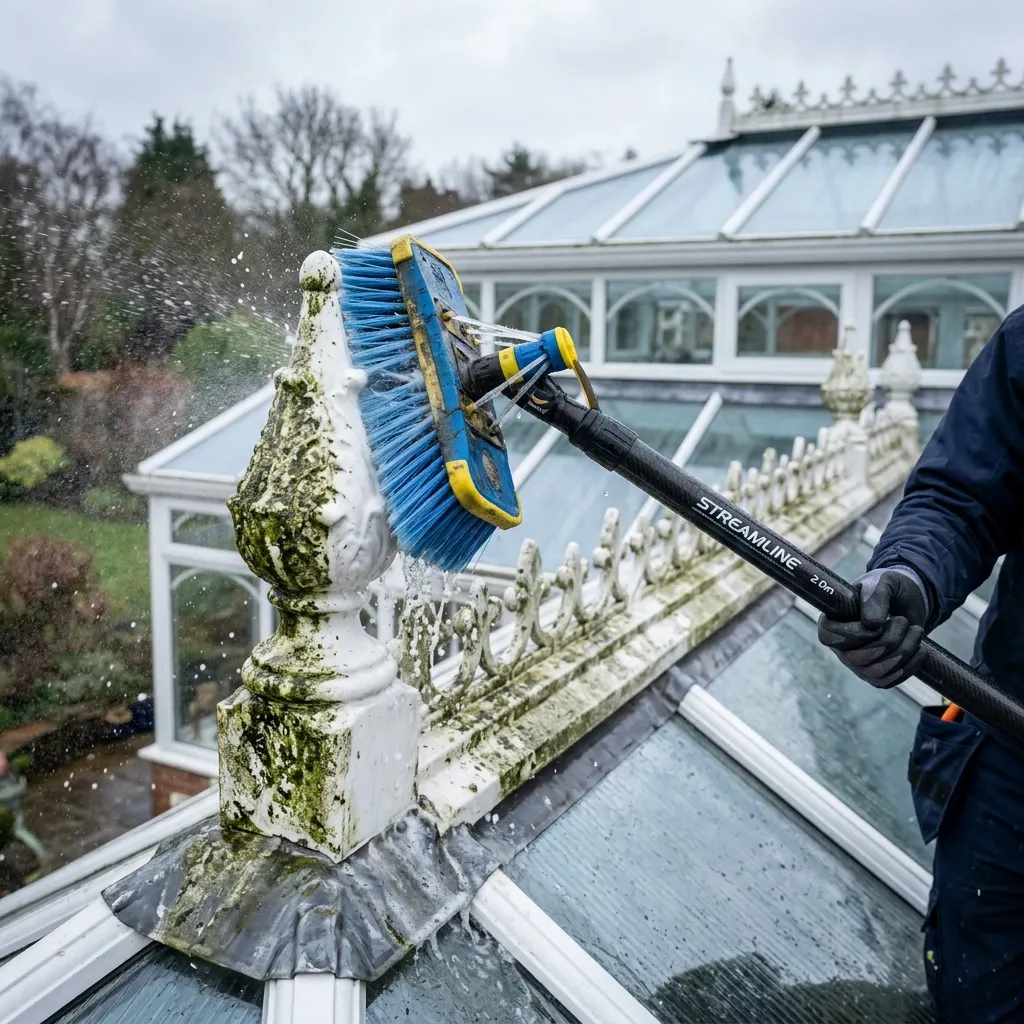
At Operation Clean we don't stop at the glass; every Conservatory Cleaning Hartlepool booking is a full Premium Conservatory Valeting pass, worked from the top down. We start at the finials and crestings - the first surface a gull lands on, and the first place its debris collects - then work down through the UPVC framework to ground level. In the older housing around Hart Village and Greatham, where conservatories were often added a generation ago, we pay particular attention to hinges, hooks and other metal fixings, since years of salt exposure can pit and seize these fittings long before the UPVC itself shows any real wear.
Our process pairs heated, laboratory-pure water with a professional-grade Traffic Film Remover (TFR), and in Hartlepool that combination earns its keep quickly. Salt crystals left by sea spray don't respond well to a plain hose-down - they need dissolving, not smearing across the glass - while properties further inland toward The Fens still pick up traffic film and general Teesside grime that water alone won't shift. Heating the water opens the UPVC's surface pores enough for the TFR to draw out embedded salt and soot together, leaving a finish a garden hose or a standard window clean simply can't match.
Quote By Conservatory Style
Pricing depends on the architectural shape, complexity and scale of your conservatory. Selecting the correct style when you book helps us allocate the right pole length, brush head and time on site before we arrive.
Victorian
The Victorian remains the most recognisable and structurally demanding conservatory design found in Hartlepool's older streets, built around a bay front, a steeply pitched roofline and ornate ridge details - the finials and crestings that give the style its character. Those decorative peaks are exactly what wind-blown coastal debris, gull fouling and damp algae spores catch on first. Our Conservatory Cleaning Hartlepool process for Victorian builds uses angled high-reach agitation to work into the crestings properly, so nothing organic is left up there to bleed down the glass the next time it rains off the sea.
Technical Standard
Edwardian / Georgian
Edwardian and Georgian conservatories favour a flat-fronted, symmetrical profile with a wide vaulted roof that maximises floor space, and while they lack the ridge detail of a Victorian build, they bring their own problem: the internal valleys and box gutters running the length of that broad roof pitch. The sheer surface area means a large volume of rainwater, coastal sand and general dirt is funnelled straight into these drainage points. In Hartlepool we treat clearing them properly as a non-negotiable part of the clean, since a blocked valley here is what eventually shows up as damp plasterwork inside.
Technical Standard
Gable / P-Shape / Lean-To
These are the largest and most structurally complex conservatories we work on, mostly found on the larger detached properties across Hartlepool's outer estates. A P-Shape combines a lean-to with a Victorian or Edwardian end, creating multiple intersecting roof valleys; a gable end presents a sheer wall of high-level glass; a long lean-to can run the full width of a property. Structures this size need our 4-storey safe reach set-up - rigid, lightweight carbon fibre poles that get our technicians up to the gables and across the full roof span without a ladder ever touching the UPVC frame.
Premium Plus
Why Your Roof Turns Green
Coastal winds here carry more than salt - they carry microscopic organic spores off nearby tree lines, farmland and the damp ground further inland. The moment those spores land on a damp Hartlepool roof, colonisation begins.
Phase 1: The Colonisation Phase
Long before any green discolouration is visible, an invisible film - biofilm - forms across the UPVC and roof glazing. It behaves like a net, trapping passing traffic soot, coastal dust and salt residue as they drift past. In Hartlepool's damp, sea-fret-prone microclimate, this layer builds faster than it would inland, simply because the air here stays wetter for longer.
Phase 2: The Visible Bloom
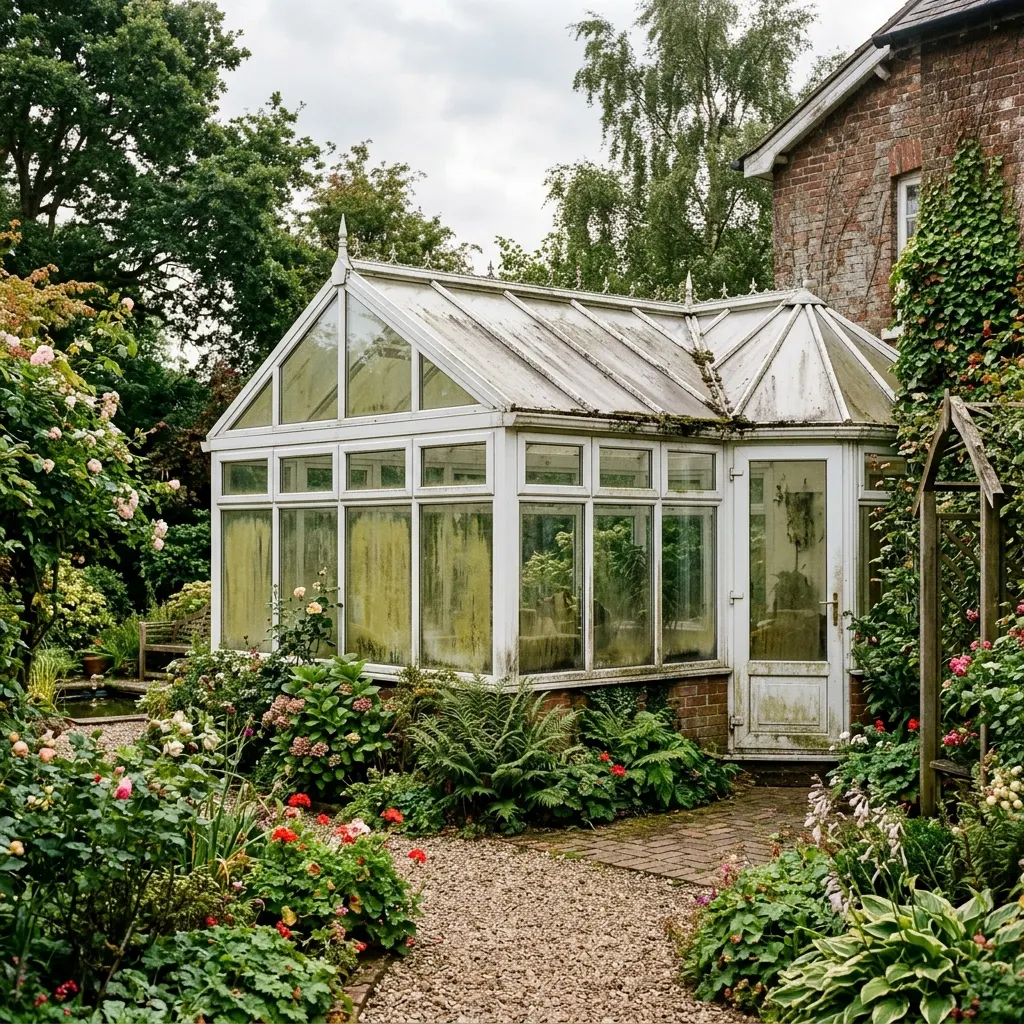
Once enough organic matter has been trapped, the biofilm turns into Chlorophyta - visible green algae - and the roof tips from dull to genuinely unsightly within weeks. The staining spreads up the glazing bars and across the panels, and this is also the point where moss spores start anchoring into the rubber gaskets and seals, chasing the moisture held in the joints.
Phase 3: The Structural Breach
This is the stage that actually costs money. Left for more than around 12 months, algae stops sitting on the surface and starts breaking down the surface minerals of the plastic and rubber beneath it. Polycarbonate panels pit and turn permanently cloudy; gaskets lift away from their seats. Once that happens you're looking at water ingress and winter draughts that a clean alone can no longer fix - only new seals will.
The Tipping Point: Don't wait for the "Structural Breach"
Once algae establishes a permanent colony under your rubber gaskets, it begins to digest the surface minerals, leading to permanent pitting and seal failure. Our annual valet stops this cycle in its tracks.
The Anatomy of a Valet.
We don't do a quick splash and a squeegee. Every valet works through each structural component in turn, from the ridge down to the sill.
Finials & Crestings
The decorative ridge spikes and mouldings along the roof apex are the first surface algae, lichen and gull fouling settle on, and because they sit at the highest point, anything left there washes straight down onto the glass you've just paid to have cleaned. We reach them with high-level carbon fibre poles built for the job, so nothing bleeds back down after we've gone.
Structural Beams
UPVC is more porous than it looks. Over the years it absorbs airborne pollutants and slowly turns a chalky grey or a dull yellow that a cold hose does nothing to shift. Heating our pure water opens the surface pores of the frame just enough for our cleaning agents to lift ingrained soot and traffic film out of the material itself, not just off the surface.
Gaskets & Seals
The black rubber gaskets and seals are what actually keep the North Sea weather out and your heating in. Algae working its way under a seal is the single biggest cause of blown double-glazed units we come across. We clean these compression points properly on every valet, flushing out the growth before it has a chance to compromise the seal.
Internal Valleys
The internal valley is the gutter where your conservatory roof meets the house wall, and because it's out of sight, it's usually the last thing anyone checks. Left alone it fills with silt and wet moss until it overflows into the house itself. We flush it on every single visit as standard, not as an optional extra.
Postcode Specific Technical Care
What settles on your roof changes street by street. We adjust our chemical agitation and flushing approach to match whichever load your postcode actually carries.
The Headland & Hartlepool Marina
Coastal Exposed / High Wind (TS24)Properties close to The Headland and Hartlepool Marina take the worst of it - a near-constant drift of salt-laden sea spray, wind-blown sand, and gull fouling from birds that treat the marina's flat roofs and moorings as a permanent perch. Ordinary soap just smears that salt across the glass and leaves fine scratches behind it. We rely on heated TFR treatment and high volumes of pure water to dissolve the salt crystals properly before they can pit UPVC frames or degrade the rubber seals.
Seaton Carew & The Coastal Ribbon
Seafront / Sandy (TS25)Homes looking out over Seaton Carew beach get the view, but they also get the sand - it works its way into box gutters and roof valleys faster here than almost anywhere else we cover. The UV reflecting off the open sea is harder on UPVC too, bleaching frames and drying out gaskets ahead of schedule. Here our focus shifts to high-flow flushing that clears the abrasive sandy silt out of the drainage system without scouring the polycarbonate panels.
Throston Grange, The Fens & Owton Manor
Inland Estates (TS26)Further back from the seafront, the estates around Throston Grange, The Fens and Owton Manor trade sea spray for tree cover and settled residential streets - but the salt still gets there, just carried further on the wind and mixed with general urban dirt rather than sitting in a thick crust. Established planting on these older estates means more leaf litter finds its way into roof valleys through autumn, and the extra shade keeps surfaces damp for longer, giving moss and lichen a head start on UPVC finials. We give these properties the same thorough flush but weight the visit toward organic build-up rather than pure salt removal.
The Anatomy of a Valet.
Every valet follows the same low-pressure, high-flow sequence, engineered to get a proper deep clean without risking the seals.
Phase 1: Bio-Saturation Pre-Wash
We start by coating the whole structure in a high-volume mist of deionised water, softening whatever has built up rather than attacking it dry.
That softening is what lets us lift moss and lichen properly afterwards, without scrubbing hard enough to scratch the polycarbonate or scuff an expensive glass coating.
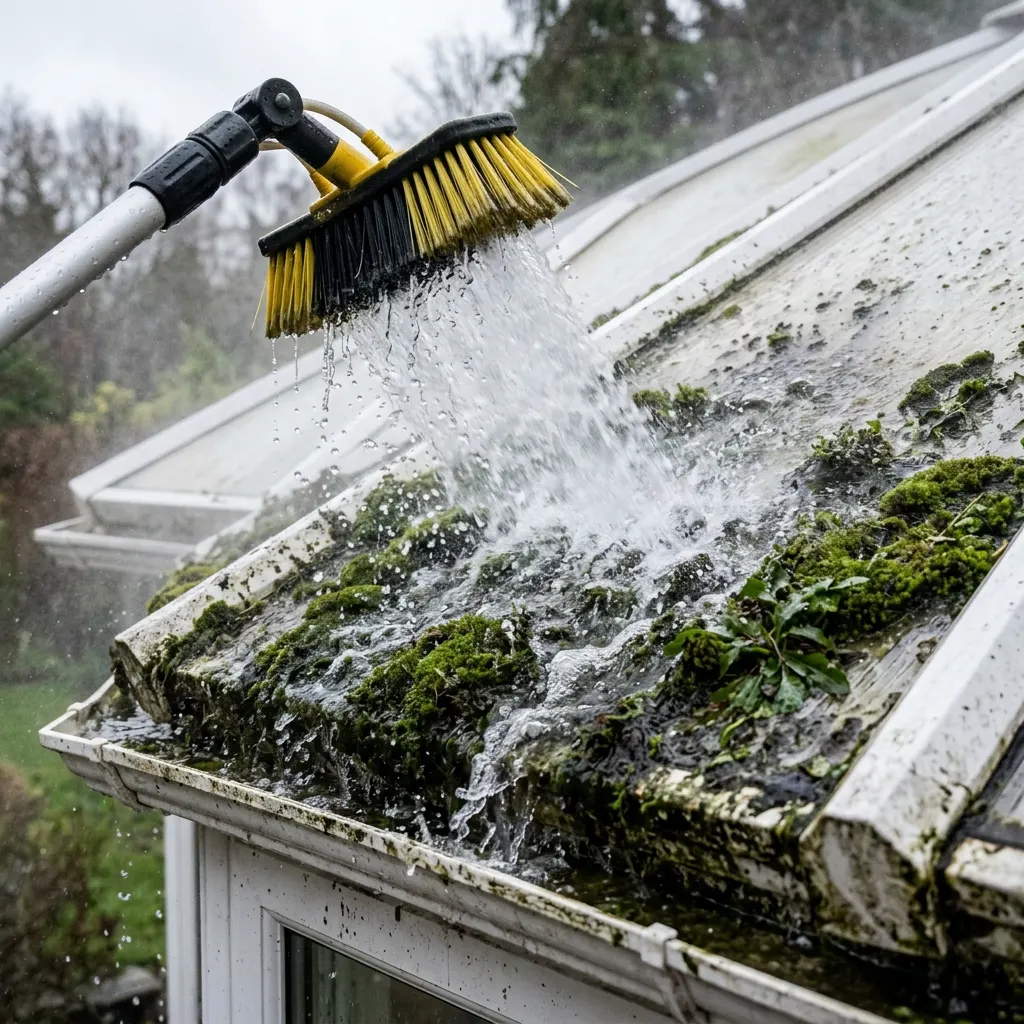
Phase 2: Intensive Structural Scrub
Once the structure is properly saturated and the dirt has softened, the manual work begins - top down. Carbon fibre poles let us agitate the finials first, then the glazing bars, then the UPVC frames beneath.
The warmth in the water helps here too, acting as a mild solvent that lifts ingrained dirt out of the porous plastic rather than just pushing it around the surface.
Phase 3: The Degreasing Flush
With the dirt loosened and suspended in the water, we flush the whole structure at high flow to carry away the silt, the organic spores and the dissolved traffic film in one continuous pass.
This is where we pay closest attention to the internal valleys and hidden box gutters, making sure the drainage is properly cleared of wet leaf mulch rather than just rinsed on the surface.
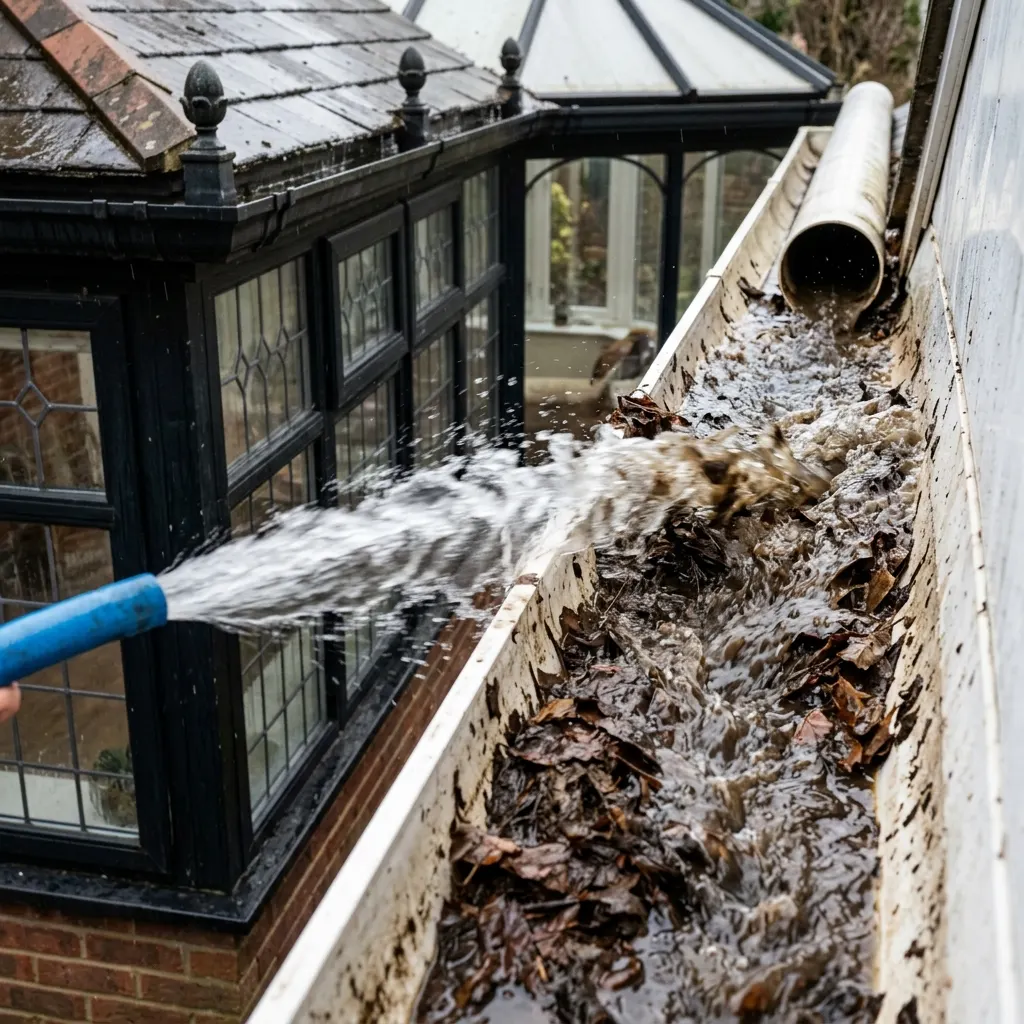
Phase 4: Surgical 0 TDS Rinse
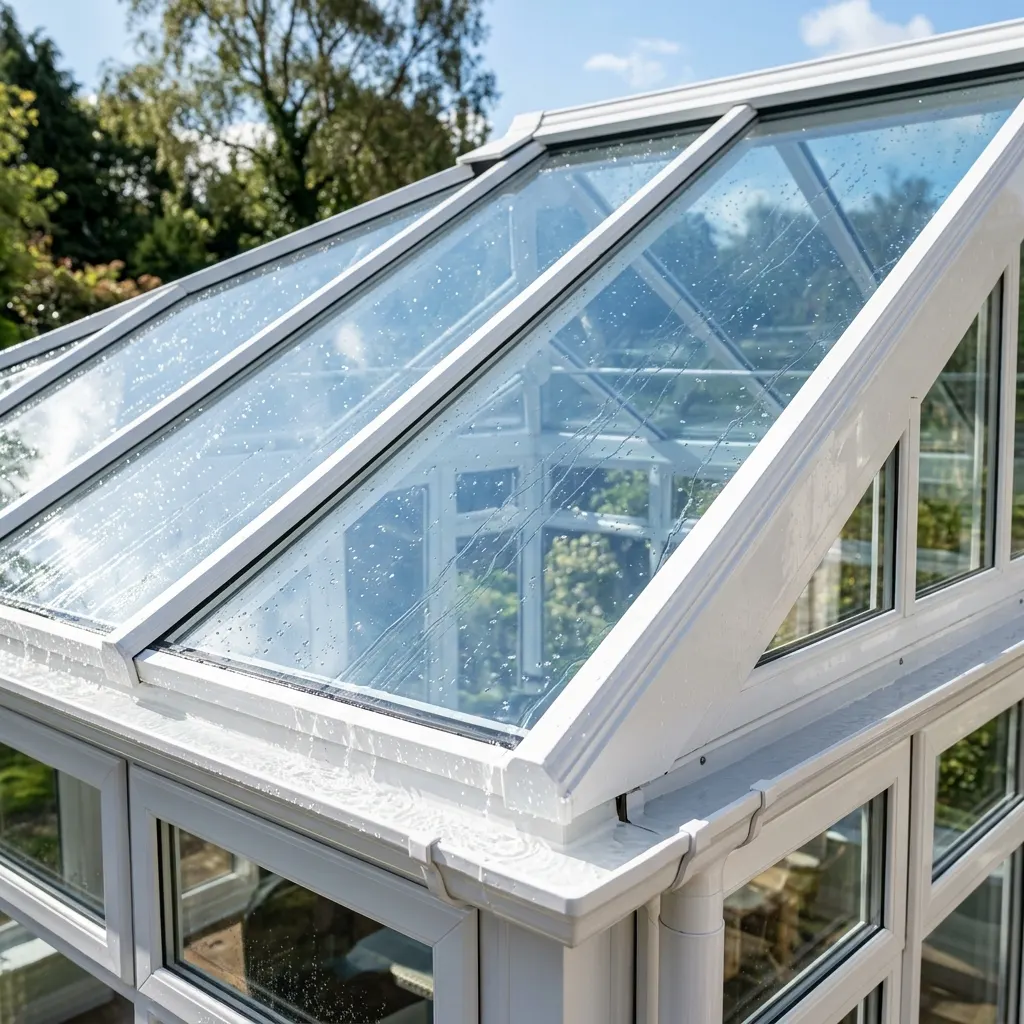
The last step is a rinse with 100% deionised water at zero TDS (000 PPM). With no dissolved minerals left in it to leave a mark, it evaporates naturally in the coastal air rather than drying into spots.
That is what gives the glass and UPVC a genuinely streak-free finish, rather than the white mineral spotting you get from a standard tap-water rinse.
Substrate Specific Calibration
Self-cleaning glass and standard polycarbonate need different handling. We match brush pressure and water purity to whichever material is actually on your roof.
Self-Cleaning Glass
Photocatalytic CoatingModern glass conservatories increasingly use a photocatalytic coating that uses UV light to break down organic dirt on its own. Standard detergents and shop-bought chemicals can strip that coating in a single wash, and once it is gone it does not come back.
We use additive-free pure water only, so the coating keeps doing its job long after we have left the property.
Structured Polycarbonate
Multiwall ConstructionPolycarbonate is a popular, lightweight insulator, but at a microscopic level it is porous and scratches easily. Stiff-bristle brushes used by unqualified cleaners leave thousands of tiny scratches that trap dirt and make the panel look permanently cloudy within a season or two.
We use soft, flocked "boar's hair" style brushes that glide across the surface, lifting the grey algae film without abrading the material underneath it.
Frequently Asked Questions
Common questions about our premium conservatory restoration service.
More Services
We Offer in Hartlepool
From ground level to roofline — Operation Clean protects every inch of your property's exterior.

Window Cleaning in Hartlepool
Heated pure water & TFR degreasing for a long-lasting, streak-free finish on every pane.

Gutter Clearing in Hartlepool
3,000W industrial vacuum extraction with HD camera verification — entirely from the ground.

Soffit & Fascia Cleaning in Hartlepool
Bio-degradable UPVC roofline restoration returning your plastics to brilliant, factory-white.

Solar Panel Cleaning in Hartlepool
Restore peak energy output by removing bio-film with 000 PPM zero-TDS pure water.

Commercial Cleaning in Hartlepool
SafeContractor approved B2B exterior maintenance with full RAMS and £5M+ cover.
Areas We Provide This Service
Book Your Restoration Today.
Select your conservatory's architectural style and approximate size, tell us a little about its current condition, and see a transparent price on screen straight away. Book your Conservatory Cleaner Hartlepool slot today.
No-Obligation Pricing
We confirm the right details before pricing.
Fast Response
We usually reply within the hour — no waiting on hold.