
Conservatory Cleaning in Norton.
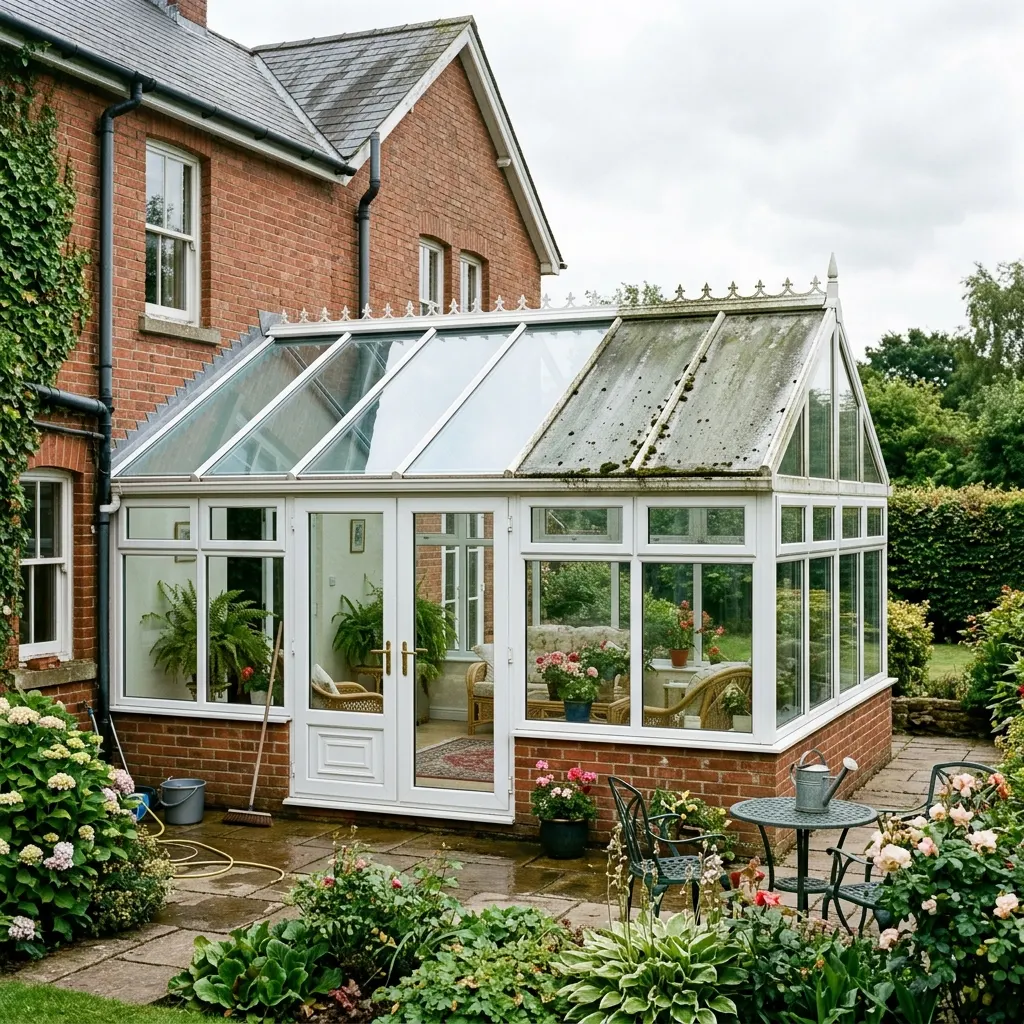
Norton is a conservation area built around a village green, and that single planning designation shapes almost everything about how a conservatory here should be cleaned. Around Norton Village Green and along Norton High Street, period frontages carry conservatories added long before UPVC was the default choice, with timber glazing bars, original ironwork and older seals that a modern tempered-glass extension on the newer plots near Darlington Lane and Grange Road simply doesn't have. Treat a bay window on Harland Place the same way you'd treat a lean-to on Radcliffe Road and you risk stripping away exactly the character a conservation area exists to protect, which is why Norton needs a Conservatory Cleaner who reads the building before reaching for a brush.
What Norton customers actually say
“Very professional operation. Very happy with the work. I would highly recommend this company.”
“Great service”
“Great communication and fit us in quickly. Thanks”
Restoration, Not Just A Rinse.
Respecting Norton's period fabric.
A Different Approach For A
Period Conservatory In Norton.
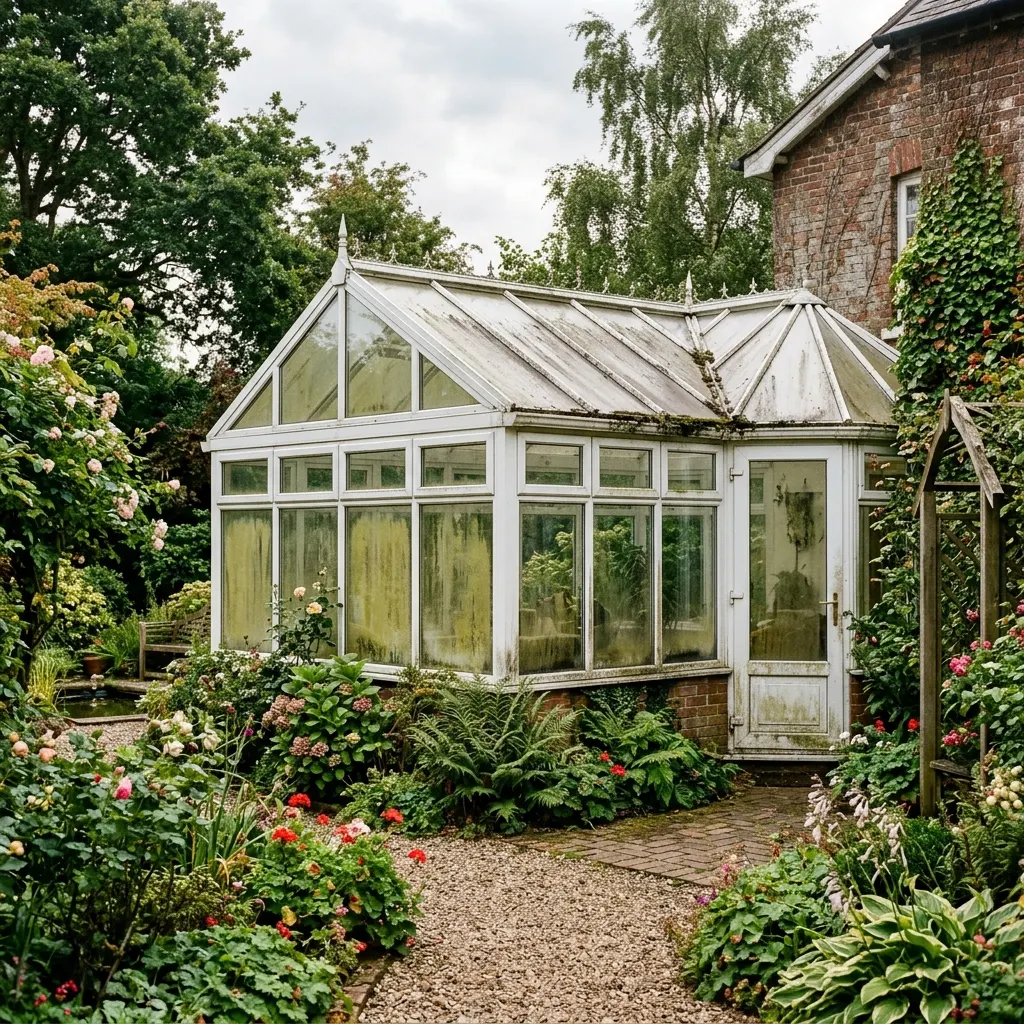
Norton's status as a conservation village isn't just a planning technicality — it means a real concentration of conservatories that predate UPVC as the industry standard. Properties fronting Norton Village Green and Norton High Street often carry glazing bars, timber sections and lead flashings fitted decades ago, and any one of them can be damaged by the same chemical strength and pole pressure that would be entirely safe on a newer structure a mile away near Grange Road. Add the organic fallout from the mature gardens ringing the green, and a period Norton conservatory ages quite differently to a modern estate build.
At Operation Clean, our Premium Conservatory Valeting treats every Norton job as an assessment first and a clean second. Before a pole ever touches the roof, we work out whether we're dealing with timber, early UPVC or a later replacement frame, because that decision changes our agitation and dilution rates completely. On Harland Place and Radcliffe Road in particular, where original frame sections and ironwork are still common, that assessment stage often takes longer than the clean itself.
Our method pairs controlled-temperature pure water agitation with a correctly diluted TFR (Traffic Film Remover) application, calibrated down for older, more porous materials rather than the stronger mix we'd use on a modern estate. That lets us lift embedded soot and organic staining without over-saturating an aged seal or timber section, so a Norton conservatory comes back genuinely clean rather than merely rinsed — without any of the character that makes these conservation-area properties worth preserving getting lost along the way.
Three Conservatory Shapes, Three Different Jobs In TS20
We price purely on the shape and scale of your structure, so when you book you'll be asked which style matches your conservatory. A Victorian bay overlooking Norton Village Green calls for an entirely different technical approach to a modern gable-end extension further out near Grange Road.
Victorian
The Victorian style dominates the older frontages along Norton High Street and around Norton Village Green, recognisable by its bay front and steeply pitched roof. It's a decorative design, but that decoration is the problem: deep-cut Finials and Crestings give algae spores somewhere to lodge, and a lot of the ridge ironwork here is still original rather than a modern powder-coated replacement. That means our approach has to be lighter and more deliberate than on a newer estate, or green run-off simply bleeds back down the roof the next time it rains.
Technical Standard
Edwardian / Georgian
Along Harland Place and Radcliffe Road, the flat-fronted, symmetrical Edwardian or Georgian style is more common, prized for the extra internal space its vaulted roof creates. That same roof shape produces "dead zones" where silt settles, especially beneath the mature trees lining these residential roads. We spend proportionally more time on the internal valleys and external box gutters here than on the glass itself, because these older roof spans hold standing water and leaf mulch that will find its way into an ageing seal if it isn't cleared.
Technical Standard
Gable / P-Shape / Lean-To
Further from the conservation core, towards Darlington Lane and Grange Road, larger plots tend to carry contemporary Gable-ended or P-shaped conservatories with sprawling, multi-directional roof spans. Domestic equipment simply can't reach these safely. We use our 4-storey safe reach technology instead, so we're never resting a ladder against a period wall or a delicate UPVC frame while still getting full coverage of the gable and roof panels.
Premium Plus
Why Your Roof Turns Green
The same mature trees and gardens that give Norton Village Green its charm are constantly shedding spores onto every roof nearby, including those backing onto Norton High Street. Land on a damp conservatory roof anywhere in TS20 and that spore starts a three-stage process that gets harder to reverse at every step.
Phase 1: An Invisible Film Takes Hold
A biofilm you can't yet see forms first, coating the UPVC and glass in a microscopically thin layer that acts like flypaper for traffic film drifting off Darlington Lane and pollen carried in from gardens around the green. Nothing looks obviously wrong beyond a slight dullness at this stage, but the groundwork for a visible bloom is already laid.
Phase 2: The Green Becomes Visible
Given a wet Teesside spring, that biofilm turns into Chlorophyta — proper green algae — and the roof stops being merely dull and starts being an eyesore. Moss anchors into the rubber gaskets, and roofs shaded by the older boundary walls near Norton High Street tend to show it first. The structure also starts holding more heat at this stage, which is when the room beneath it gets noticeably stuffier.
Phase 3: The Structural Breach
Beyond about 12 months, algae starts digesting surface minerals out of glass coatings and polycarbonate — pitting that can't be undone. On the older leaded and timber-framed conservatories around the conservation area, it stains original woodwork too. Once moss has properly expanded inside the gaskets, seals lift or perish, and that's when blown double-glazing units and internal leaks start to appear.
The Tipping Point: Don't wait for the "Structural Breach"
Once algae establishes a permanent colony under your rubber gaskets, it begins to digest the surface minerals, leading to permanent pitting and seal failure. Our annual valet stops this cycle in its tracks.
Every Structural Component, Not Just The Glass.
A conservatory valet in a village built around conservation shouldn't be a five-minute wipe of the glass. We treat it as a top-to-bottom technical restoration, covering every structural component in turn.
Finials & Crestings
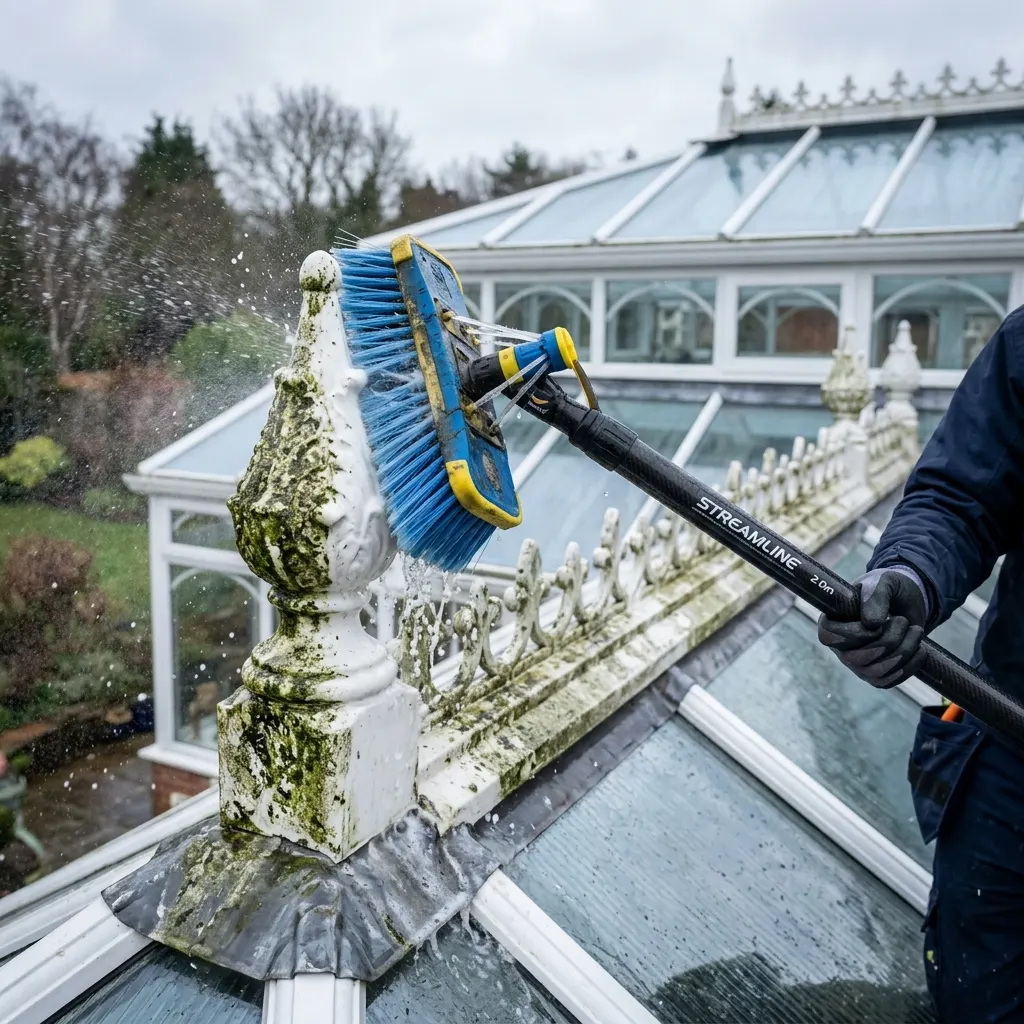
The ornate ridge spikes at the very top of the roof are often original ironwork on the Victorian-style conservatories around Norton Village Green, not a modern replacement. We reach these peaks with specialised carbon fibre poles and scrub them by hand, stopping organic spores from washing down and recontaminating the glass below while keeping the original finish intact.
Structural Beams
UPVC is porous, and it absorbs pollutants from the air over time, more noticeably along busier routes such as Darlington Lane. Our controlled-temperature pure water opens the plastic's pores just enough to draw out ingrained soot and traffic film, restoring the frame to white without the aggressive heat that would warp an older, thinner UPVC section.
Gaskets & Seals
Seal failure almost always starts with algae growing underneath the rubber gasket, and that risk is higher on older conservatories such as those along Radcliffe Road and Harland Place, where the original seals are already past their best. We deep-clean these compression points to clear out organic matter, which helps an existing seal last rather than hastening the point where it needs replacing.
Internal Valleys
The hidden box gutters and valleys where a conservatory meets the house wall get a thorough flush on every visit. Near the mature gardens around Norton High Street and the green, these channels fill with silt and leaf mulch fast, and an overflow here finds its way into a period property's original wall fabric far more easily than into a modern cavity wall — which is exactly why clearing them is standard on every valet, not an add-on.
Postcode Specific Technical Care
Walk from the green to the edge of the village and the environmental load on a conservatory roof changes completely. As a local Conservatory Cleaner in Norton, we calibrate agitation and chemical strength to whichever part of TS20 you're in.
Norton High Street & Village Green
Conservation Core (TS20)Fronting the High Street or the green itself means facing two things at once: traffic film and soot from passing vehicles, and organic staining from the mature trees that shade this stretch. Because many of these are older, locally significant buildings, we dilute our TFR treatment down and apply it by hand, degreasing the UPVC without risking the period frame or the brickwork it sits in.
Harland Place & Radcliffe Road
Established Residential (TS20)Move back from the High Street onto quieter roads like these and traffic film stops being the main issue — mature gardens are. Moss grows faster here and box gutters fill with leaf litter more quickly, so we adjust water temperature and dwell time to handle the higher organic load without overworking seals that, on some properties, are still original.
Darlington Lane & Grange Road
Arterial & Edge (TS20)Out on the busier edge of the conservation area, frames pick up more airborne traffic film and UV-baked grime than anything closer to the green. We run a stronger initial degrease pass here first, before switching to the gentler maintenance clean we'd use nearer the historic centre.
How We Valet A Norton Conservatory, Phase By Phase.
Every Conservatory Cleaning Norton booking follows the same careful four-phase protocol, kept deliberately low-pressure and low-chemical so it suits modern glazing and the village's older period structures equally.
Phase 1: Bio-Saturation Pre-Wash
We start by misting the entire structure with a high volume of deionised water, softening whatever has settled on the roof at a controlled, lower pressure suited to the older glazing and sealant found on many of Norton's period conservatories.
That pre-wash means moss and lichen lift away safely later on, without the abrasive scrubbing that could scratch glass or polycarbonate, or strain an ageing frame unnecessarily.
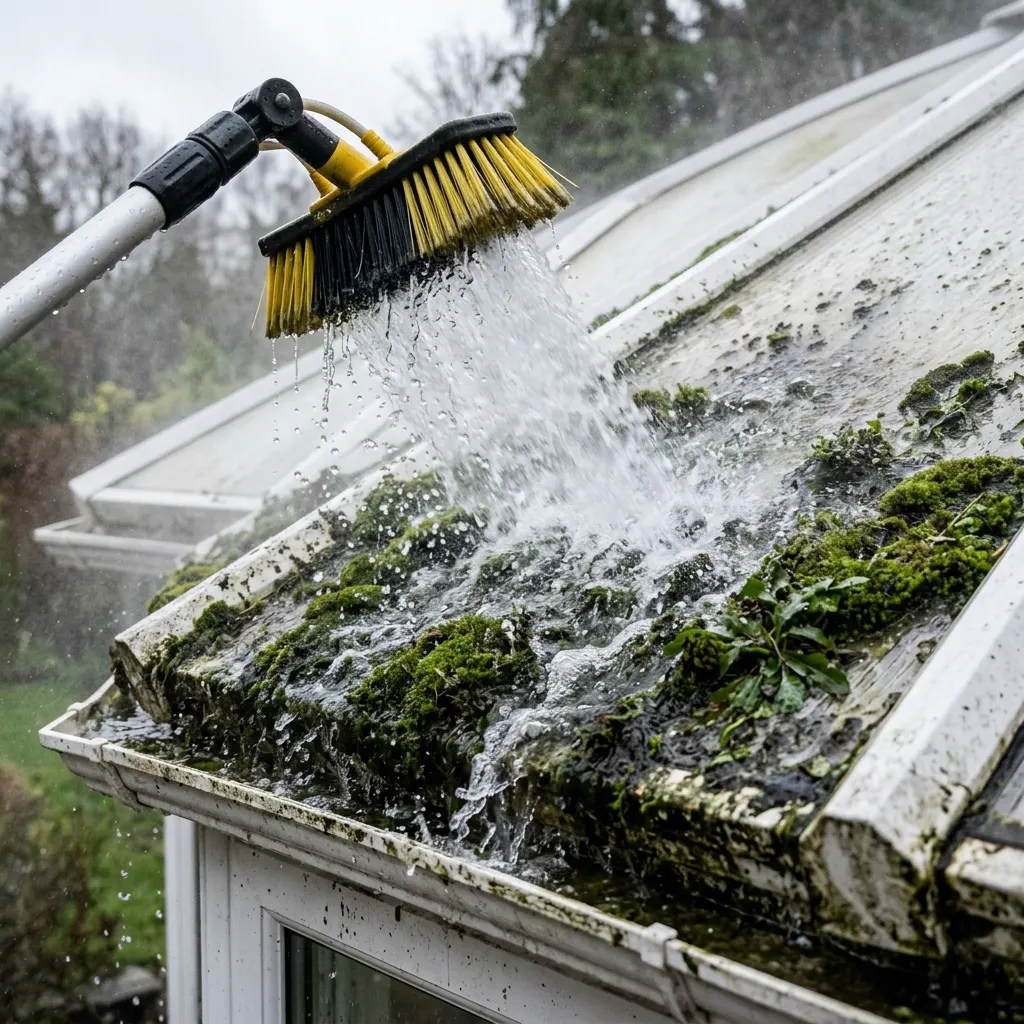
Phase 2: Intensive Structural Scrub
From the ridge down, we hand-agitate every part of the structure with ultra-light carbon fibre poles, easing off the pressure wherever we're working over original ironwork or timber rather than standard modern UPVC.
The controlled heat in our pure water system acts as a natural solvent here, lifting ingrained dirt out of the porous plastic and breaking down sticky biofilm without the force that could damage an older fitting.
Phase 3: The Degreasing Flush
With everything agitated, a high-flow rinse carries away the silt, spores and traffic film, particularly on properties nearer busier routes such as Darlington Lane.
We give the internal valleys and box gutters particular attention at this stage, clearing the drainage system completely of leaf mulch shed by the mature gardens found across much of the conservation area.
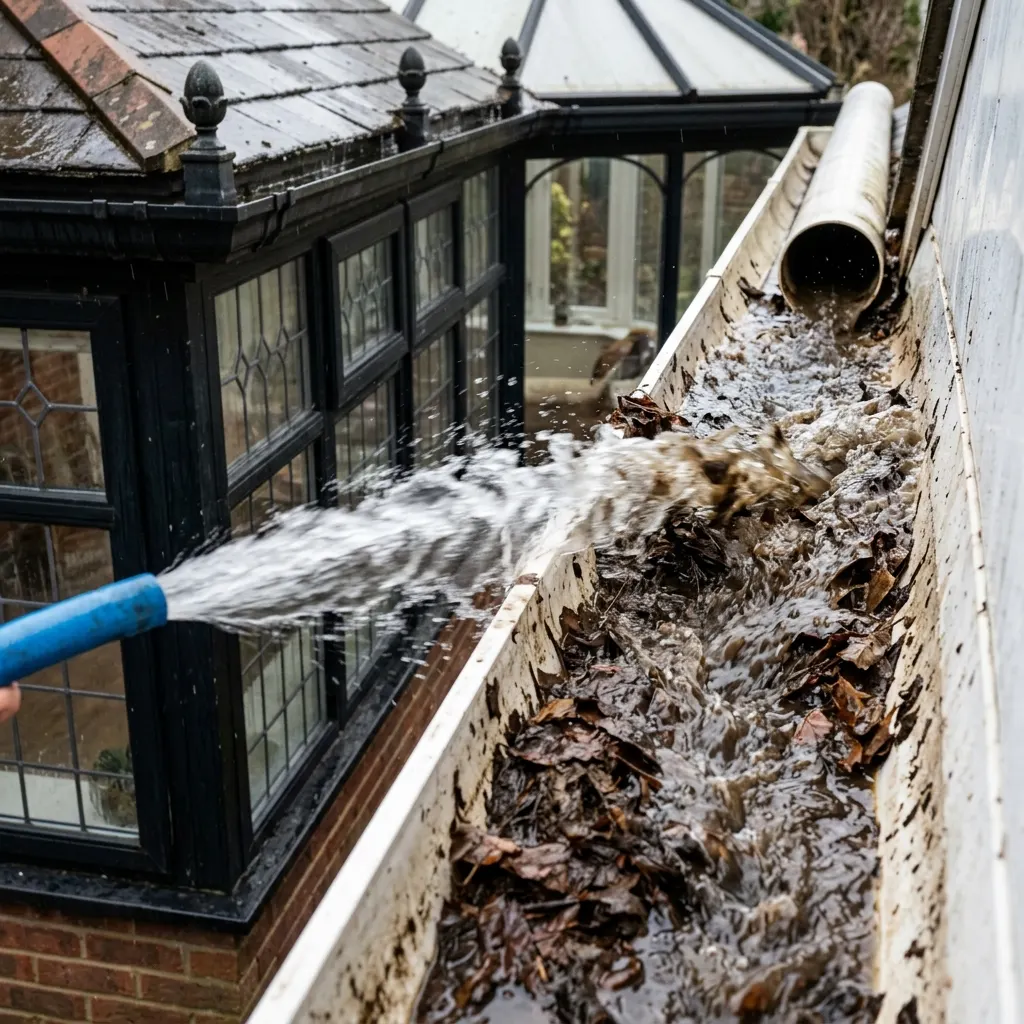
Phase 4: Surgical 0 TDS Rinse
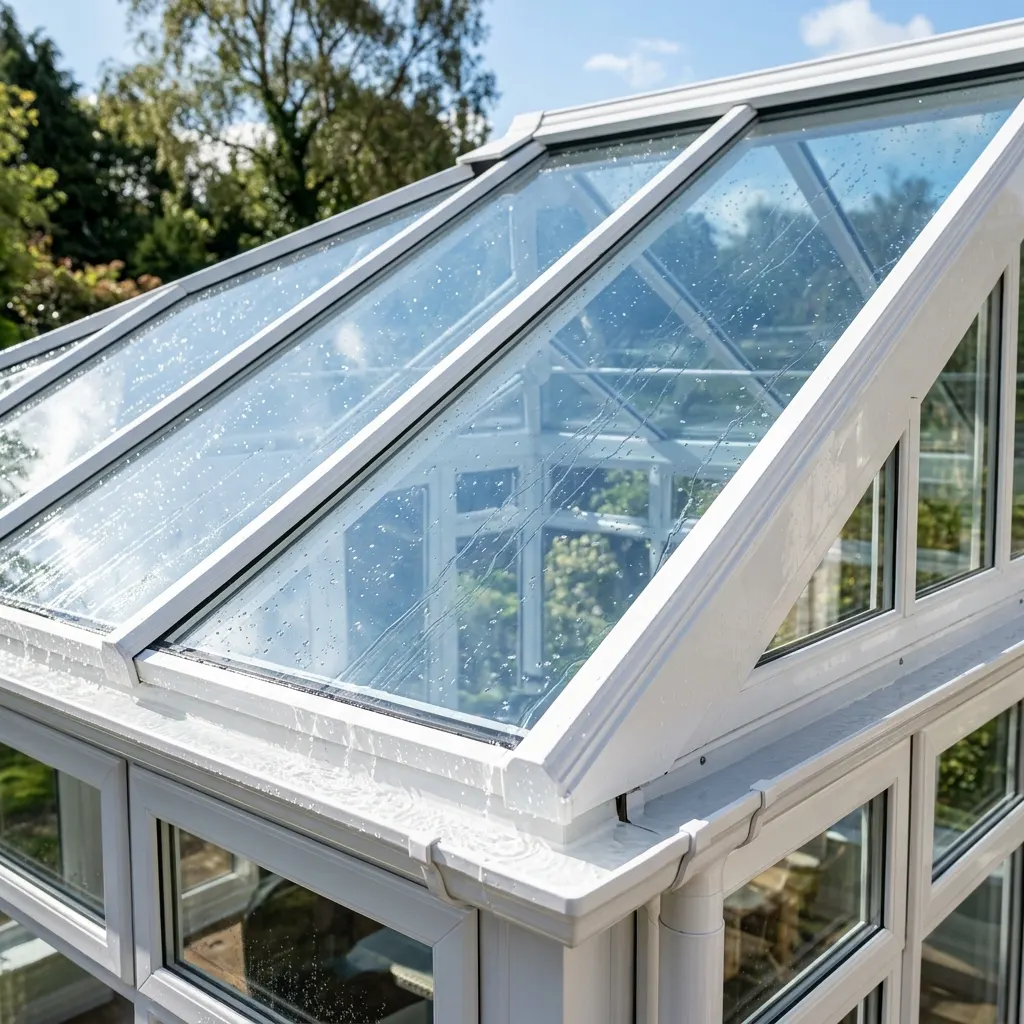
The final phase is what gives the showroom finish: a rinse using 100% deionised water at 000 PPM.
With zero minerals in the water, it evaporates naturally rather than leaving anything behind, giving glass and UPVC a mirror-like finish that tap water, or a garden hosepipe, simply can't replicate.
Substrate Specific Calibration
Norton conservatories split fairly evenly between modern self-cleaning glass and the older-style polycarbonate common on period additions, so we calibrate brush pressure and water purity to whichever one is actually on your roof.
Self-Cleaning Glass
Photocatalytic CoatingSome of the newer conservatories around Grange Road and further from the historic centre carry self-cleaning glass, with a microscopic chemical coating that uses UV light to break dirt down on its own. Standard detergents and harsh chemicals burn straight through that coating.
Our additive-free pure water leaves it intact, so the glass keeps doing its self-cleaning job long after we've left.
Structured Polycarbonate
Multiwall ConstructionPolycarbonate turns up most often on the older lean-to and Edwardian-style additions found throughout the village, and it's genuinely porous and easy to micro-scratch. Cheap stiff-bristle brushes leave thousands of tiny scratches that trap dirt and leave the panel permanently cloudy.
We use soft-flocked brushes instead, gliding across the surface to lift the grey algae film without abrading a panel that, on some of these properties, may already be a decade or more old.
Frequently Asked Questions
Common questions about our premium conservatory restoration service.
More Services
We Offer in Norton
From ground level to roofline — Operation Clean protects every inch of your property's exterior.

Window Cleaning in Norton
Heated pure water & TFR degreasing for a long-lasting, streak-free finish on every pane.

Gutter Clearing in Norton
3,000W industrial vacuum extraction with HD camera verification — entirely from the ground.

Soffit & Fascia Cleaning in Norton
Bio-degradable UPVC roofline restoration returning your plastics to brilliant, factory-white.

Solar Panel Cleaning in Norton
Restore peak energy output by removing bio-film with 000 PPM zero-TDS pure water.

Commercial Cleaning in Norton
SafeContractor approved B2B exterior maintenance with full RAMS and £5M+ cover.
Areas We Provide This Service
Book Your Norton Restoration Today.
Ready to bring the light back into your home? Simply select the style and size of your conservatory, tell us a bit about its current condition, and see a completely transparent price instantly on screen. Your sanctuary is just a valet away.
No-Obligation Pricing
We confirm the right details before pricing.
Fast Response
We usually reply within the hour — no waiting on hold.